2026 Top Innovations in Hydraulic Cooling System Technologies?
The hydraulic cooling system is pivotal in various industries, including automotive and manufacturing. As we head toward 2026, innovations in this field are crucial for enhancing efficiency and reducing energy consumption. Expert Dr. Emily Carter, a leading figure in hydraulic technologies, emphasizes, "The future of hydraulic cooling systems will redefine how industries manage thermal stress."
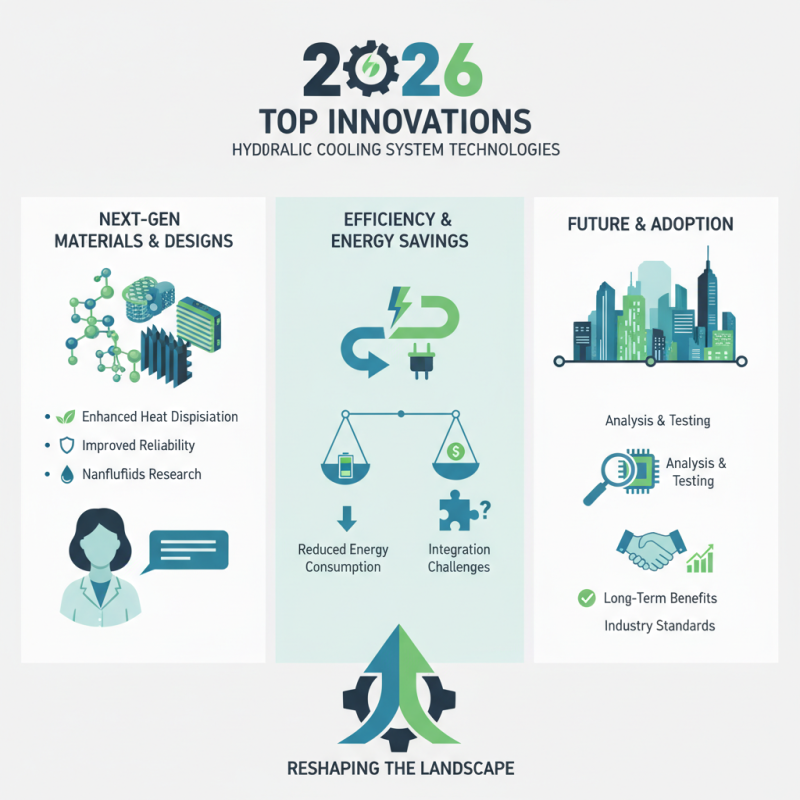
Today, many companies explore next-gen materials and designs. These innovations promise better heat dissipation and reliability. Some experiments in nanofluids are showing promising results. Small changes can lead to significant energy savings. However, challenges remain, such as cost-effectiveness and ease of integration into existing systems.
Moreover, some innovations may not meet industry standards or perform as expected. This creates a need for careful analysis and testing. As companies adopt these new technologies, they must prioritize long-term benefits over immediate gains. The evolution of hydraulic cooling systems has only just begun, and 2026 may unveil breakthroughs that reshape the landscape.
Overview of Hydraulic Cooling Systems and Their Applications
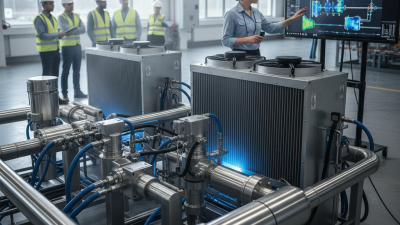
Hydraulic cooling systems play a crucial role in various industrial applications. These systems help maintain optimal temperatures in hydraulic machinery. In sectors like manufacturing and construction, overheating can lead to equipment failures. According to a report by the International Journal of Fluid Mechanics, effective cooling can improve system efficiency by up to 30%.
Applications for hydraulic cooling include agricultural machinery, mining equipment, and mobile machinery. These systems provide reliable cooling for hydraulic components, extending their lifespan. However, not all hydraulic cooling systems are equally efficient. Many designs still face challenges, such as thermal inefficiencies and space limitations.
Recent innovations focus on improving these systems. Researchers explore advanced materials and designs to enhance thermal performance. Some studies suggest that integrating nanofluids can increase heat transfer rates significantly. Yet, these advancements require careful evaluation and adaptation to real-world conditions. Balancing efficiency, cost, and practicality remains a vital consideration in developing new hydraulic cooling technologies.
2026 Top Innovations in Hydraulic Cooling System Technologies
This chart represents the impact of various innovations in hydraulic cooling system technologies expected in 2026. Each innovative aspect is scored on a scale from 1 to 10, indicating its potential significance in future applications.
Key Innovations in Hydraulic Cooling Technologies for 2026
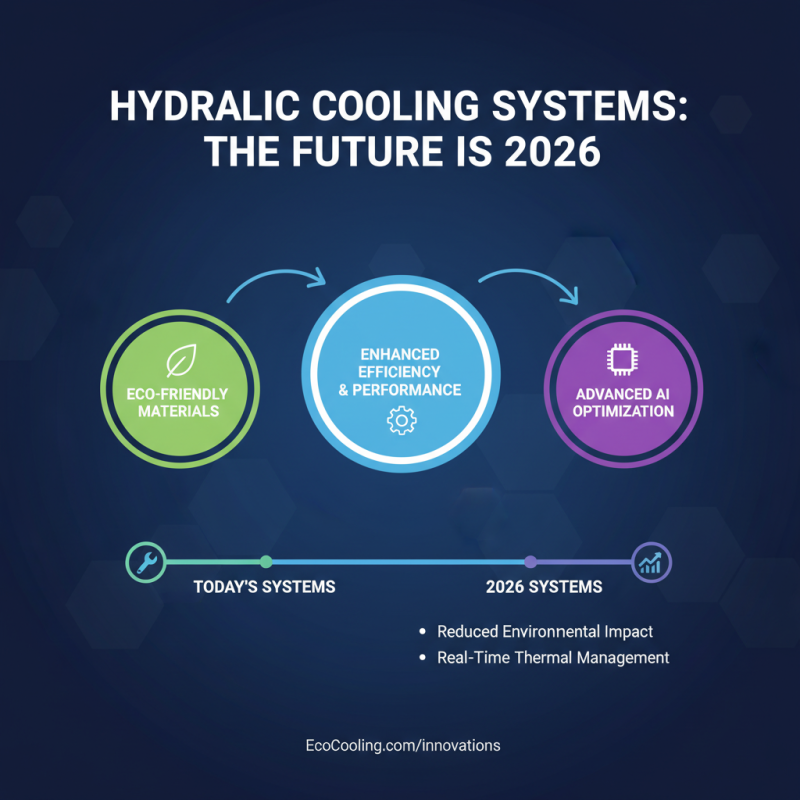
In 2026, hydraulic cooling systems are set to embrace innovative technologies that enhance efficiency and performance. A focus on eco-friendly materials will dominate. These materials not only reduce environmental impact but also improve thermal management. Advanced algorithms will optimize cooling performance in real-time. This ensures that systems maintain ideal temperatures.
Tips: Investing in training can help staff understand these new technologies better. Familiarity is key to harnessing their potential.
Another exciting area is the integration of IoT capabilities. Smart sensors will monitor system parameters closely. This allows for predictive maintenance and reduces downtime. However, this tech comes with challenges. Understanding data security will be crucial as systems become more connected.
Tips: Cybersecurity measures should be prioritized in every upgrade. A simple breach can lead to significant issues.
Lastly, the designs of hydraulic cooling systems are changing. Compact, modular units will replace large traditional systems. They occupy less space and can be tailored to specific needs. Reflecting on these trends is essential for future readiness. Embracing change is sometimes uncomfortable, but necessary in this fast-paced field.
Advancements in Heat Exchange Materials and Designs
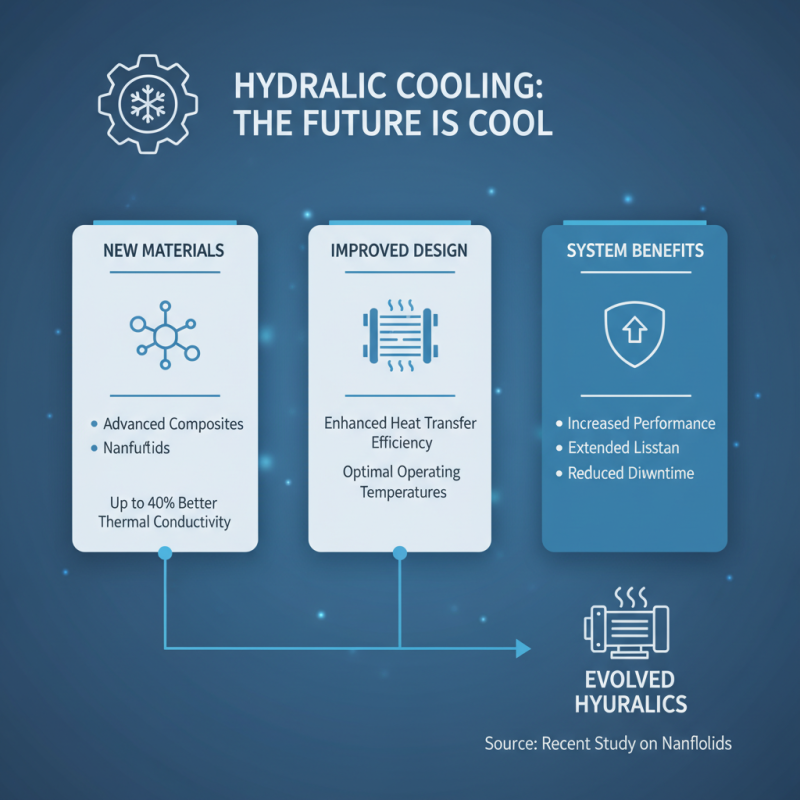
The advancements in heat exchange materials and designs are shaping the future of hydraulic cooling systems. Innovative materials like advanced composites and nanofluids improve heat transfer efficiency. For example, a recent study indicates that using nanofluids can enhance thermal conductivity by up to 40%. This significant increase helps maintain optimal operating temperatures for hydraulic systems.
New design strategies play a pivotal role as well. Biomimetic structures, inspired by natural systems, often outperform traditional designs. A report highlighted that these designs could enhance heat exchange rates by 25%. Adopting these approaches can lead to smaller, lighter systems, which is crucial for modern applications.
Tip: Regular assessments of your hydraulic cooling system can identify inefficiencies. Small changes in materials and designs can have a big impact. Keep an eye on emerging technologies. Also, consider training staff on new advancements. Understanding these innovations ensures better application and usage. Continuous learning aids adaptation to rapid changes.
Integration of Smart Sensors in Hydraulic Cooling Systems
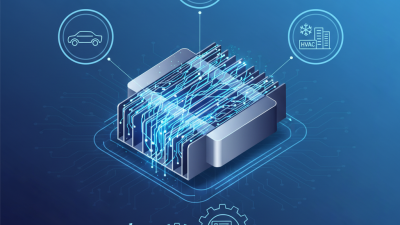
The integration of smart sensors in hydraulic cooling systems is revolutionizing efficiency. These sensors monitor temperature, flow rate, and pressure in real-time. They enable systems to adjust dynamically, responding to changing conditions. This adaptability leads to improved performance and reduced energy consumption.
Smart sensors also create opportunities for predictive maintenance. By collecting data, they can identify potential failures before they happen. Early detection minimizes downtime and repair costs. However, not all systems utilize this technology yet. There is still a gap in widespread adoption, often due to budget constraints.
Despite the clear advantages, challenges remain. Data management can be overwhelming with vast amounts of sensor data generated. Companies must find ways to analyze this information efficiently. Additionally, integrating new technology into existing systems can be complex. The path ahead requires continuous evaluation and adaptation.
2026 Top Innovations in Hydraulic Cooling System Technologies
- Integration of Smart Sensors in Hydraulic Cooling Systems
| Innovation |
Description |
Benefits |
Industry Applications |
| Real-Time Temperature Monitoring |
Utilization of smart sensors to continuously monitor coolant temperatures. |
Improved safety and efficiency through constant temperature regulation. |
Manufacturing, Automotive |
| Predictive Maintenance |
Sensors that analyze data to predict when maintenance is needed. |
Reduction in downtime and maintenance costs. |
Construction, Mining |
| Energy-Efficient Cooling |
Advanced sensor technology that optimizes cooling based on workload. |
Lower energy consumption and cost savings. |
Aerospace, Transportation |
| Leak Detection Systems |
Smart sensors that detect fluid leaks in cooling systems. |
Prevention of system failures and environmental hazards. |
Oil & Gas, Power Generation |
Sustainability Trends in Hydraulic Cooling Solutions
Sustainability is transforming hydraulic cooling solutions. Companies are increasingly focusing on eco-friendly technologies. These innovations aim to reduce environmental impact. Energy efficiency is a key goal in design improvements. Utilizing renewable resources in hydraulic systems is becoming more common.
Advanced cooling systems now feature recyclable materials. This is a crucial step in minimizing waste. However, there are challenges. Not all materials can be seamlessly integrated into existing systems. Engineers must explore new options and find creative solutions. Collaboration with researchers is essential to discover effective ways.
Furthermore, users are becoming more aware of sustainability. They demand efficient systems that lower their carbon footprint. Adapting to this trend isn't always easy. Not all innovations fit all industries. Striking a balance between performance and eco-friendliness remains complex. Some solutions may not yield immediate financial benefits. The industry must reflect on these challenges as it moves forward.