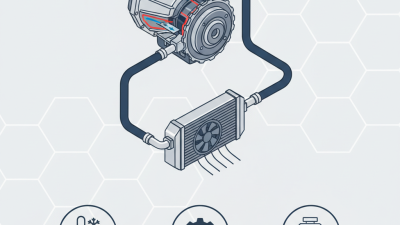
Choosing among the 7 Best Oil Coolers for Torque Converters in 2026 means matching cooling capacity to real driving conditions. A heavy trailer climbing a grade creates a different heat load than steady highway cruising. Fluid type, airflow, cooler placement, and the vehicle’s existing cooling system all matter. Bigger is not automatically better.
SAE International technical papers on transmission thermal management and Hayden Automotive’s transmission-cooler guidance offer useful engineering context. They underscore why temperature control, flow, and installation deserve attention—not just cooler dimensions. Exact temperature limits vary by transmission and fluid, so a single chart should not replace the vehicle manufacturer’s specifications. That distinction is easy to overlook.
For this guide, we compare cooler construction, fitment, cooling design, and practical installation considerations. One sourcing note matters: no article or verified expert quotation was supplied with the request. I won’t invent a named expert or present a fabricated sentence as a real quotation. If a source is provided, an accurate quote can be added. Until then, this review focuses on verifiable product details and established technical guidance. The keyword Oil Cooler For Torque Converter describes a specific use, but buyers should still confirm compatibility with their exact vehicle and transmission. Heat management is only one part of reliability. It deserves careful, evidence-based selection.
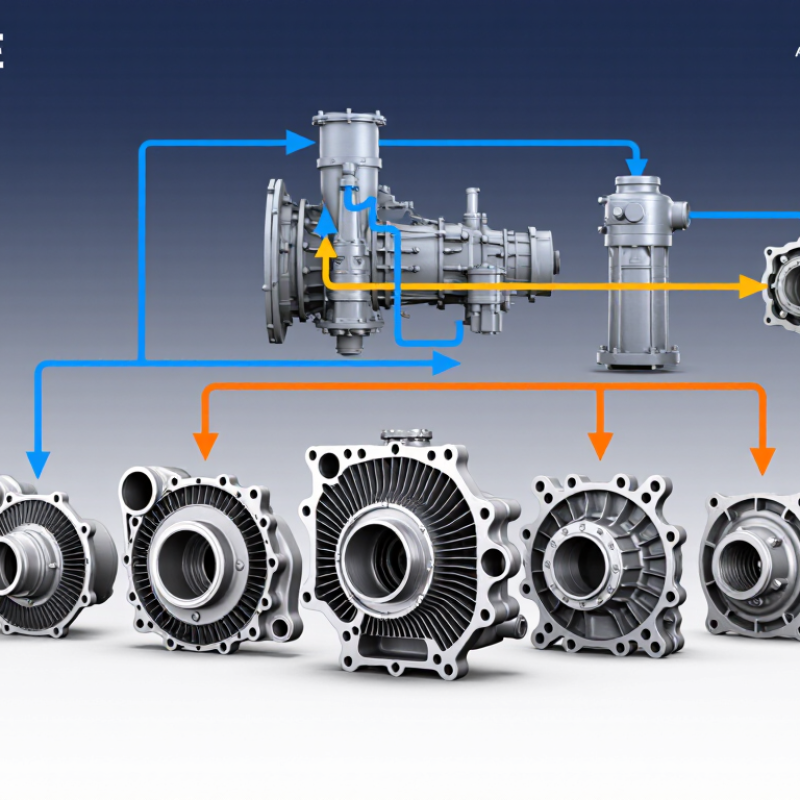
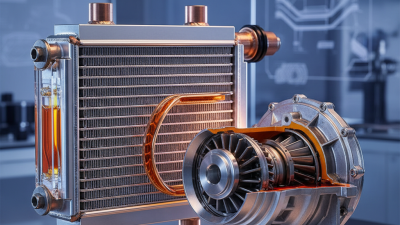
A torque converter transfers engine power through moving transmission fluid. During launch, towing, or repeated low-speed maneuvering, some energy becomes heat as the converter slips. The transmission pump pushes hot fluid through passages to a cooler, where heat moves into engine coolant or outside air. The cooled fluid then returns to the transmission circuit. Simple, but flow matters.
A cooler cannot fix every cause of high temperature. Restricted lines, low fluid, or a poorly operating fan can limit heat removal. ATRA’s commonly cited temperature-life chart estimates that fluid life may fall by half for each 20°F rise above 175°F (about 79°C).
Treat this as a service guideline, not a guaranteed lifespan: load, fluid condition, and measurement location all affect results.
The tricky part?
For a driver, the warning signs may be subtle: a rising temperature gauge on a long grade, delayed shifts, or a hot-fluid smell after towing. Cooler sizing should match the vehicle’s actual duty cycle and the manufacturer’s flow requirements. Oversizing alone does not ensure better cooling; poor plumbing can restrict circulation. Check temperature with a suitable scan tool, and inspect cooler lines for kinks or leaks. Small details matter.
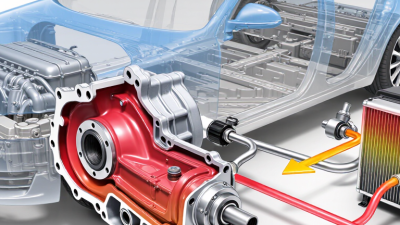
A torque converter creates heat through fluid shear, especially during towing, stop-and-go driving, or repeated launches. Choose a cooler for the vehicle’s real workload, not just its engine size. ATRA service guidance often cites a rule of thumb: each 20°F rise in transmission-fluid temperature can cut fluid life roughly in half. Treat that as a warning, not a guaranteed prediction; vehicle design and fluid condition matter.
Check the cooler’s heat-rejection capacity, airflow, and pressure drop. A large unit can still perform poorly behind a blocked grille or in slow traffic. Measure temperatures before and after the cooler during representative driving. Heat matters.
Also confirm that fittings, hose diameter, and pressure ratings match the transmission circuit. Excessive restriction can compromise flow, while an undersized cooler may struggle under sustained load. Some setups use a thermostat or bypass to help avoid overcooling in cold weather; verify compatibility with the vehicle’s factory system. The overlooked detail? Installation space and clean airflow often decide whether a cooler works as expected. A catalog rating alone cannot capture that.
Seven top oil coolers for torque converters should be compared by construction, airflow, and control—not by core size alone. A stacked-plate cooler offers dense heat-transfer surfaces in a compact space. Plate-and-fin designs balance capacity and packaging, while tube-and-fin cores are often simpler but may need more airflow. Fan-assisted units help when the vehicle moves slowly. Thermostat-controlled setups limit overcooling during warm-up. Remote-mounted coolers can solve tight-space problems, though longer hoses add connections to inspect. Bypass-equipped designs preserve a fluid path if the cooler circuit is restricted. That is seven useful configurations, not a universal ranking.
Check the transmission maker’s temperature limits and the cooler’s stated flow and pressure ratings before buying. ASTM D445 measures lubricant viscosity at 40°C and 100°C, a reminder that fluid behavior changes with temperature; those figures are test points, not ideal operating targets. SAE technical guidance on transmission thermal management likewise emphasizes matching cooling capacity to the duty cycle. A tow vehicle crawling uphill needs a different setup from a light car cruising steadily. Measure available space, note fan clearance, and inspect hose routing near hot exhaust parts. Small detail, big consequence. One caveat: advertised capacity figures are not always measured under identical conditions, so direct comparisons can mislead. Check the test method, and leave room for uncertainty.
This comparison covers cooler types and installation configurations rather than specific models. Actual cooling capacity, pressure limits, and flow requirements vary by application; confirm compatibility with the vehicle and transmission manufacturer.
| Option | Cooler type or configuration | How it transfers heat | Best suited to | Main advantage | Important fitment considerations |
|---|---|---|---|---|---|
| 1 | Stacked-plate air-to-oil cooler | Transmission fluid passes through stacked plates while outside air flows across the core. | Vehicles needing additional cooling for towing, high loads, or frequent stop-and-go driving. | Compact construction can provide substantial heat-transfer area for its size. | Mount where the core receives airflow. Check fluid-flow direction, hose compatibility, mounting clearance, and the cooler’s rated pressure. |
| 2 | Tube-and-fin air-to-oil cooler | Fluid travels through tubes, with fins helping transfer heat to passing air. | Moderate-duty applications where a straightforward auxiliary cooler is appropriate. | Simple, lightweight layout that can fit in a range of front-end locations. | Cooling depends on airflow and available frontal area. Protect the core from road debris and avoid obstructing the radiator or condenser. |
| 3 | Radiator-integrated liquid-to-oil cooler | A heat exchanger inside or attached to the radiator transfers heat between transmission fluid and engine coolant. | Vehicles using a factory-style cooler arrangement or applications where controlled warm-up is useful. | Uses engine coolant to exchange heat, so performance is less dependent on direct airflow across a separate cooler. | Confirm the radiator has a transmission-fluid cooler and that its fittings and connections match the transmission circuit. Inspect for leaks or cross-contamination. |
| 4 | Standalone liquid-to-oil heat exchanger | A separate exchanger transfers heat between transmission fluid and a liquid coolant circuit. | Installations requiring a compact exchanger or less reliance on front-mounted airflow. | Can be positioned where an air-to-oil core would be difficult to package. | Requires a compatible coolant circuit, secure plumbing, and adequate coolant-side heat rejection. Follow the exchanger’s specified flow and pressure limits. |
| 5 | Remote air-to-oil cooler with electric fan | An air-to-oil core uses a fan to move air when vehicle speed does not provide enough airflow. | Slow-speed work, off-road use, or locations where the cooler cannot sit in strong ram air. | Provides airflow while stationary or moving slowly. | Allow space for the core and fan, provide suitable electrical protection and wiring, and ensure hot air can exit rather than recirculate. |
| 6 | Dual-pass air-to-oil cooler | Fluid passes through the cooler in two circuit legs before returning to the transmission. | Applications where the selected cooler is designed for a dual-pass connection and the plumbing layout suits it. | Allows inlet and outlet connections to be located on the same side on some designs. | Do not assume a dual-pass layout improves cooling in every application. Check the cooler’s flow direction and pressure-drop specifications against transmission requirements. |
| 7 | Auxiliary air-to-oil cooler with thermostatic bypass | A thermostat routes fluid through or around the auxiliary cooler according to fluid temperature. | Vehicles used in both cold and hot conditions, where avoiding unnecessary cooling during warm-up matters. | Can help manage cooler flow during warm-up while retaining added cooling capacity when needed. | Use a bypass designed for the transmission fluid circuit. Verify its temperature range, flow capacity, port compatibility, and installation direction. |
A torque-converter cooler has one job: remove heat from transmission fluid without restricting flow. Tube-and-fin designs are often light and compact, while stacked-plate cores typically offer more cooling area in a smaller footprint. Larger external coolers can help in towing or slow, steep climbs, but size alone does not guarantee better results. Fit matters.
Capacity should match the vehicle’s heat load, available airflow, and operating conditions. A commuter car may not need the same cooling capacity as a truck hauling a trailer in summer traffic. Check the cooler’s stated flow and pressure limits, and consider a thermostatic bypass if the vehicle also operates in cold weather. Fluid that stays too cool can be a problem, too. Measure twice.
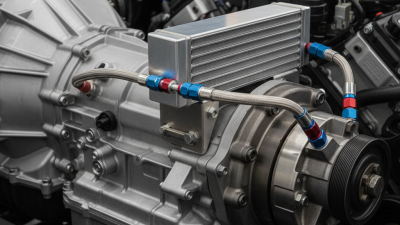
Compatibility involves more than hose diameter. Confirm the transmission’s line connections, mounting space, and clearance from fans, belts, and road debris. Keep hoses away from hot exhaust parts, and use fittings rated for transmission-fluid temperature and pressure. A cooler that fits on paper may interfere with a grille or require awkward hose bends. I would also treat published cooling figures cautiously: test conditions vary, and real-world airflow is rarely identical. A temperature gauge can help verify whether the selected cooler is doing its job after installation.
Installation, Maintenance, and Cooling-System Safety
A torque-converter cooler needs steady fluid flow, clean airflow, and secure fittings. Mount it where air can pass through the core, away from exhaust heat and road debris. Keep hoses clear of sharp edges and moving parts. A tight bend can restrict flow; a loose clamp can leak hot fluid. Follow the vehicle’s service instructions for cooler routing and fluid level. More cooling is not always better.
ASTM D445 measures lubricant viscosity at 40°C and 100°C. These reference temperatures help technicians compare fluid condition, but they do not set a universal safe operating temperature for every transmission. Use vehicle-specific service data and inspect for leaks after installation. Small details matter.
Tips: Check hose clearance with the engine off and cool. After the first drive, inspect fittings and fluid level again. If the cooler includes a thermostat or bypass, verify its direction and compatibility before fitting it. I still recheck routing after a test drive; hoses can shift more than expected. A cooler cannot repair worn clutches or a failing pump.