What Are the Benefits of Microchannel Heat Exchangers?
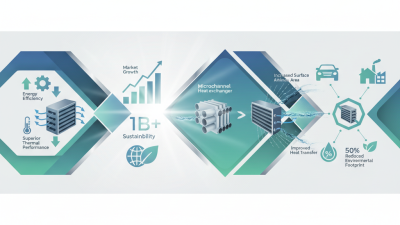
The use of Microchannel Heat Exchangers (MCHEs) has surged in various industries, driven by their unrivaled efficiency and compact design. According to a report from the U.S. Department of Energy, these systems can enhance heat transfer rates by up to 50% compared to traditional heat exchangers. This efficiency stems from their unique structure, allowing for reduced fluid flow resistance and improved thermal performance.
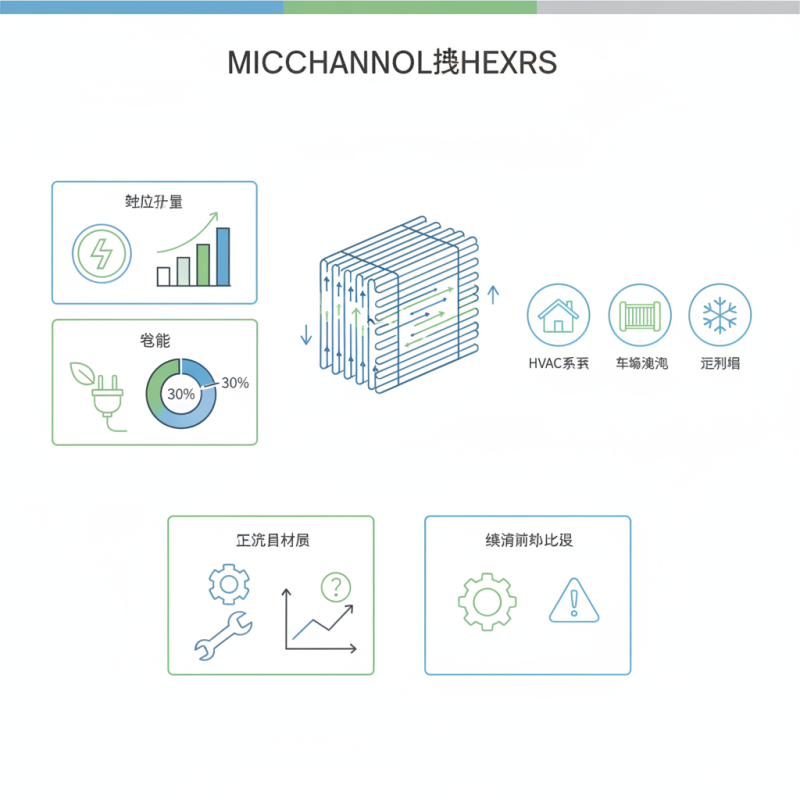
Microchannel technology finds application in HVAC systems, automotive cooling, and refrigeration. For instance, data from industry leaders indicate that MCHEs can save up to 30% in energy usage. Such benefits are essential as industries strive for sustainability. However, while MCHEs provide substantial advantages, they also require careful consideration of manufacturing methods and materials. The complexity of their design can lead to higher production costs and potential maintenance challenges.
As industries adapt to changing environmental standards, the demand for innovative solutions like Microchannel Heat Exchangers continues to rise. Their potential to optimize energy efficiency makes them a focal point for future engineering developments. However, businesses must address the challenges associated with their implementation to fully realize the benefits.
Overview of Microchannel Heat Exchangers
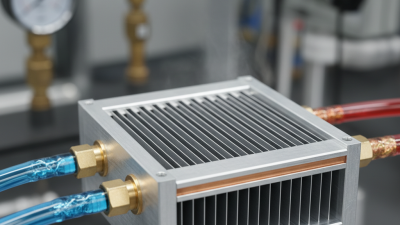
Microchannel heat exchangers are revolutionizing heat transfer technology. Their design features small flow channels that enhance efficiency and minimize space. These units often have a larger surface area relative to their size. This attribute allows for effective heat exchange, crucial in various applications, from HVAC systems to automotive cooling processes.
The compact structure of microchannel heat exchangers contributes significantly to their performance. Their lightweight nature makes installation simpler. However, the small channels can be prone to clogging. Cleaning and maintenance must be taken seriously to ensure longevity. It requires specialized knowledge to manage these systems.
In practical settings, microchannel heat exchangers can lead to energy savings. They operate effectively under varying thermal loads. Despite these benefits, imperfections exist. The manufacturing process can introduce variability in performance. This aspect warrants caution and careful evaluation when selecting these exchangers for critical applications.
Key Advantages of Microchannel Heat Exchangers
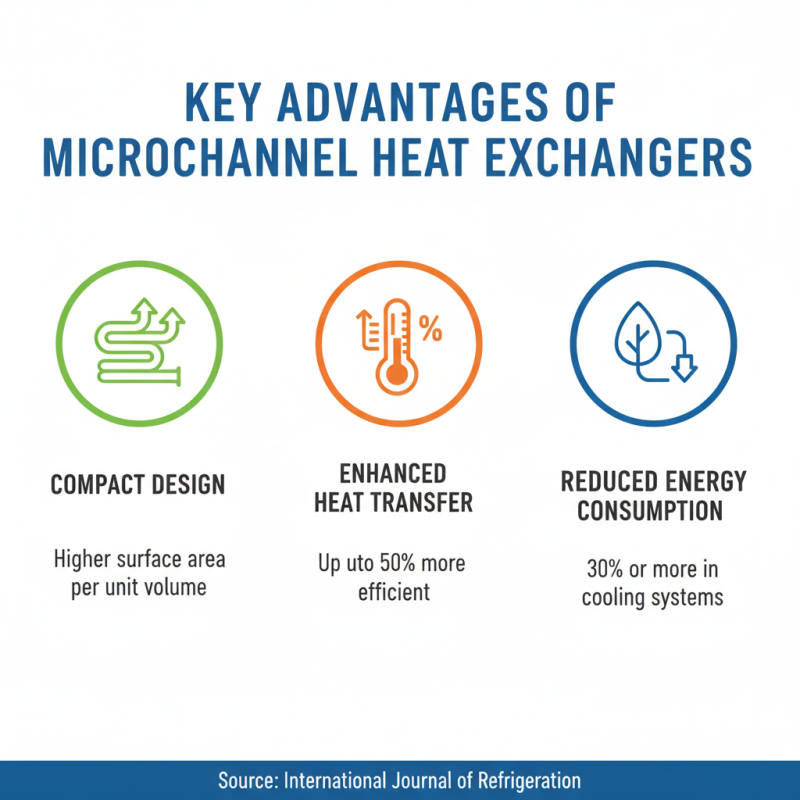
Microchannel heat exchangers present significant advantages in various industrial applications. Their compact design allows for higher surface area per unit volume. This feature enhances heat transfer efficiency by up to 50% compared to traditional exchangers. According to a recent industry report by the International Journal of Refrigeration, microchannel designs can reduce overall energy consumption in cooling systems by 30% or more.
Another benefit is the reduced refrigerant charge. Microchannel exchangers typically require less refrigerant, which can lower operational costs and enhance environmental sustainability. ASHRAE studies indicate that minimizing refrigerant use aligns with eco-friendly regulations. This results in lower greenhouse gas emissions and operating costs, appealing to businesses under environmental scrutiny.
Moreover, these heat exchangers exhibit impressive resistance to corrosion and fouling. Their construction often includes aluminum, which is durable yet lightweight. However, the initial investment may deter some companies. The transition to microchannel technology requires careful consideration, including the need for training and adjustments in existing infrastructure. Balancing cost and efficiency remains a critical challenge for many organizations looking to optimize thermal performance.
Applications of Microchannel Heat Exchangers in Various Industries
Microchannel heat exchangers are essential in various industries due to their efficiency and compact design. In the aerospace industry, they are used for lightweight cooling systems. According to a report from the American Institute of Aeronautics and Astronautics, microchannel designs can reduce weight by 30% compared to traditional systems. This advantage is critical in aviation, where every ounce counts.
In the automotive sector, microchannel heat exchangers play a vital role in vehicle cooling systems. Their smaller size allows for more innovative designs, improving fuel efficiency. A study by the Society of Automotive Engineers showed that these exchangers can enhance thermal performance by up to 50%. This improved performance can contribute to reduced emissions.
Tip: When considering microchannel heat exchangers, evaluate the specific thermal requirements of your application. The design must match the operational environment to achieve optimal results.
In the industrial sector, microchannel heat exchangers are increasingly being adopted in refrigeration and HVAC systems. They enable increased heat transfer rates, making systems more efficient. However, challenges still exist, such as potential clogging due to their small channels. Continued research is needed to address these concerns.
Tip: Regular maintenance and monitoring are crucial to prolong the life of these devices. Simple checks can prevent major failures.
Benefits of Microchannel Heat Exchangers in Various Industries
Comparison with Traditional Heat Exchangers
Microchannel heat exchangers offer distinct advantages over traditional models. Their compact size leads to lower material usage, which can reduce costs significantly. These heat exchangers have smaller flow passages. This design allows for improved heat transfer efficiency due to enhanced turbulence. As a result, they operate effectively even at lower fluid temperatures.
However, they are not without issues. The reduced size can lead to clogging, especially when dealing with fluids containing particulates. Maintenance might be more challenging compared to traditional systems. Additionally, while their efficiency is high, their manufacturing process can be more complex. This complexity may increase production costs initially, although long-term savings may offset this.
In contrast, traditional heat exchangers are often easier to service. Their larger flow paths make them less prone to blockages. But they tend to be bulkier, consuming more space and materials. The efficiency levels can also be lower, leading to potentially higher energy costs over time. Thus, while microchannel heat exchangers have clear benefits, careful consideration is needed when determining which system is best for a specific application.
Challenges and Considerations in Using Microchannel Technology
Microchannel heat exchangers offer significant advantages in thermal management, but they also present unique challenges. One major issue is the susceptibility to corrosion. In demanding environments, the materials used in microchannel designs need to withstand various fluids and temperatures. According to a report from the American Society of Mechanical Engineers (ASME), improper material selection can lead to a deterioration rate 20% faster than traditional designs. This presents a clear challenge in achieving long-term reliability.
Another consideration is the manufacturing process. Microchannel technology demands precise engineering and fabrication techniques. The small passages require advanced fabrication methods that can be costly. A survey by the International Journal of Refrigeration highlighted that 35% of manufacturers faced difficulties with scaling production without sacrificing quality. This can hinder the technology’s broader adoption, especially in cost-sensitive industries.
Lastly, the potential for fouling in microchannel designs is a concern. As fluid flows through narrow channels, debris may accumulate and hinder performance. A study by the Institute of Refrigeration found that 15% of microchannel heat exchangers experienced reduced efficiency due to fouling within the first year of operation. Professionals must find effective cleaning methods to maintain optimal functionality. These challenges necessitate continuous research and innovation in microchannel technologies.