Best Hydraulic Cooling System Solutions for Global Buyers?
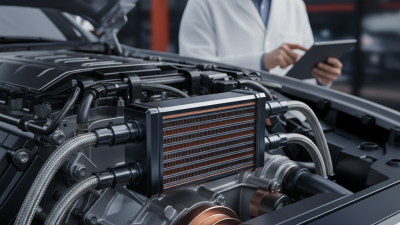
In today’s industrial landscape, the importance of an efficient Hydraulic Cooling System cannot be overstated. With machines operating at high capacities, effective cooling solutions are essential. They ensure the longevity and reliability of your equipment. Buyers globally face numerous options, but not all solutions are created equal.
Choosing the right Hydraulic Cooling System requires a blend of knowledge and practical experience. Factors like climate, machinery type, and operational demands play crucial roles. It’s not just about installation; maintenance practices and system adaptability are equally important. Users often overlook these aspects, leading to inefficiencies.
Navigating through various suppliers can be overwhelming. Many promise high performance, but how can one assess their credibility? Seek out manufacturers with a established reputation. Look for systems with proven track records. Engaging in community forums and expert networks can provide vital insights. Embracing a critical approach to selection will lead to the best solutions for your hydraulic cooling needs.
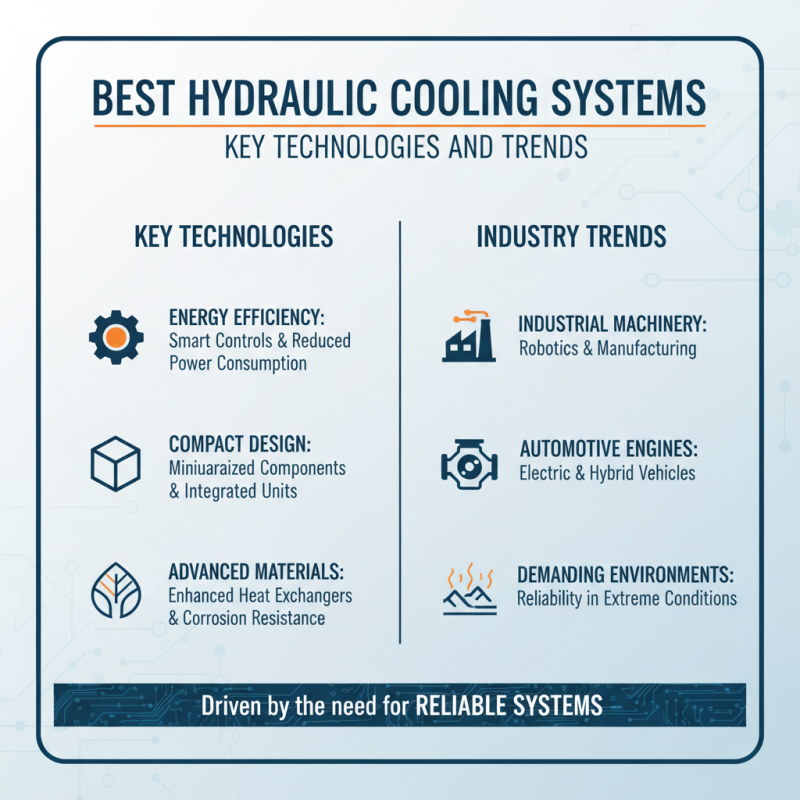
Best Hydraulic Cooling Systems: Key Technologies and Trends
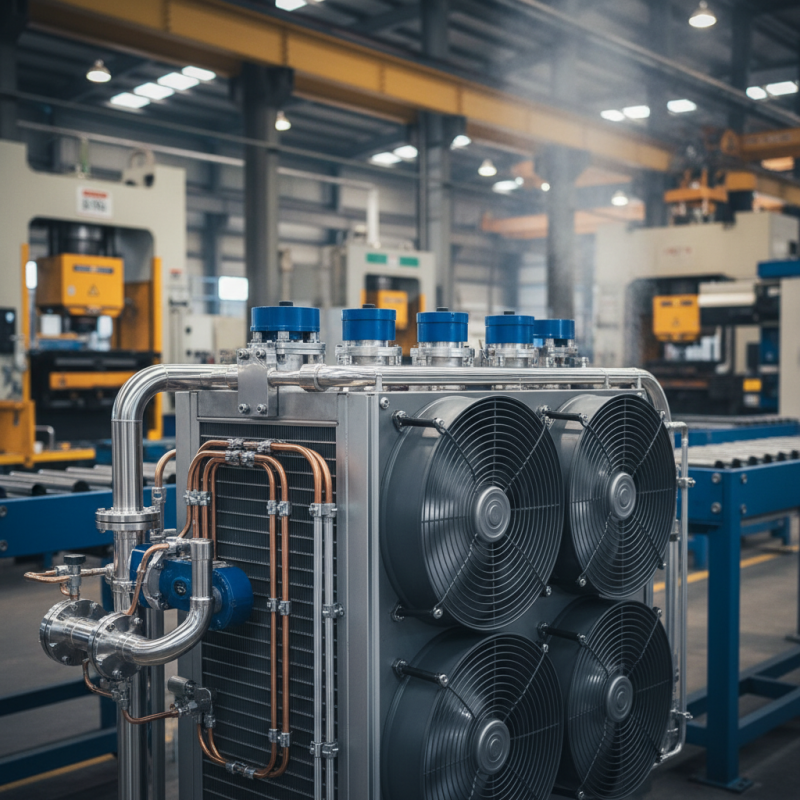
Hydraulic cooling systems are essential in various applications, from industrial machinery to automotive engines. Key technologies reflect a shift towards energy efficiency and compact design. Advanced materials enhance heat exchangers for better thermal performance. This evolution is driven by the need for reliable systems in demanding environments.
When selecting a hydraulic cooling system, consider its integration capabilities. Systems should smoothly fit into existing setups. Flexibility in design allows for adjustments in diverse applications. Regular maintenance checks can prevent costly damages and downtime.
Tips: Ensure appropriate fluid selection to optimize performance. Monitor fluid temperatures regularly for signs of overheating. Remember, efficiency is directly linked to system longevity. Engaging with industry professionals can offer insights into emerging technologies. Explore innovative solutions, but reflect on specific application needs for optimal results.
Market Analysis: Global Demand for Hydraulic Cooling Solutions
The global demand for hydraulic cooling solutions is on the rise. Industries such as construction, manufacturing, and transportation heavily rely on efficient cooling systems. These systems prevent overheating and ensure smooth operations. As various sectors expand, the need for reliable cooling solutions only intensifies.
Market analysis shows a growing trend towards advanced technology in hydraulic cooling. Buyers are looking for systems that offer better efficiency and sustainability. However, not all solutions meet these criteria. Some systems may fail to perform under high stress, leading to operational downtime. Therefore, buyers must evaluate options carefully, seeking experts who can guarantee reliability and efficiency.
Regional variations also impact demand. Some regions prioritize cost-effectiveness, while others focus on long-term durability. Buyers must think critically about their specific needs. Quick fixes may seem appealing, but they often lead to bigger problems down the road. Reflecting on these factors is essential for making informed decisions in this dynamic market.
Essential Components of Effective Hydraulic Cooling Systems
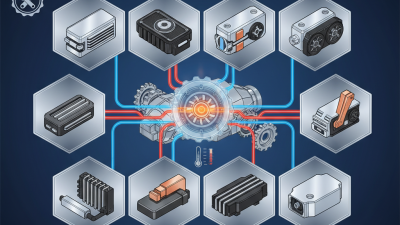
Hydraulic cooling systems play a vital role in maintaining optimal performance in machinery. They manage temperature effectively to prevent overheating. Essential components of these systems include heat exchangers, pumps, and coolers. Each part must work together seamlessly. When one component fails, it can lead to inefficiencies and increased operational costs.
Heat exchangers disperse excess heat from hydraulic fluid. They come in various designs, such as plate or shell-and-tube types. The right design depends on the specific application. Pumps circulate the fluid, ensuring the entire system functions efficiently. If a pump malfunctions, it can cause fluid stagnation. This could increase the temperature and degrade fluid quality.
Additionally, coolers often employ air or water to remove heat. The choice between air-cooled and water-cooled systems hinges on environmental considerations and space availability. Regular maintenance is crucial. Neglecting this can lead to scale buildup or fluid contamination. This could compromise the cooling system's effectiveness. Therefore, adopting a proactive approach to maintenance ensures longevity and reliability.
Best Hydraulic Cooling System Solutions for Global Buyers - Essential Components of Effective Hydraulic Cooling Systems
| Component |
Purpose |
Material |
Efficiency Rating |
Typical Applications |
| Heat Exchanger |
Removes heat from hydraulic fluid |
Aluminum / Copper |
85% |
Industrial machinery, construction equipment |
| Cooling Fan |
Enhances airflow across heat exchanger |
Plastic / Metal |
90% |
HVAC, automotive applications |
| Hydraulic Oil |
Transmits power and lubricates components |
Mineral oil / Synthetic |
70-90% |
Agriculture, manufacturing |
| Thermostatic Valve |
Regulates fluid temperature |
Brass / Stainless Steel |
85% |
Pressure systems, refrigeration |
Case Studies: Successful Hydraulic Cooling Implementations Worldwide
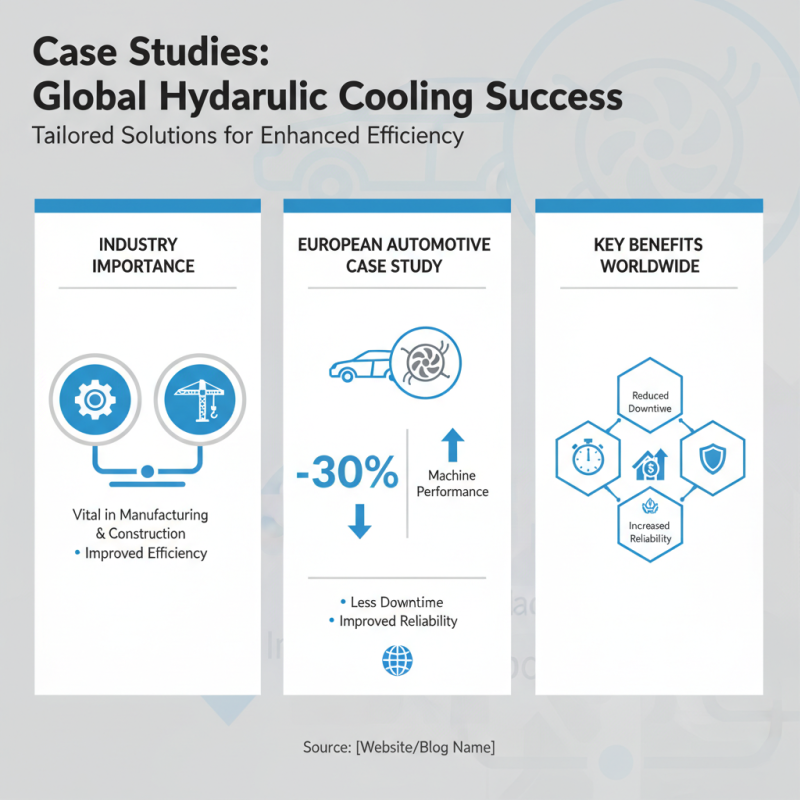
Hydraulic cooling systems are vital in various industries, from manufacturing to construction. Case studies from different regions show how tailored cooling solutions have improved efficiency. One notable example comes from the automotive sector in Europe. A custom hydraulic cooling system reduced operational temperatures by nearly 30%, significantly enhancing machine performance. This adjustment led to less downtime and improved reliability.
In another instance, a mining operation in Australia faced overheating issues. They implemented a more robust cooling design based on climate and workload. The new system not only improved performance but also decreased energy consumption by 15%. However, this project revealed some shortcomings. Integrating advanced technology with existing machinery brought challenges. Training staff to adapt to new systems proved essential yet time-consuming.
Furthermore, an agricultural machinery enterprise in South America aimed to enhance equipment lifespan. They invested in a cooling solution that employed heat exchangers. The modifications resulted in better thermal management. However, after the installation, unforeseen maintenance issues arose, prompting a need for routine evaluations. These real-life implementations showcase not only the success of hydraulic cooling systems but also the continuous learning process involved in optimizing them for diverse applications.
Future Innovations in Hydraulic Cooling Technologies and Solutions
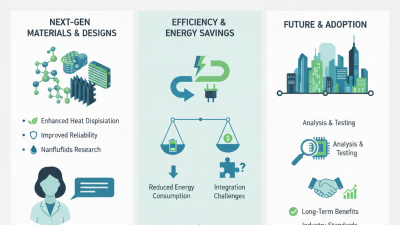
Innovations in hydraulic cooling technologies are transforming the industry. Experts predict a significant shift toward more efficient cooling systems by 2025. According to a recent report from the International Journal of Fluid Mechanics, the global market for hydraulic cooling solutions is expected to reach $1.5 billion, driven by increasing demands for energy efficiency and sustainability.
One of the most promising advancements is the integration of advanced materials. For instance, lightweight composites can enhance thermal conductivity while reducing overall weight. New cooling designs, like micro-channel heat exchangers, are also showing great potential. They can improve heat dissipation significantly, yet their implementation can be challenging and costly. Industry players must weigh these factors carefully.
Additionally, the future may see a rise in smart cooling systems equipped with IoT technology. These systems can optimize cooling performance based on real-time data. However, the technology suffers from security vulnerabilities, raising concerns that must be addressed. As hydraulic systems evolve, a balance of innovation and safety will be crucial for sustainable progress.