Best Industrial Radiators for 2026 How to Choose the Right One?
Choosing the right industrial radiators is crucial for optimal performance. As industries evolve, so does technology in heating solutions. By 2026, the market will witness significant advancements. This guide aims to highlight the best industrial radiators available.
Industrial radiators play a vital role in maintaining equipment efficiency. They ensure machines operate within safe temperature ranges. Selecting a unit requires careful consideration. Factors like size, efficiency, and design matter greatly. Quality radiators can lead to significant cost savings.
However, not all options are perfect. Some models may not meet specific industry needs. While durability is essential, aesthetics can also impact your choice. It’s a balancing act of performance and practicality. Keeping these points in mind will lead to a more informed decision.
Types of Industrial Radiators Available in 2026
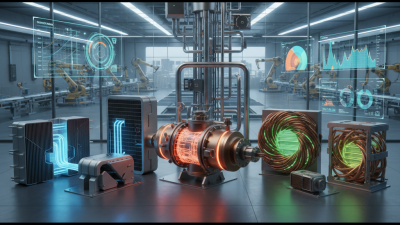
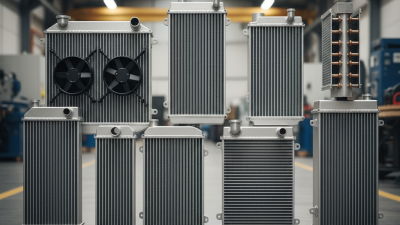
Industrial radiators are vital for efficient temperature regulation in various settings. In 2026, the market showcases several types of radiators, each tailored for specific applications. The primary types include water-cooled, air-cooled, and oil-cooled radiators. Water-cooled models offer efficient heat dissipation but are often limited to stationary systems. Meanwhile, air-cooled radiators are more versatile and typically used in mobile equipment.
Oil-cooled radiators stand out in high-performance scenarios, providing incredible heat transfer capabilities. According to a recent industry report, about 40% of manufacturers preferred oil-cooled systems due to their reliability. However, it’s crucial to consider your operational environment when selecting the type. High ambient temperatures may impair an air-cooled radiator's efficiency, while water-cooled systems might require extra maintenance depending on the quality of water used.
When choosing an industrial radiator, consider its size carefully. Oversized or undersized radiators can lead to inefficiencies. It’s also vital to evaluate materials. Corrosion resistance is essential, especially in harsh environments. Lastly, ensure that your cooling system aligns with industry standards for safety and efficacy. Balancing these elements may seem challenging, yet it is necessary to prevent operational failures.
Key Factors to Consider When Choosing Industrial Radiators
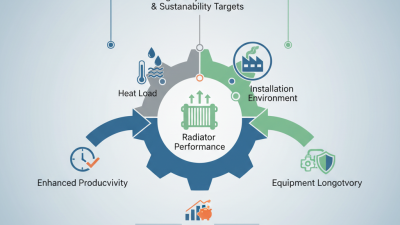
Choosing the right industrial radiator involves understanding several key factors. The efficiency of a radiator can greatly impact operational costs. A recent report indicates that improved radiator efficiency can reduce energy consumption by up to 30%. This makes it crucial to select models that maximize heat transfer while minimizing energy waste.
Size and compatibility are also paramount. An oversized radiator can lead to inefficient heating, while an undersized unit may fail to meet thermal demands. According to industry standards, calculating the required BTU (British Thermal Unit) output is essential for appropriate sizing. This ensures optimal performance and prevents potential overloading of the heating system.
Material choice plays a significant role in durability and performance. Steel and aluminum radiators offer different advantages. Steel, though heavier, often provides better longevity in harsh environments. Conversely, aluminum radiators are lighter and can offer enhanced heat dissipation. Research shows that the right material can improve lifespan by at least 15%, reducing long-term maintenance costs.
Comparative Analysis: Top Brands of Industrial Radiators in 2026
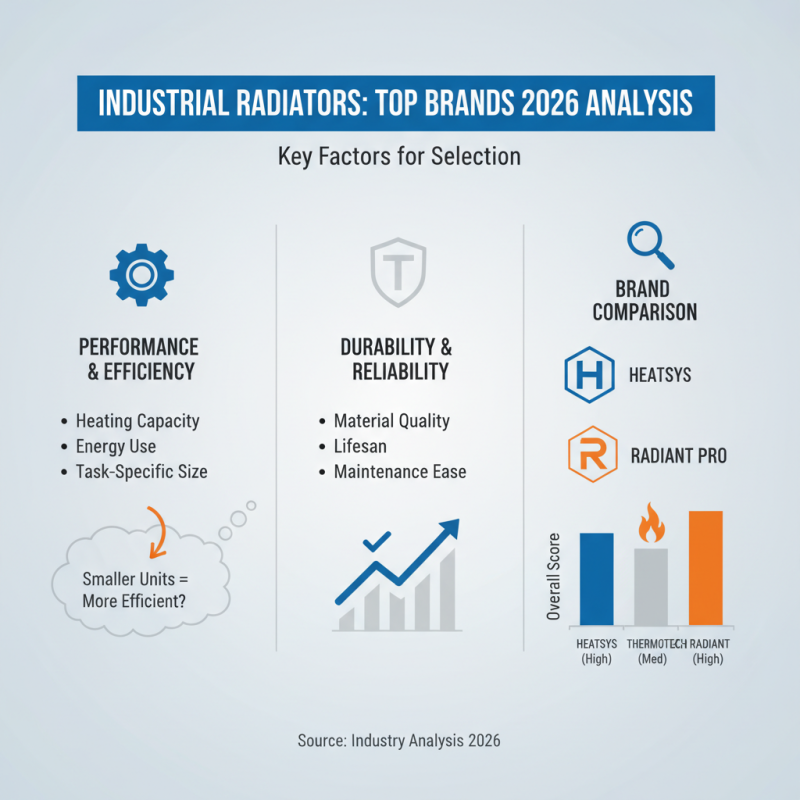
When selecting industrial radiators, understanding the various brands can be overwhelming. Each brand offers unique features that cater to specific needs. Analysts emphasize comparing performance, efficiency, and durability among different models. It is crucial to consider the heating capacity required for your operations. Sometimes, bigger isn’t better. Often, smaller units can be more efficient for particular tasks.
In 2026, leading brands focus on energy conservation and environmental impact. Features such as advanced thermal technologies can improve performance. Reliability is vital; an unreliable radiator can cause costly downtime. Examine user reviews and seek expert recommendations before making a decision. It is important to look beyond flashy marketing and understand the real-world performance of each radiator model. Ensure the potential risks of poor quality equipment are highlighted. Each choice should be weighed carefully, considering both immediate and long-term costs.
Moreover, past experiences with industrial radiators can reveal much about their effectiveness. Users often note issues like maintenance needs and operational inconsistencies. Your choice may be heavily influenced by these factors. It’s wise to reflect on how equipment choices can affect your overall workflow. Balancing cost with quality is a common challenge. The right radiator could greatly enhance your efficiency, while the wrong one could hinder operations.
Maintenance Tips for Prolonging the Life of Industrial Radiators
Industrial radiators are essential for maintaining optimal temperature conditions in various environments. Regular maintenance ensures their efficient operation and longevity. One crucial aspect is checking for leaks. Small leaks can become larger ones, leading to performance issues. Routine inspections can mitigate this risk.
Cleaning is another key maintenance task. Dust and debris can accumulate, blocking airflow. Using compressed air or a soft brush can help maintain clean surfaces. Pay attention to the fins and vents. Neglecting these areas could result in overheating.
It’s also vital to monitor fluid levels and quality. Low coolant levels affect heating efficiency. Contaminated fluids can lead to corrosion. Regularly testing and replacing fluids can prevent costly failures. Keep a log of maintenance activities. This practice enhances accountability and helps identify patterns. Mistakes can happen, but learning from them helps improve future maintenance strategies.