Best Oil Cooler For Torque Converter in 2026 for Your Vehicle?
In 2026, the search for the best oil cooler for torque converter systems is more crucial than ever. Automotive expert Mark Thompson emphasizes, "A proper oil cooler for torque converter can greatly enhance engine efficiency." This statement resonates deeply in a world where vehicle performance and longevity matter.
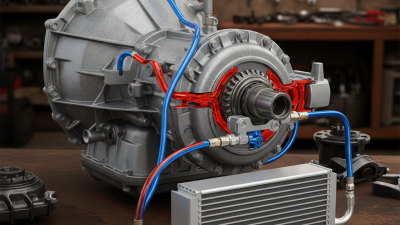
Oil coolers play a significant role in maintaining optimal temperatures for torque converters. They prevent overheating, which can lead to significant engine damage and costly repairs. However, many vehicle owners still overlook this vital component. Choosing the right oil cooler for torque converter systems can be challenging. The market is flooded with options, each promising the best results.
Understanding the specific needs of your vehicle is essential. Factors like engine size, driving conditions, and vehicle type should influence your choice. The right cooler not only protects your engine but also boosts overall performance. Yet, some choices might not deliver expected results. It’s vital to reflect on the product features and reliable brands that can meet your needs effectively.
Best Oil Cooler Types for Torque Converters in 2026
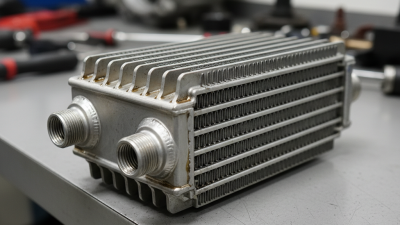
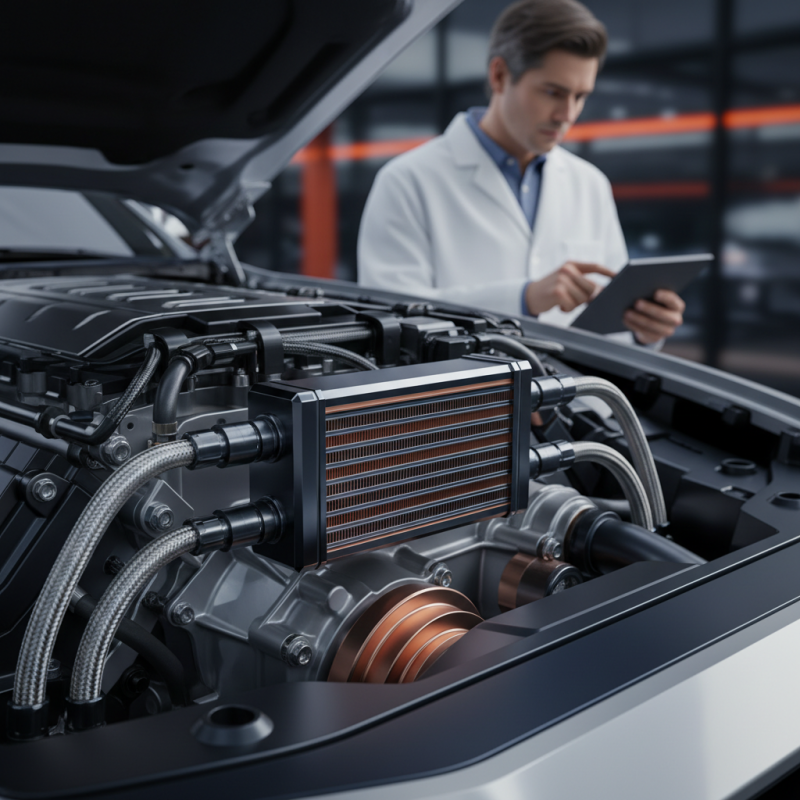
Selecting the right oil cooler for your torque converter can significantly improve your vehicle's performance. In 2026, several types of oil coolers are available, each catering to specific needs. Air-cooled systems remain popular for their simplicity. They use airflow to dissipate heat efficiently. Liquid-cooled options offer a higher cooling capacity and are better suited for high-performance applications. Both types have their merits depending on usage conditions.
Experts recommend evaluating your vehicle's requirements before making a choice. Data from industry reports suggests that vehicles with high torque need efficient cooling to avoid overheating. For heavy-duty trucks, dual-core oil coolers provide enhanced thermal management. This is vital, particularly for those who tow or carry heavy loads regularly.
Consider these tips when selecting an oil cooler. Ensure compatibility with your vehicle's transmission and mounting space. Regular maintenance is crucial to prevent clogs and ensure optimal flow. Even the best systems can underperform if neglected. Keeping an eye on temperature readings can provide insights into how well your cooler is functioning. Assessing these factors leads to smarter decisions for your vehicle’s needs.
Best Oil Cooler for Torque Converter in 2026
Key Features to Consider When Choosing an Oil Cooler
When selecting an oil cooler for your vehicle’s torque converter, several key features come into play. Cooling efficiency is crucial. Look for coolers that offer excellent heat dissipation. High-performance designs use advanced materials to maximize thermal conductivity. A well-ventilated cooler can prevent overheating during heavy loads.
Another important factor is compatibility. Your oil cooler must fit your vehicle's specific model and engine type. Check dimensions and mounting points before purchasing. It’s frustrating to find out the cooler doesn’t fit. Additionally, the flow rate of the oil cooler can impact performance. A cooler with an optimized flow path reduces pressure drop, enhancing efficiency.
Durability also matters. Choose a cooler made from robust materials that can withstand harsh conditions. Corrosion-resistant coatings extend the lifespan of the unit. Lastly, don’t forget user reviews. They provide insight into real-world performance. Balancing these features can lead to a well-informed decision for your vehicle. It’s all about ensuring efficiency and reliability on the road.
Industry Standards and Performance Metrics for Oil Coolers
When selecting the best oil cooler for a torque converter, understanding industry performance metrics is crucial. Effective cooling systems reduce fluid temperatures and enhance transmission longevity. According to industry reports, a standard torque converter cooler should maintain fluid temperatures below 200°F. This threshold significantly impacts overall transmission performance and efficiency.
Efficiency ratings are also important. High-efficiency oil coolers can improve performance by up to 30%. However, not all products meet these standards. Some cheaper models fail to provide the required thermal exchange rates. Look for models that specify their cooling capacity in BTU per hour. Always verify the specifications before installation.
Tips: Ensure proper installation to avoid leaks. Monitor fluid levels periodically. Overheating can lead to fluid degradation, potentially damaging your transmission. Choose coolers with corrosion-resistant materials for added longevity. Pay attention to airflow; inadequate ventilation can hinder performance.
Ultimately, selecting the right oil cooler can significantly influence your vehicle's efficiency and reliability. Careful consideration of these metrics is essential for optimal transmission performance.
Top Brands and Models of Oil Coolers for Vehicles in 2026
As we approach 2026, choosing the right oil cooler for your torque converter becomes crucial. A well-functioning oil cooler maintains optimal temperatures, ensuring that your vehicle runs smoothly. Various top brands offer a range of models tailored for different vehicle types. These coolers are essential for extending the lifespan of your transmission, especially in high-performance scenarios.
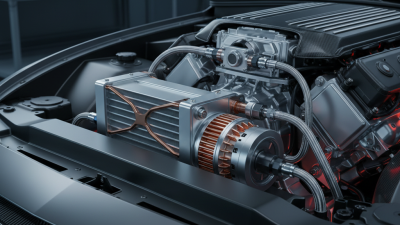
Several vehicle oil cooler models on the market stand out. Many feature durable construction, often utilizing aircraft-grade aluminum. This choice of materials enhances cooling efficiency and ensures longevity. Some models offer sleek designs, fitting seamlessly into various engine bays. It's important to note that not all coolers fit every vehicle type. Researching compatibility is vital to avoid potential roadblocks during installation.
However, even the best oil coolers have their downsides. Installation can sometimes be complex, requiring professional help. This added cost might not be suitable for every budget. Furthermore, performance can vary with different attachments and modifications. Addressing these aspects early can save you from future headaches. Balancing quality, performance, and cost is crucial in this decision-making process.
Best Oil Cooler For Torque Converter in 2026
| Model |
Cooling Capacity (BTU) |
Material |
Dimensions (inches) |
Weight (lbs) |
Price ($) |
| Model A |
20,000 |
Aluminum |
12 x 6 x 2 |
4.5 |
150 |
| Model B |
25,000 |
Steel |
14 x 7 x 3 |
5.0 |
180 |
| Model C |
18,000 |
Aluminum |
11 x 5 x 2 |
3.8 |
120 |
| Model D |
30,000 |
Steel |
15 x 8 x 4 |
6.5 |
200 |
Maintenance Tips for Optimal Functionality of Torque Converter Oil Coolers
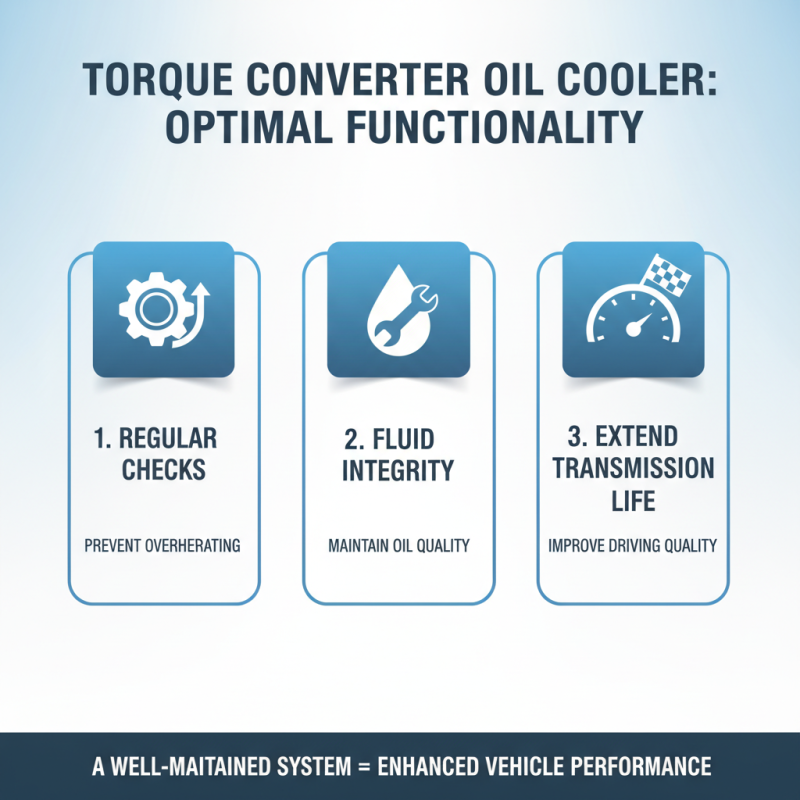
Maintaining the functionality of your torque converter oil cooler is essential for optimal vehicle performance. Regular checks can prevent overheating and maintain fluid integrity. A well-maintained cooler extends the life of your transmission and improves driving quality.
One tip is to regularly inspect the oil cooler for signs of leaks. Any fluid loss can severely affect performance. Ensure that all connections are tight. A loose connection can cause a gradual loss of fluid, leading to potential damage.
Inspect the coolant lines, too. Over time, these can wear down or become clogged. Clean them periodically to ensure proper flow. Flushing the system may also be beneficial, especially after long periods of use. This helps remove built-up debris and prevents overheating issues.
Routine maintenance can seem tedious, but neglecting these tasks can lead to costly repairs. Taking proactive measures is key. Listen to your vehicle. Any unusual noises or performance changes may indicate a problem. Being attentive can save time and money in the long run.