China Top Heat Exchanger Products and Their Applications in Industry
Heat exchangers play a vital role in various industrial applications. They facilitate the transfer of heat between fluids, enhancing efficiency and saving energy. This equipment is essential in sectors such as petrochemicals, power generation, and HVAC systems.
China has developed a strong position in the global heat exchanger market. The country’s innovation in design and materials allows for improved performance and durability. However, not all products meet high standards. It is critical for industries to choose reliable suppliers to avoid performance issues.
As industries evolve, the demand for advanced heat exchanger technologies increases. The shift towards sustainable solutions pushes manufacturers to enhance efficiency. Despite progress, challenges in quality control persist. This highlights the need for ongoing assessment and understanding of heat exchanger applications.
Overview of Heat Exchangers in China's Manufacturing Sector
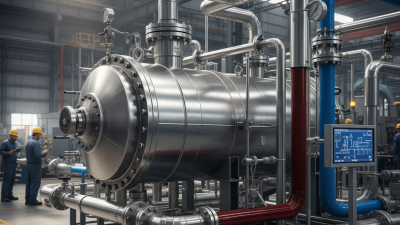
Heat exchangers play a critical role in China's manufacturing sector. These devices transfer heat between two or more fluids. They ensure efficient energy use and maintain optimal operating temperatures across various industrial processes. In industries like petrochemicals and power generation, these systems are vital for enhancing productivity.
China produces many types of heat exchangers, including shell and tube, plate, and finned tube varieties. Each type serves specific applications. For example, shell and tube designs are common in oil refineries. Plate heat exchangers find their place in food processing and HVAC systems. Their compact design improves thermal efficiency and facilitates easier maintenance.
Despite advancements, challenges remain. Some industries still rely on outdated technologies, leading to energy inefficiencies. The need for innovation is apparent. Upgrading to modern heat exchanger designs can significantly reduce operational costs. Investing in research and development is crucial for addressing these issues. Understanding the unique demands of different sectors can guide manufacturers in producing more efficient solutions.
Overview of Heat Exchangers in China's Manufacturing Sector
This chart illustrates the distribution of various heat exchanger types used in China's manufacturing sector, highlighting their respective applications across different industries.
Key Types of Heat Exchanger Products in China
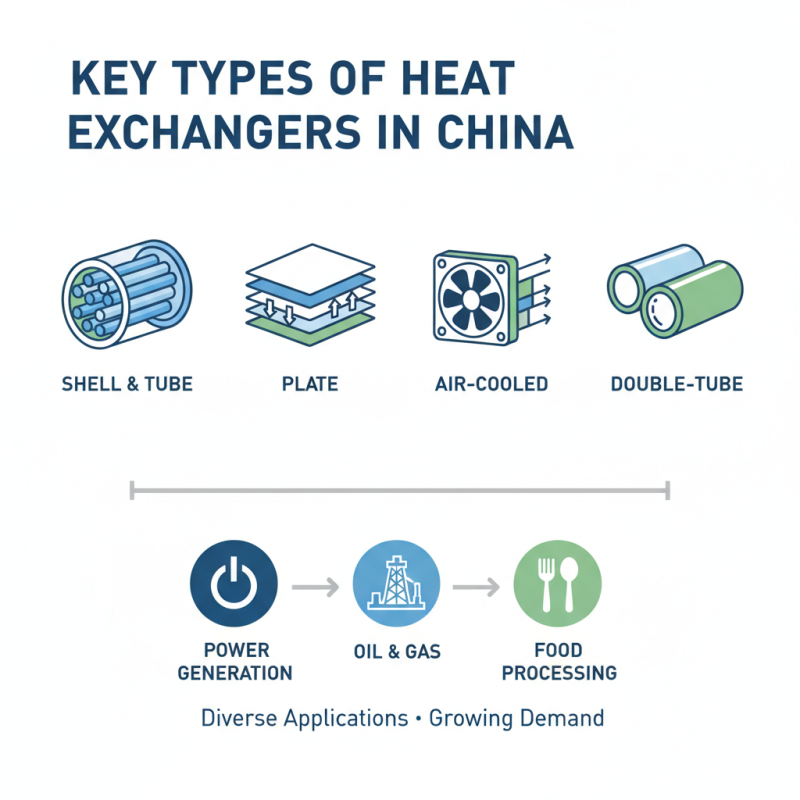
China's heat exchanger industry has seen significant advancements, driven by the growing demand across various sectors. The country produces several key types of heat exchangers, each designed for specific applications. These include shell and tube, plate, air-cooled, and double tube heat exchangers. Each type serves distinct purposes in industries such as power generation, oil and gas, and food processing.
For instance, shell and tube heat exchangers are widely used in oil refineries and chemical plants. According to a recent industry report, they account for nearly 40% of the heat exchanger market in China. This is due to their robust design and efficiency in handling high-pressure applications. Plate heat exchangers, on the other hand, are preferred in HVAC systems and food industries for their compact size and high thermal efficiency. With a market share of about 25%, they offer flexibility and ease of maintenance.
Despite the advancements, challenges remain. The industry faces issues related to product standardization and quality control. There are ongoing calls for stricter regulations to ensure reliability. Research indicates that about 20% of heat exchangers in the field may not meet optimal performance standards. Continuous improvement and adherence to international standards will be crucial for the future growth of this vital sector.
Major Applications of Heat Exchangers Across Industries
Heat exchangers play a crucial role in various industries. Their primary function is to transfer heat between two or more fluids without mixing them. This process is essential in sectors like petrochemical, power generation, and food processing. For instance, in the petrochemical industry, heat exchangers help recover heat from waste processes. This improves energy efficiency and reduces operational costs.
In the power generation sector, these devices are used to cool steam and condense it back into water. Using heat exchangers in this way maximizes energy recovery. In the food processing industry, they ensure proper heating or cooling of products. This is vital for maintaining safety and quality.
Despite their importance, the performance of heat exchangers can decline over time. Fouling and corrosion can lead to reduced efficiency. Regular maintenance is crucial but often overlooked. Industries must evaluate their usage regularly. Implementing smart monitoring can help identify issues before they become significant problems.
Innovative Technologies in China's Heat Exchanger Market
China's heat exchanger market is rapidly evolving.
Innovative technologies are shaping how industries operate. New materials improve efficiency. Enhanced designs optimize performance for various applications.
One notable trend is the use of advanced coatings.
These coatings enhance heat transfer and corrosion resistance. As a result, equipment lasts longer and requires less maintenance.
Moreover, compact design innovations are saving space. They enable industries to maximize productivity without compromising quality.
Nonetheless, challenges remain. Some manufacturers struggle with quality control.
Not all technologies deliver the promised results. Inconsistent standards across the industry create uncertainty.
Users must remain vigilant when selecting heat exchangers for critical applications.
Every decision impacts the overall efficiency of their operations.
Future Trends and Challenges for Heat Exchangers in China
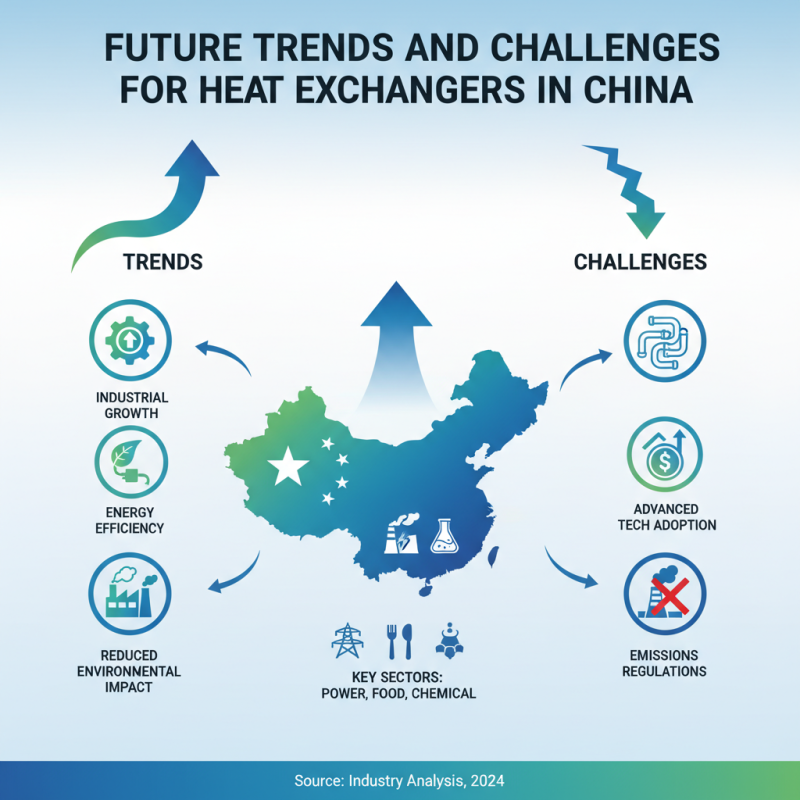
The future of heat exchangers in China faces significant trends and challenges. With rapid industrial growth, the demand for efficient heat transfer solutions is soaring. Industries such as power generation, food processing, and chemical manufacturing are key areas. They require advanced heat exchanger technology to improve energy efficiency and reduce environmental impact.
One critical challenge is the need for innovation. Many existing designs do not meet the latest energy standards. Manufacturers must invest in research and development. New materials and designs could enhance performance. Yet, there is a question of cost-effectiveness. Some options may be prohibitively expensive for smaller companies. Balancing performance and affordability remains a significant hurdle.
**Tip:** Regular maintenance of heat exchangers ensures optimal performance. Schedule routine checks to prevent costly failures.
Sustainability is also at the forefront. Regulations are pushing for eco-friendly designs. The industry must adapt to stricter environmental policies. This shift requires collaboration between engineers and policymakers. However, the transition may be slow, leading to industry fragmentation.
**Tip:** Keep abreast of regulatory changes. Staying informed will help your business navigate upcoming challenges.
Investing in training for engineers is essential. A skilled workforce will better understand the complexities of new technologies. However, it is often overlooked in budget allocations. Ignoring employee development can hinder progress in adopting innovative solutions.