China Top Plate-Fin Heat Exchanger Manufacturers and Innovations?
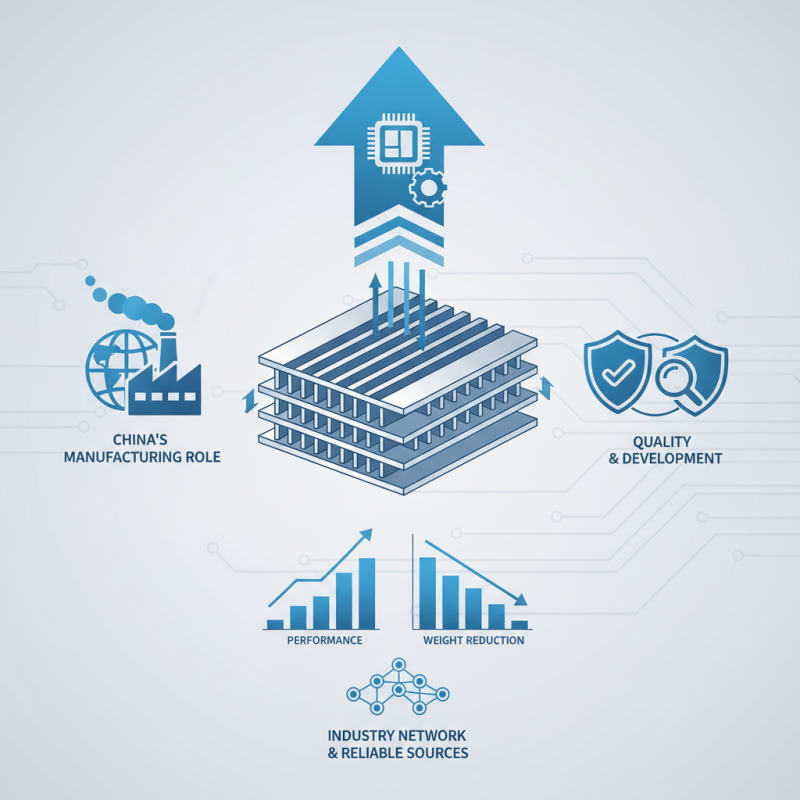
The Plate-Fin Heat Exchanger is an essential component in various industries, including aerospace and automotive. These devices are engineered for efficient thermal management. China has emerged as a key player in manufacturing these heat exchangers. The country's manufacturers focus on innovation, producing high-quality solutions.
Recent advancements highlight the growing expertise in this sector. Companies are investing in research and development to enhance product performance. Innovative designs are addressing challenges like weight reduction and heat transfer efficiency. However, not all products meet the same standards. Some manufacturers still struggle with quality control.
This article explores leading Plate-Fin Heat Exchanger manufacturers in China. It examines their innovations and contributions to the industry. By understanding the landscape, we can identify reliable sources. This helps in opting for the best solutions for thermal management needs.
China's Leading Manufacturers of Plate-Fin Heat Exchangers
China is becoming a notable player in the plate-fin heat exchanger market. The country has seen
significant advancements in design and manufacturing techniques. According to a 2022 market report, China's production of
plate-fin heat exchangers grew by 15% over the previous year. This
booming growth reflects the increasing demand for energy-efficient solutions in various sectors,
including oil and gas, power generation, and HVAC.
Several manufacturers in China are leveraging innovative technologies. They are focusing on enhanced thermal performance and
compact designs. Some companies are implementing advanced materials to improve durability and heat transfer efficiency.
While many innovations exist, challenges remain, such as ensuring product reliability under extreme conditions.
Industry experts note that companies need to address these issues to compete globally.
Sustainability is also becoming a key focus. Manufacturers are exploring eco-friendly materials and processes.
Reports indicate that about 30% of new projects in 2023 are targeting
lower emissions. However, there is a need for more research on long-term environmental impacts. This dual focus on
performance and sustainability reflects the evolving needs of the market.
Key Innovations in Plate-Fin Heat Exchanger Technology in China
In recent years, China has seen significant advancements in plate-fin heat exchanger technology. These innovations focus on improving thermal efficiency and reducing manufacturing costs. Engineers are exploring new materials that enhance durability and resistance to corrosion. Such developments are crucial for industries that rely heavily on heat exchangers.
One emerging trend is the integration of advanced computational fluid dynamics (CFD). This method aids in optimizing the design of plate-fin structures. By simulating fluid flows, manufacturers can identify the most effective configurations. However, the reliance on complex software brings its own set of challenges. Not all engineers are trained in CFD applications, which can lead to inconsistent design practices.
Another interesting aspect involves eco-friendly designs. Many manufacturers are prioritizing sustainable methods in production processes. Yet, the balance between sustainability and cost-effectiveness remains a contentious issue. Manufacturers must often choose between premium materials and lower costs. This ongoing debate highlights the need for continual reflection on priorities within the industry.
Key Innovations in Plate-Fin Heat Exchanger Technology in China
Market Trends Impacting China's Plate-Fin Heat Exchanger Industry
The plate-fin heat exchanger industry in China is witnessing significant changes. Driven by energy efficiency demands, the market is shifting. According to a recent industry report, the market is expected to grow at a CAGR of 8.5% through 2025. This growth reflects a strong push towards sustainability and reducing carbon emissions.
Innovation plays a crucial role in this transformation. Manufacturers are adopting advanced materials. For instance, lighter alloys are gaining popularity to enhance thermal performance. The emergence of smart technologies is also noteworthy. Companies are investing in IoT-enabled systems for real-time monitoring and maintenance. This leads to higher efficiency and minimizes downtime.
However, challenges persist. The high costs of advanced materials can limit accessibility for smaller manufacturers. Many companies face difficulties in upgrading outdated systems. The talent gap in specialized engineering fields is another concern. Addressing these challenges will be vital for sustainable growth. The industry must balance innovation with practical implementation to thrive in a rapidly evolving market.
China Top Plate-Fin Heat Exchanger Manufacturers and Innovations
| Manufacturer Type |
Innovation Focus |
Market Share (%) |
Annual Revenue (Million USD) |
Key Application Sectors |
| Established Manufacturers |
Enhanced thermal efficiency, lightweight materials |
40 |
250 |
Oil & Gas, HVAC |
| Emerging Startups |
Nano-coating technology, modular designs |
15 |
75 |
Chemical processing, Renewable energy |
| Medium-sized Enterprises |
Automated manufacturing processes, advanced simulation |
25 |
150 |
Power generation, Automotive |
| R&D Focused Companies |
Sustainable materials, innovative heat transfer solutions |
10 |
50 |
Aerospace, Pharmaceuticals |
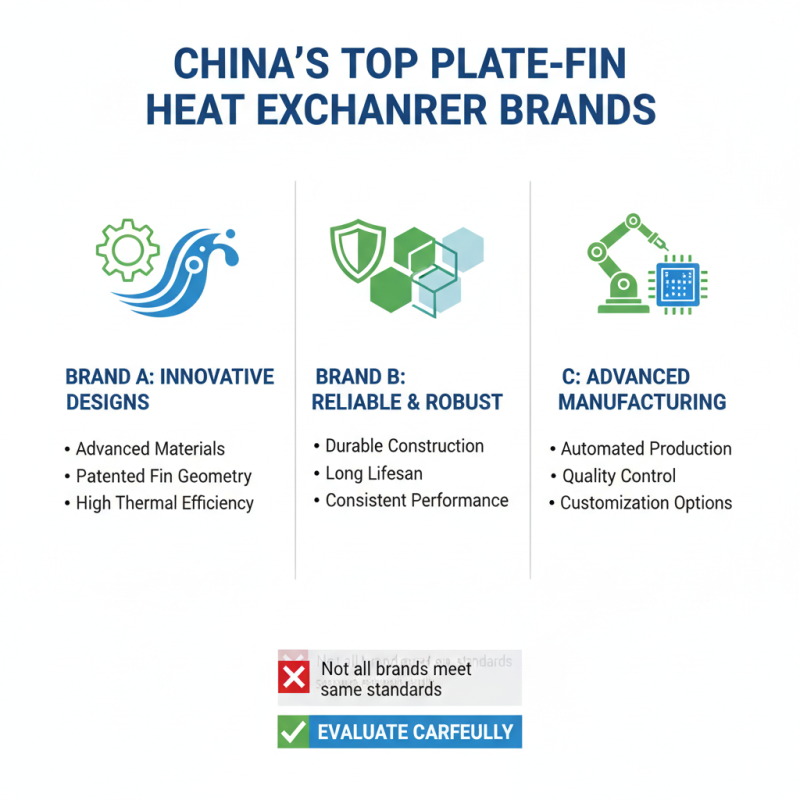
Comparison of Top Plate-Fin Heat Exchanger Brands in China
Plate-fin heat exchangers are integral in various industries, providing efficient thermal management. In China, several manufacturers stand out due to their innovative approaches and reliable designs. These companies are leveraging advanced materials and manufacturing techniques to enhance performance. However, not all brands meet the same standards, and consumers must evaluate them carefully.
Some manufacturers prioritize energy efficiency, promoting lower operational costs. Others may focus on compact designs that fit into tighter spaces. The challenge lies in balancing performance and durability. While many models boast high efficiency, some may have quality control issues. Furthermore, customer feedback often highlights inconsistency among different batches, drawing attention to potential production flaws.
Researching different brands is essential. Reviews and technical specifications provide vital insights. However, consumers often find it difficult to navigate the technical jargon. Evaluating user experiences can reveal hidden strengths and weaknesses. It’s clear that while innovation is thriving, potential buyers should remain vigilant and discerning.
Challenges and Future Directions for Chinese Plate-Fin Heat Exchanger Makers
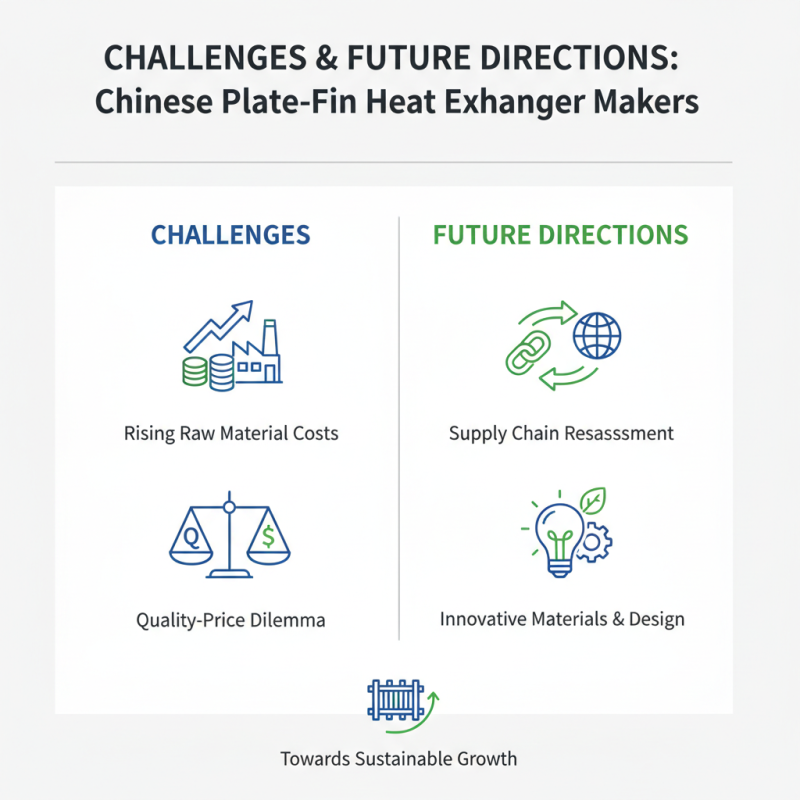
The plate-fin heat exchanger (PFHE) market in China faces unique challenges. One significant issue is the rising raw material costs. Manufacturers often struggle to maintain competitive pricing while ensuring quality. This dilemma forces many companies to reassess their supply chain strategies. Innovative materials and design techniques are essential to curb these escalating costs.
Sustainability is another pressing concern. The production process for plate-fin heat exchangers can generate considerable waste. As environmental regulations tighten, manufacturers must adapt their practices. Implementing more eco-friendly approaches may require initial investment. However, the long-term benefits outweigh these short-term challenges.
Moreover, there is a skills gap in the workforce. Many workers lack specialized training needed for advanced manufacturing techniques. This knowledge deficit can hinder innovation and efficiency. Companies must invest in training programs. This step could enhance worker skills and, ultimately, product quality. Developing a skilled workforce is crucial for staying competitive in the evolving market.