How to Choose the Best Oil Cooler for a Torque Converter?
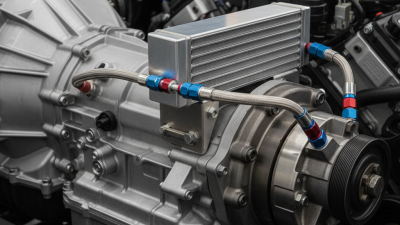
Choosing the right Oil Cooler For Torque Converter begins with understanding heat, not simply buying the largest available unit. A torque converter transfers power through fluid, and that fluid can become extremely hot during towing, hill climbs, stop-and-go traffic, or repeated launches. Excessive heat reduces fluid life and can accelerate clutch, seal, and bearing wear.
Sonnax technical educator Matt Graves has emphasized a practical truth: “Heat is the enemy of transmission life.” That warning matters when comparing stacked-plate, tube-and-fin, and liquid-to-liquid cooler designs. Stacked-plate models usually provide stronger cooling in demanding applications, while tube-and-fin units may offer easier installation and lower cost. Liquid-to-liquid systems can stabilize temperature effectively, especially in changing weather, but they may transfer engine heat into the transmission during cold starts.
I once treated cooler size as the only deciding factor. That was a poor assumption. Flow restriction, hose diameter, mounting position, airflow, and the vehicle’s original cooler circuit also matter. A cooler that is too restrictive can create unwanted pressure loss. A poorly mounted cooler may receive little fresh air behind a bumper or grille.
This guide explains how to match an Oil Cooler For Torque Converter with vehicle weight, towing conditions, fluid specifications, and available space. It also considers thermostatic bypass valves, temperature monitoring, fitting quality, and realistic installation limits. The perfect choice is not always the biggest cooler. It is the cooler that controls temperature without creating new problems. Practical testing still matters.
Identify Your Torque Converter Cooling Requirements
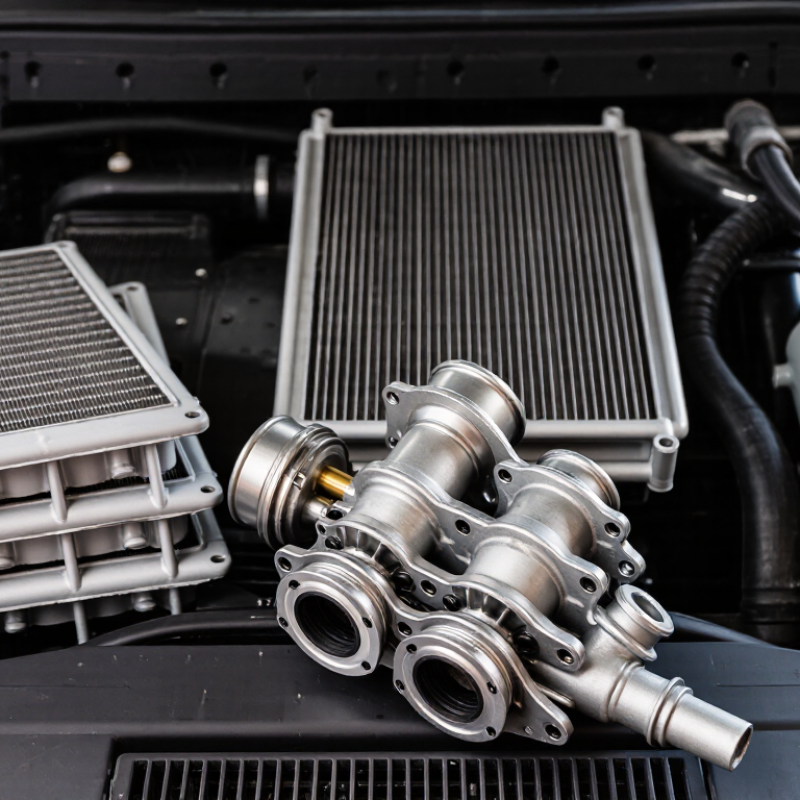
Choosing begins with heat, not cooler size. Identify the converter’s real working conditions first. Record vehicle weight, towing load, ambient temperature, stall speed, and driving terrain. A converter working in deep sand produces more heat than one cruising on a highway. Service data from the Automatic Transmission Rebuilders Association commonly treats 200°F as a serious monitoring point, while temperatures near 220°F demand prompt investigation. These figures are useful guides, not universal limits.
Measure before selecting. Install temperature sensors at the converter outlet and cooler return line. A persistent outlet temperature above 200°F suggests insufficient cooling, excessive slip, or restricted airflow. The 2023 Vehicle Technologies Office Annual Merit Review highlights thermal control as a major factor in drivetrain efficiency and durability. That principle applies here. A cooler with high advertised capacity may still fail behind a blocked grille or undersized fan.
Check pressure drop, hose routing, fitting size, and fluid compatibility. SAE J1532 provides relevant test requirements for automatic-transmission oil-cooler hose. Use its guidance when evaluating hose quality and installation safety. I would avoid choosing from horsepower ratings alone. They often hide the actual heat load. A simple calculation can mislead. Real towing data is better. Log temperatures on the hardest route, then select a cooler that maintains stable return temperatures without creating excessive restriction. Leaving some thermal capacity unused is safer than operating at the edge.
Compare Oil Cooler Types and Heat-Transfer Designs
How to Choose the Best Oil Cooler for a Torque Converter?
Choosing an oil cooler starts with the vehicle’s heat load, not its appearance. A daily-driven vehicle may need an air-to-oil cooler with moderate capacity. Towing, racing, and steep terrain create much higher thermal demand. Measure transmission fluid temperature during real operation. Short test drives can hide heat buildup.
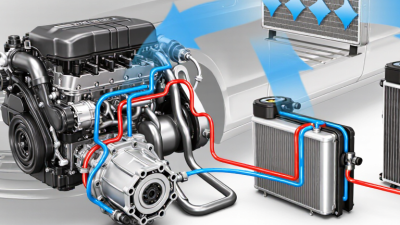
Air-to-oil coolers reject heat through airflow. They work well when mounted behind a grille with steady air movement. Tube-and-fin designs are usually lighter and less expensive. Stacked-plate designs transfer heat more efficiently and often provide greater cooling in compact spaces. However, they can create higher flow resistance. That matters when the transmission pump has limited capacity.
Liquid-to-liquid coolers use engine coolant to control fluid temperature. They perform consistently in traffic, winter conditions, and low-airflow areas. Their weakness is shared heat. Excess transmission heat can enter the coolant system. Check the cooler’s rated pressure, hose size, and allowable flow before installation. A restrictive fitting can reduce real-world performance.
Design details matter. Larger surface area helps, but poor airflow can cancel that advantage. Keep hoses short and protected from exhaust heat. Use temperature readings before and after the cooler. A cooler that looks impressive may still underperform. Selection sometimes involves compromise, and the first choice may need revision after testing.
Match Cooler Capacity to Vehicle and Driving Conditions
How to Choose the Best Oil Cooler for a Torque Converter?
Match cooler capacity to the vehicle and its driving conditions.
A light sedan commuting on level roads needs less cooling than a loaded truck climbing mountain grades. Vehicle weight, trailer load, engine output, ambient temperature, airflow, and converter slip all increase thermal demand. During slow towing, the converter may multiply torque while producing substantial heat.
Heat tells the truth. Measure it.
The Society of Automotive Engineers’ SAE J1532 standard shows why cooler ratings require careful comparison. Test temperatures, oil flow, and airflow can change the published result. A larger rating does not always mean better real-world performance. ATRA technical guidance commonly places many automatic transmissions near 175–200°F during normal operation. It also warns that sustained temperatures above roughly 220°F accelerate fluid oxidation and component wear.
My first sizing mistake was choosing by connection size alone. The fittings matched, but airflow was poor behind the bumper.
Tips:
Select a cooler with tested capacity above your estimated load, not merely the catalog minimum. Use a stacked-plate design when space and airflow are limited. For towing, add temperature monitoring near the transmission outlet. Check pressure loss, hose routing, and mounting strength. A bypass thermostat can help prevent overcooling in cold climates. Recheck temperatures after a loaded climb, because an empty-road test proves very little.
Evaluate Durability, Maintenance, and Overall Value
How to Choose the Best Oil Cooler for a Torque Converter?
Evaluate Durability, Maintenance, and Overall Value
A durable oil cooler should handle heat, vibration, pressure, and road debris. Look for strong metal construction and secure connections. Finned surfaces need protection from stones and mud. In practical inspections, loose fittings often cause more trouble than weak cooling capacity. Check the cooler’s pressure rating against your transmission system. Leave a safety margin.
Maintenance should remain simple. A removable screen can trap insects, dust, and small fragments before they block airflow. Inspect the fins during routine servicing, especially after driving on gravel roads. Bent fins reduce airflow. Flush the cooling circuit according to the vehicle maker’s procedure. Never assume clean-looking fluid means a clean cooler. Internal restrictions may remain hidden.
Value depends on service life, not only purchase price. A cheaper unit may require frequent repairs or create higher fluid temperatures. An expensive model is not automatically better. Compare installation time, replacement parts, warranty terms, and cleaning access. I used to focus heavily on cooling capacity, but maintenance access proved equally important. That judgment can still vary by vehicle and climate. Measure available space before buying. A cooler that fits poorly may need extra adapters, increasing leak risks and labor costs. Small details matter.