How to Estimate Heat Exchanger Cost Effectively?
Estimating the cost of a heat exchanger can be challenging. According to industry expert Dr. James Carter, "Understanding Heat Exchanger Cost is crucial for project budgeting." His insight highlights the importance of a precise cost estimation process.
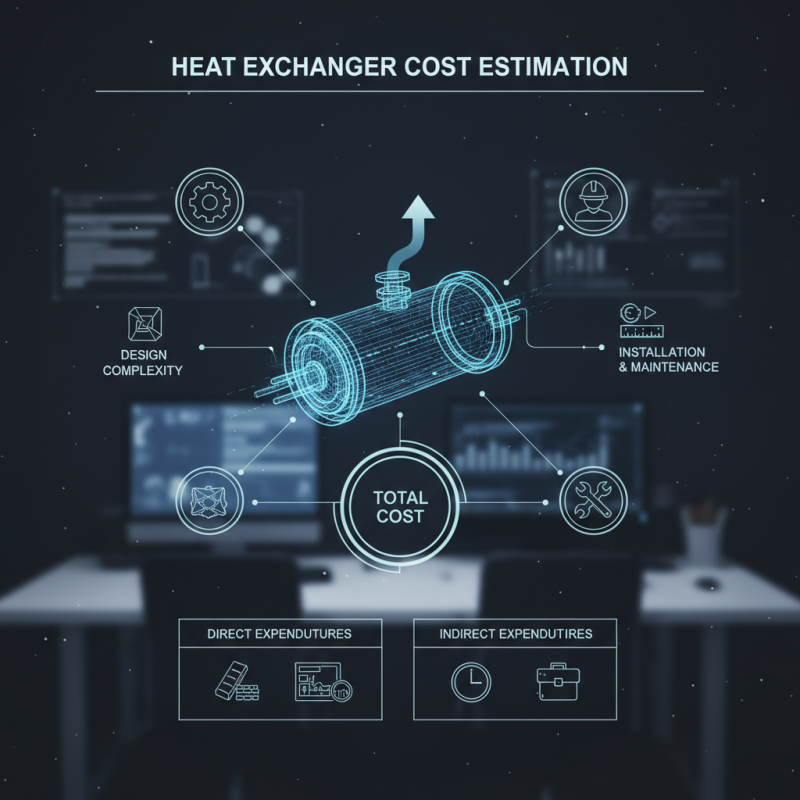
The factors influencing Heat Exchanger Cost are numerous. Material selection, design complexity, and size all play significant roles. Accurate calculations can save thousands in project expenses. However, many overlook hidden costs that may emerge later. Costs associated with installation and maintenance often create budget overruns.
Many companies struggle with these estimates. They may rely too heavily on outdated data. This can lead to serious discrepancies. A more thorough approach is necessary. It involves understanding both direct and indirect expenditures. By refining their estimation processes, companies can achieve a more accurate picture of overall costs. This approach not only fosters better budgeting but also aids in project planning.
Understanding Heat Exchangers and Their Cost Factors
Understanding heat exchangers is crucial for effective cost estimation. These devices transfer heat between two or more fluids. Their efficiency directly impacts energy consumption and operating costs. According to a recent industry report, heat exchangers can account for up to 50% of a facility's total energy usage. Thus, knowing what drives costs is essential.
Several factors influence the pricing of heat exchangers. Material choice significantly impacts cost, with stainless steel being more expensive than carbon steel. Additionally, the size and complexity play a vital role. Custom designs may lead to unexpected expenses. A study found that custom heat exchangers can exceed standard models by 30% to 50% in cost. Unexpected maintenance events further complicate overall expenses, often driving costs beyond initial estimates.
In the design phase, understanding these factors helps avoid pitfalls. Many buyers overlook operational costs in favor of lower upfront prices. Short-term savings can lead to long-term losses. Regular maintenance is often neglected, affecting performance. It’s vital to consider these elements to achieve a comprehensive cost breakdown. Effective estimation requires attention to both initial and operational costs.
Key Components Influencing Heat Exchanger Pricing
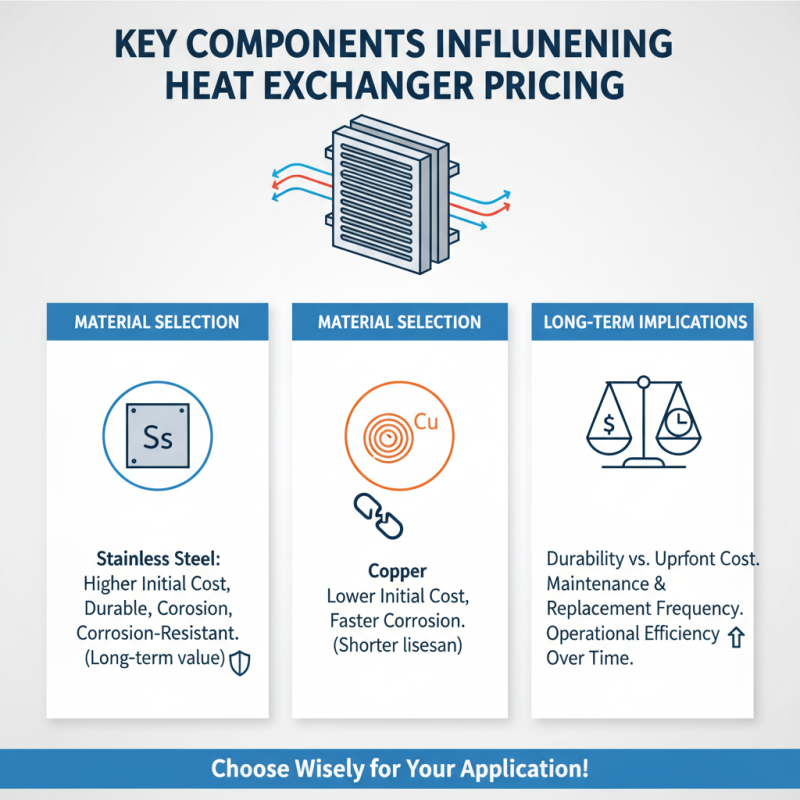
When estimating heat exchanger costs, several key components play a crucial role. Material selection significantly impacts pricing. Stainless steel, while durable, is often more expensive. Copper may have lower initial costs but can corrode faster. Consider the long-term implications of these choices.
Design complexity also affects the cost. Custom designs will naturally require more resources and engineering time. Be cautious with unique specifications. They can lead to unexpected expenses. Sometimes, simpler designs yield similar efficiency at a lower cost.
Tips: Always get multiple quotes to compare prices effectively. Factor in installation costs, which can add up quickly. Look for suppliers offering warranties; this can indicate product quality. Remember, sometimes a lower upfront cost might lead to higher maintenance down the line. Keep these points in mind for a better estimation.
Methods for Estimating Heat Exchanger Costs Accurately
Estimating heat exchanger costs accurately requires a comprehensive approach. Various methods can be employed to gauge expenses effectively. A popular technique is the use of empirical formulas. These formulas often rely on the material type and size, which are crucial factors. For example, data indicates that the cost can vary significantly between stainless steel and carbon steel.
Industry reports suggest that labor costs usually represent about 30% of total expenses. This variability can depend on the complexity of installation. A simple installation often leads to lower costs. However, intricate designs might require specialized skills, inflating expenses. Additionally, market fluctuations can impact raw material prices, adding another layer of challenge in accurate estimations.
Cost estimation should also include overhead costs, which can be around 20% of the total price. This figure may seem reasonable, yet businesses often overlook it. A failure to account for overhead can lead to significant budget overruns. Moreover, historical data can guide future estimates, but it is crucial to remember that past performance may not predict future costs accurately. Always consider the unique aspects of each project before finalizing estimates.
Estimated Heat Exchanger Costs by Type
Comparative Analysis of Heat Exchanger Costing Approaches
When estimating heat exchanger costs, various approaches provide distinct advantages and limitations. One method involves break-even analysis, which calculates cost-effectiveness based on operational data. This type of analysis can offer a clear view of investment returns. However, it might not account for unforeseen expenses that arise during operation.
On the other hand, using a parametric approach relies on historical data and industry benchmarks. It allows for quick estimates and aids in decision-making. Yet, this method can sometimes overlook specific project nuances. If the data is old or generalized, it may lead to misleading figures.
Another common method is engineering judgment, where experienced professionals assess cost. While this approach can be very insightful, it is also subjective. Different engineers may have different opinions. Therefore, it becomes essential to balance these methods for a more accurate overall estimation. An understanding of each technique's strengths and weaknesses can lead to better financial planning for heat exchanger projects.
How to Estimate Heat Exchanger Cost Effectively? - Comparative Analysis of Heat Exchanger Costing Approaches
| Costing Method |
Estimated Cost ($) |
Accuracy (%) |
Time to Estimate (days) |
| Method A: Direct Historical Costing |
$50,000 |
85% |
10 |
| Method B: Parametric Costing |
$47,000 |
90% |
5 |
| Method C: Commodity Costing |
$55,000 |
80% |
15 |
| Method D: Expert Judgment |
$52,000 |
88% |
7 |
| Method E: Software Estimation |
$49,500 |
92% |
3 |
Budgeting and Financial Planning for Heat Exchanger Projects
When budgeting for heat exchanger projects, start by identifying all potential costs. This includes materials, labor, and installation expenses. Consider hidden costs, such as maintenance and operational efficiency. Neglecting these can lead to an unexpected budget shortfall. A detailed workbook that lists all costs helps in planning effectively.
Evaluate the financial impact of energy efficiency. Choosing a more efficient heat exchanger can lead to long-term savings. However, upfront costs may be higher. Balance initial costs with future savings. Use energy modeling to project potential savings over time. This helps justify higher initial investments.
Don’t overlook the importance of project timelines. Delays can escalate costs. A realistic schedule ensures resources are allocated efficiently. Regularly check progress against the budget. Adjustments may be necessary; flexibility is key. Reflecting on budgeting strategies after project completion can improve future estimates.