Top 10 Heat Exchangers in China for Global Buyers?
In the dynamic world of heat exchange technology, the importance of selecting high-quality equipment cannot be overstated. According to Dr. Mei Wang, a leading expert in the Heat Exchanger industry, "Choosing the right heat exchanger can significantly improve energy efficiency and reduce operational costs." This statement highlights the crucial role that heat exchangers play across various sectors, from industrial manufacturing to HVAC systems.
China has emerged as a key player in the global market for heat exchangers. The country houses numerous manufacturers that meet international standards. With advancements in materials and design, these companies are pushing the boundaries of efficiency. However, buyers must navigate through choices that may seem overwhelming. It is essential to weigh each option's performance, durability, and cost-effectiveness.
The task of identifying the top ten heat exchangers may provoke discussion and skepticism. What criteria should define the best? Quality, innovation, and reliability matter. Yet, each buyer's needs can vary widely. Thus, it is imperative for global buyers to approach with both curiosity and caution. Ignoring potential pitfalls can lead to costly mistakes and operational inefficiencies.
Top 10 Heat Exchangers in China for Global Buyers: An Overview
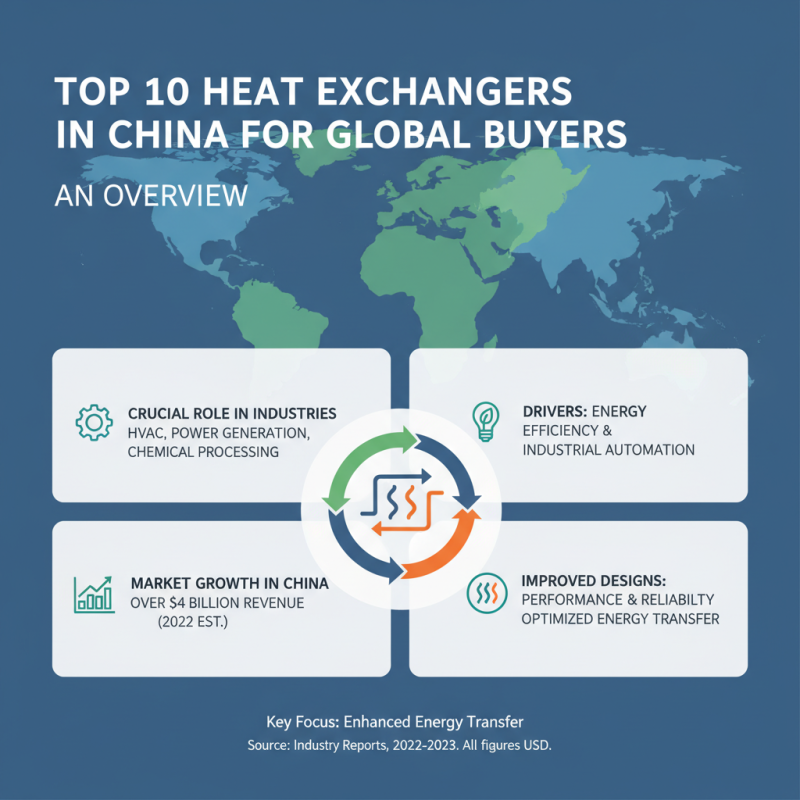
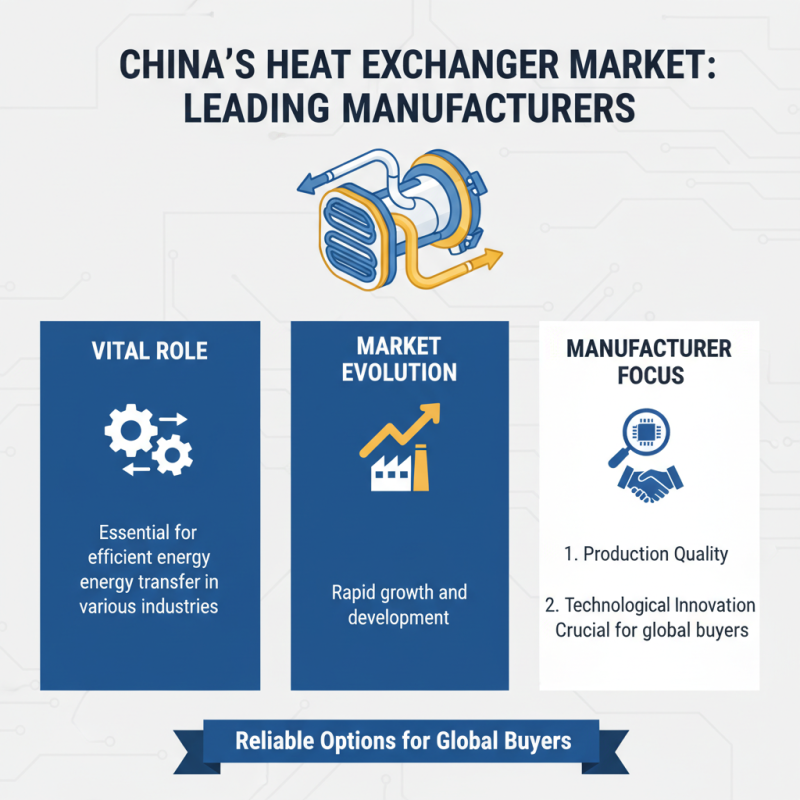
Heat exchangers play a crucial role in various industries, including HVAC, power generation, and chemical processing. In China, the heat exchanger market has seen significant growth, with estimates suggesting that it reached over $4 billion in revenue in 2022. This growth is primarily driven by increasing demands for energy efficiency and industrial automation. Improved designs focus on performance and reliability, optimizing energy transfer between fluids.
Several research reports indicate that plate heat exchangers and shell-and-tube units are leading the market due to their efficiency in heat transfer. Plate heat exchangers can achieve a heat transfer coefficient of up to 5000 W/m²K, making them highly effective. However, challenges remain in the industry, such as material costs and maintenance issues. The durability of components often warrants further investigation.
Moreover, globalization has led to increased competition among manufacturers. Many aspire to meet international standards, yet discrepancies in production quality persist. While some producers invest in advanced technologies, a significant number remain reliant on traditional manufacturing methods. This inconsistency raises questions about the long-term sustainability of their operations. Balancing innovation and cost-effectiveness remains a challenge.
Market Trends in China's Heat Exchanger Industry and Growth Projections
The heat exchanger industry in China has witnessed significant growth in recent years, driven by increased demand across various sectors. Reports indicate that the market size was valued at approximately $4 billion in 2021 and is projected to reach around $6.5 billion by 2026, growing at a CAGR of over 10%. This shift reflects the expanding manufacturing, chemical, and energy sectors in China, where efficient thermal management is crucial.
Manufacturers are increasingly adopting innovative technologies to enhance performance and efficiency. The focus on sustainability is also changing the landscape. Companies are investing in research to develop heat exchangers with less environmental impact. However, the transition comes with challenges. Many producers struggle to keep pace with rapid technological advancements and shifting regulatory landscapes. Reports highlight that smaller companies often lack resources and expertise, which can hinder their competitiveness.
As the industry matures, the need for high-quality products grows stronger. Many analysts emphasize that while innovation is vital, there is a pressing need to address quality control issues that may arise from rapid production scaling. This presents an ongoing challenge for manufacturers dedicated to maintaining reliability and industry standards amidst rising demand.
Technological Innovations Driving Heat Exchanger Efficiency in China
Heat exchangers are vital in many industries. Their efficiency directly impacts energy consumption and operational costs. In China, recent technological innovations have revolutionized their design and functionality. Enhanced materials, such as advanced alloys and composites, improve durability and heat transfer rates. This shift not only increases performance but also extends lifespan.
Digital integration is another trend seen in Chinese heat exchangers. Smart monitoring systems collect real-time data to optimize operation. This level of precision ensures energy-efficient performance. However, adapting such technologies poses challenges. Training personnel and integrating systems can be complex. Additionally, there may be compatibility issues with older infrastructure.
Sustainability is also a critical factor. Innovative heat exchangers now incorporate eco-friendly practices. For instance, waste heat recovery systems reduce emissions and save energy. These advancements are commendable, yet they require a thorough evaluation of their long-term impact. Companies must consider both immediate benefits and potential drawbacks. Striking a balance between efficiency and sustainability is essential in today’s market.
Regulatory Standards Impacting Heat Exchanger Design and Production in China
In China, regulatory standards significantly influence heat exchanger design and production. These standards ensure safety, efficiency, and environmental responsibility. Manufacturers must comply with national and international regulations, including pressure vessel codes and energy efficiency guidelines. The focus is on enhancing performance and minimizing environmental impact.
To navigate these regulations, it's essential to stay informed. Understanding local compliance measures can streamline the design process. Collaboration with local experts can provide valuable insights into best practices. This approach encourages innovation while adhering to regulatory frameworks.
Manufacturers face challenges in balancing compliance with market demands. Cost pressures and rapid technological changes may lead to shortcuts, risking product quality. Regular audits and quality checks are vital to ensure adherence to standards. This commitment fosters long-term reliability and customer trust.
Tip: Consider investing in training programs for your team. Skilled professionals can better handle regulations and improve design processes.
Top 10 Heat Exchangers in China for Global Buyers
| Rank |
Type |
Material |
Application |
Efficiency (%) |
Regulatory Compliance |
| 1 |
Shell and Tube |
Stainless Steel |
Oil Refining |
85 |
ASME, TUV |
| 2 |
Plate |
Titanium |
Marine Applications |
90 |
ISO 9001, CE |
| 3 |
Air-Cooled |
Aluminum |
Power Generation |
78 |
API, ASHRAE |
| 4 |
Double Pipe |
Carbon Steel |
Chemical Processing |
82 |
NACE, PED |
| 5 |
Fin Tube |
Copper |
HVAC |
88 |
EN, ASTM |
| 6 |
Spiral |
Plastic |
Waste Water Treatment |
75 |
ISO 14001 |
| 7 |
Brazed Plate |
Copper-Nickel |
Food Processing |
92 |
HACCP, FDA |
| 8 |
Radiator |
Aluminum Alloy |
Automotive |
87 |
TS16949 |
| 9 |
Plate Fin |
Alloy Steel |
Cryogenics |
94 |
ISO 3834 |
| 10 |
Cooling Tower |
FRP |
Industrial Cooling |
76 |
GB, IEC |