Leave Your Message

2026 Best Plate-Fin Heat Exchanger Types for Global Buyers?

Choosing the right Plate-Fin Heat Exchanger in 2026 requires more than comparing catalog prices. Global buyers now face stricter efficiency targets, volatile material costs, and demanding operating conditions. MarketsandMarkets’ 2024 Heat Exchangers Market report estimates growth from approximately USD 19.8 billion in 2024 to USD 27.7 billion by 2029. That expansion reflects stronger demand across LNG, aerospace, power generation, hydrogen, and industrial cooling. However, broad market growth does not guarantee the right equipment for every plant.

As heat-transfer specialist Ramesh K. Shah has stated, “The design of a heat exchanger is a compromise between thermal performance, pressure drop, size, weight, and cost.” This principle remains practical in 2026. A brazed-aluminum plate-fin unit may suit cryogenic gas service, where compactness matters. A stainless-steel design may offer better resistance in corrosive process environments. Modular constructions can simplify maintenance, but they may increase footprint and procurement complexity.

The details matter. A buyer should verify thermal duty, allowable pressure drop, fin geometry, header design, fouling risk, and inspection requirements. ASME certification may be essential for certain pressure applications. EN or regional standards may also influence acceptance.

One overlooked issue is data quality. Supplier performance figures are not always comparable. Laboratory results can differ from field operation. That weakness deserves attention. The best selection process combines verified test data, lifecycle cost analysis, and engineering review. This guide compares the leading Plate-Fin Heat Exchanger types for global buyers, while acknowledging that no single design wins every application.
2026 Best Plate-Fin Heat Exchanger Types for Global Buyers?

Plate-Fin Heat Exchanger Fundamentals and Operating Principles

2026 Best Plate-Fin Heat Exchanger Types for Global Buyers?

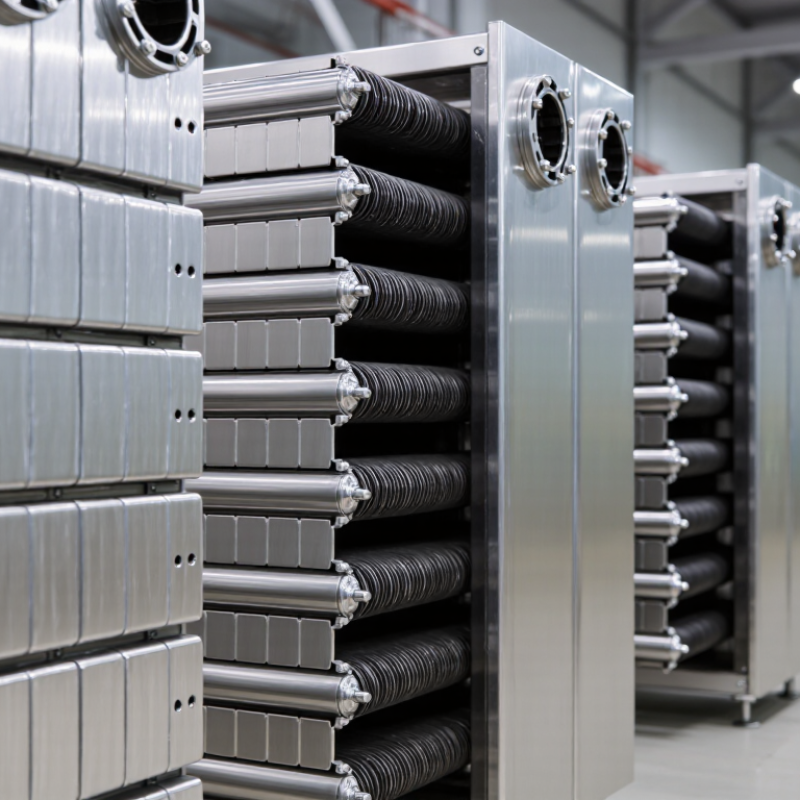
Plate-fin heat exchangers use thin plates and corrugated fins to create compact flow passages. The plates separate fluids. The fins enlarge the heat-transfer area and support the structure. As hot and cold streams move through different passages, heat crosses the separating plates without direct fluid contact. Counterflow operation usually improves temperature effectiveness because the fluids maintain a stronger temperature difference. Parallel flow can be simpler, but it may deliver lower thermal performance.

Operating results depend on more than surface area. Designers must check flow rate, inlet temperature, allowable pressure drop, fluid cleanliness, and material compatibility. Fin geometry affects turbulence, heat transfer, and resistance. A dense fin may transfer more heat, yet it can increase fouling risk and pumping demand. In field commissioning, small sensor errors can distort performance checks. A clean calculation can still describe the wrong operating condition.

Tips: Confirm both design and off-design conditions. Leave practical space for inspection and cleaning. Compare measured pressure drop with the design value after stabilization. If results seem poor, check flow distribution before blaming the exchanger. This step is often missed. Also, review vibration, thermal expansion, and freezing risks where applicable. Selection should reflect the actual duty cycle, not only the nameplate capacity.

2026 Best Plate-Fin Heat Exchanger Types for Global Buyers

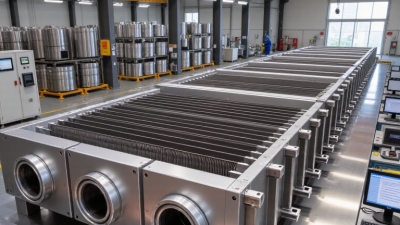
The chart compares representative upper design envelopes for common plate-fin heat exchanger constructions. Aluminum-brazed units are widely used for cryogenic and general gas-to-gas service, while stainless-steel, nickel-brazed, and diffusion-bonded designs are selected for higher temperature, pressure, or corrosive applications. Actual limits depend on alloy, fin geometry, brazing method, safety code, fluid compatibility, and manufacturer design qualification.

Major Plate-Fin Heat Exchanger Types and Their Design Features

2026 Best Plate-Fin Heat Exchanger Types for Global Buyers?

Plate-fin heat exchangers combine thin plates with corrugated fins inside a compact core. Their design supports high heat-transfer area and low equipment weight. DOE reports that process heating uses about 61% of manufacturing energy in the United States. This makes thermal recovery a practical purchasing concern, not only an engineering preference.

Brazed aluminum plate-fin units suit cryogenic service, compressed air, and gas processing. They commonly use plain, serrated, or perforated fins. Serrated fins increase turbulence and transfer rates, but they also create higher pressure loss.

Stainless-steel plate-fin units handle higher temperatures and aggressive fluids. Welded or diffusion-bonded construction can improve mechanical strength.

Crossflow designs allow simpler connections and easier maintenance. Counterflow designs usually achieve closer temperature approaches. Multipass layouts manage several streams inside one core, although their internal flow paths need careful review.

The International Energy Agency’s Energy Efficiency 2023 report places industry near 37% of global final energy use. Even a small recovery gain can therefore influence operating costs. However, catalog performance can mislead. Dust, oil carryover, moisture, and uneven flow may reduce real-world output. A smaller core is not always the better choice.

Tips: Confirm allowable pressure drop, fouling risk, cleaning access, and material compatibility. Request performance data at actual inlet temperatures, flow rates, and operating pressures. Leave design margin, but avoid excessive oversizing.

How to Compare Materials, Thermal Performance, and Pressure Ratings

2026 Best Plate-Fin Heat Exchanger Types for Global Buyers

Selecting a plate-fin heat exchanger starts with the process fluid, not the catalogue image. Aluminum cores suit lightweight gas service and moderate temperatures. Stainless steel handles corrosive fluids and demanding sanitation requirements. Nickel-based alloys may be justified when chlorides, acids, or high temperatures create serious material risks. They cost more, but replacement downtime can cost more.

Thermal performance depends on fin density, flow arrangement, surface area, and fouling resistance. A compact core may achieve a close temperature approach with less installation space. However, dense fins can collect dust or viscous deposits. Check the actual overall heat-transfer coefficient, not only the advertised capacity. Ask for inlet and outlet temperatures, mass flow, pressure drop, and test conditions. Small assumptions matter.

Pressure ratings require equal attention. Brazed construction can be compact, while gasketed designs support easier inspection and maintenance. Welded cores may suit higher pressure or severe temperature cycling, but fabrication quality becomes critical. Review design pressure, operating pressure, test pressure, and allowable metal temperature separately. Verify compliance with the destination market’s pressure-vessel rules. In field comparisons, buyers sometimes select a stronger alloy while overlooking weak joints or connection limits. That is a costly mistake. Leave a realistic fouling margin, too. Oversizing is not always safer; it can increase pressure drop and reduce control stability.

Selection Criteria for Global Buyers in Different Industrial Applications

2026 Best Plate-Fin Heat Exchanger Types for Global Buyers?

Selection Criteria for Global Buyers in Different Industrial Applications

Global buyers should match the exchanger to duty conditions, not only purchase price. Brazed aluminum plate-fin units suit cryogenic gases, air separation, and compact refrigeration systems. Their high surface density saves space, but aluminum requires careful control of corrosion, vibration, and operating pressure. Stainless-steel plate-fin designs offer stronger chemical resistance for demanding process streams. They usually cost more and may need longer manufacturing lead times.

Thermal duty comes first. Check flow rates, inlet temperatures, allowable pressure drop, startup conditions, and cleaning access. ASHRAE’s HVAC Systems and Equipment Handbook stresses that fouling and maintainability can change real-world performance significantly.

Small channels can lose efficiency quickly when oil, dust, or scale enters the core. This matters in refineries, compressed-air systems, and biomass facilities. Compact is not always better.

Energy demand also deserves attention. The International Energy Agency’s Energy and AI report estimates global data-center electricity use reached about 415 TWh in 2024 and may exceed 945 TWh by 2030. Cooling loads will intensify. Liquid-cooling systems may favor stainless-steel or corrosion-resistant compact cores, depending on water quality and pressure. In food processing, hygienic design and drainability may outweigh maximum heat-transfer density. In practice, selection tables can mislead. Seasonal data, local service capability, spare-core access, and regional pressure-vessel requirements deserve equal weight. A cheaper exchanger can become expensive after one difficult shutdown.

2026 Trends, Standards, Costs, and Supplier Evaluation Factors

2026 Best Plate-Fin Heat Exchanger Types for Global Buyers?

In 2026, buyers are comparing brazed aluminum, stainless-steel, and gasketed plate-fin exchangers. Brazed aluminum suits compact cryogenic and gas applications. Stainless steel offers stronger corrosion resistance for demanding process fluids. Gasketed designs simplify inspection and maintenance, but their seals can limit temperature and chemical compatibility.
Standards now influence purchasing decisions more directly. Project teams may require ASME Section VIII, EN 13445, ISO 9001, or region-specific pressure regulations. Certification alone is not enough. Request material certificates, weld procedures, pressure-test records, and leak-test results. Check whether documents cover the actual model, not only the supplier’s general product range. Small paperwork gaps can delay customs clearance or commissioning.
Cost analysis should include core materials, brazing, machining, testing, packaging, freight, spare parts, and downtime risk. A low quotation may conceal thin documentation or weak after-sales support. Supplier evaluation should examine thermal calculations, fouling assumptions, design margins, traceability, and response time. Ask for references involving similar pressure, temperature, and fluid conditions. Also inspect the factory’s quality controls when possible. Not every efficiency claim survives real operating conditions. Buyers should challenge optimistic pressure-drop figures, especially when fluids contain moisture, particles, or changing compositions. The best choice may cost more initially, yet an overlooked gasket failure or difficult repair can become far more expensive.