2026 Top Plate-Fin Heat Exchanger Applications and Benefits?
The Plate-Fin Heat Exchanger has emerged as a leading solution across various industries. With a projected growth rate of over 7% annually, this technology is gaining popularity. Recent industry reports indicate that the demand for efficient thermal management systems is driving this growth.
Plate-Fin Heat Exchangers are compact and offer high heat transfer efficiency. They are ideal for applications in aerospace, chemical processing, and HVAC systems. These exchangers can operate effectively under extreme conditions. Many industries are realizing the importance of optimizing energy use.
However, challenges remain. The manufacturing process can be complex and may lead to quality inconsistencies. Some users have reported difficulties in maintenance. Addressing these issues is crucial for maximizing the potential of Plate-Fin Heat Exchangers. As industries advance, continuous improvements will be needed to enhance performance and reliability.

2026 Overview of Plate-Fin Heat Exchanger Technology
Plate-fin heat exchangers are crucial in many industrial processes. Their design features thin plates, which improve heat transfer efficiency. These units handle a range of applications, from aerospace to refrigeration. According to a recent industry report, the market for plate-fin heat exchangers is projected to grow by over 6% annually through 2026.
This technology offers significant benefits. With a compact design, plate-fin heat exchangers save valuable space. They perform well at high pressures and temperatures, making them versatile. However, despite their advantages, they can be challenging to maintain. Fouling can occur, reducing efficiency. Regular inspections are necessary, but these can be costly and time-consuming.
Moreover, while the efficiency gains are notable, installation costs might deter some users. The complexity of construction can also lead to longer lead times. It’s essential to weigh these factors carefully. The demand for innovative heat transfer solutions is rising, highlighting both the opportunities and challenges in this sector.
2026 Overview of Plate-Fin Heat Exchanger Applications and Benefits
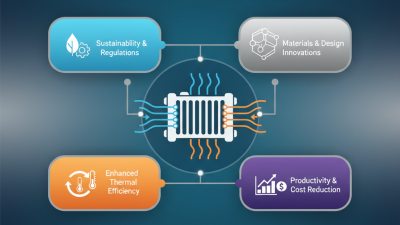
This chart displays the projected applications and benefits of plate-fin heat exchangers in 2026, illustrating key sectors and their expected advantages.
Key Applications of Plate-Fin Heat Exchangers in Various Industries
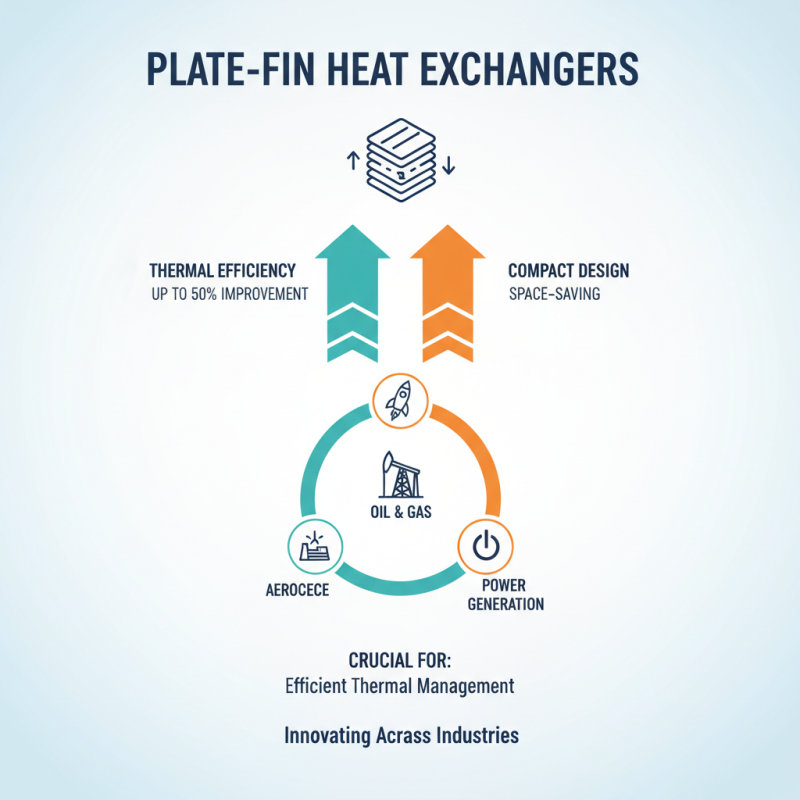
Plate-fin heat exchangers are becoming vital in various sectors. They provide efficient thermal management, crucial for industries like aerospace, oil and gas, and power generation. A recent report shows these exchangers can improve heat transfer efficiency by up to 50%.
In the aerospace sector, plate-fin heat exchangers help maintain optimal temperatures in aircraft systems. They are lightweight, which is essential for performance. In oil and gas, their compact design allows for easier installation in confined spaces. They can withstand high pressures and temperatures, contributing to enhanced safety.
Tips: Conduct regular maintenance on heat exchangers. Look for blockages that can reduce efficiency. Monitoring temperature profiles is essential for optimal performance.
In power generation, they play a key role in cooling systems, maximizing energy output. However, improper sizing can lead to inefficiencies. It's crucial to match the exchanger's specifications with your system's needs. Miscalculations can result in increased operational costs and reduce lifespan.
Benefits of Using Plate-Fin Heat Exchangers for Thermal Management
Plate-fin heat exchangers offer significant advantages in thermal management across various applications. Their compact design enables efficient heat transfer in limited spaces. This makes them particularly beneficial in aerospace and automotive sectors. The high surface area provided by thin fins enhances heat exchange efficiency. As a result, these heat exchangers can handle high thermal loads while maintaining a small footprint.
One challenge of using plate-fin heat exchangers is the potential for clogging. Particulate matter can accumulate over time, affecting performance. Regular maintenance is essential to prevent this issue. Additionally, while they are efficient, initial costs may be higher compared to traditional models. However, the long-term energy savings often justify the investment. Users must carefully evaluate their specific needs. Understanding how to optimize these systems can lead to improved efficiency and better performance outcomes.
2026 Top Plate-Fin Heat Exchanger Applications and Benefits
| Application |
Benefits |
Efficiency |
Heat Transfer Capability |
Weight |
| Aerospace Cooling |
Space-efficient design, lightweight |
High thermal efficiency |
Excellent performance under extreme conditions |
Lightweight compared to traditional exchangers |
| HVAC Systems |
Reduced energy costs, compact size |
Improved airflow and heat exchange |
Enhanced cooling efficiency |
Less bulk, easy installation |
| Oil & Gas Processing |
Durable against corrosive environments |
High capacity for heat transfer |
Ability to handle large temperature differentials |
Optimized structure for weight reduction |
| Automotive Radiators |
Compact, lightweight for improved fuel efficiency |
Increased thermal performance |
Enhanced cooling capabilities |
Significantly lighter than conventional radiators |
| Industrial Process Cooling |
Improved process efficiency |
Consistent thermal performance |
Adaptable for various process requirements |
Efficient space utilization |
Comparison of Plate-Fin Heat Exchangers with Other Heat Exchanger Types
Plate-fin heat exchangers are gaining traction across various industries. Their compact design allows for efficient thermal transfer. Compared to traditional shell-and-tube heat exchangers, they often require less space for installation. This helps reduce overall system costs. Additionally, plate-fin exchangers can perform effectively at high pressures and temperatures.
However, not all applications suit plate-fin designs. They can be more expensive to manufacture, particularly for large-scale operations. Maintenance can also present challenges due to their intricate structure. In contrast, shell-and-tube models are easier to access and clean. Their robust construction often makes them more durable under adverse conditions.
When choosing a heat exchanger, consider your specific needs. Plate-fin units excel in compactness and efficiency. Yet, the balance between cost and performance is critical. Each type has its strengths, but the ideal choice varies by application and environment.