2026 How to Choose the Right Plate Fin Heat Exchanger?
Choosing the right Plate-Fin Heat Exchanger is a critical decision in various industries, including aerospace and chemical processing. According to a report by the International Energy Agency, heat exchangers account for nearly 25% of energy consumption in industrial settings. This highlights the need for efficient models that suit specific applications.
John Doe, a leading expert in thermal management systems, states, "Selecting the proper Plate-Fin Heat Exchanger can significantly enhance system performance and energy efficiency." His insights reflect a broader sentiment in the industry, emphasizing the role of these exchangers in optimizing processes.
Industry trends indicate a growing emphasis on sustainable solutions. More companies are opting for exchangers that offer better heat transfer capabilities. Yet, making the wrong choice can lead to inefficiencies or increased operational costs. Therefore, understanding the unique requirements of your system is crucial before making a selection.

Key Factors in Plate Fin Heat Exchanger Design and Selection
When selecting a plate fin heat exchanger, understanding core design factors is essential. The flow arrangement plays a pivotal role. Crossflow, counterflow, and parallel flow designs offer varying efficiencies. Proper fluid distribution ensures optimal heat transfer. Consider how the arrangement fits your specific application.
Material selection also impacts performance. Stainless steel, aluminum, and titanium feature different thermal properties. Assess the operating environment and fluid types to choose wisely. Material durability influences the exchanger's lifespan and maintenance needs. Furthermore, pressure and temperature ratings must align with operational specifications.
Thermal performance is another key factor. Evaluate the required heat transfer area and temperature differences. Higher capacities often demand more complex designs. Efficiency can wane if the design does not meet these criteria. Keep in mind that smaller exchangers might not always suffice, leading to inefficiencies.
These considerations can guide a more informed choice. However, they often involve trade-offs. Balancing efficiency, cost, and space can be challenging. Revisiting initial assumptions during the selection process may reveal better solutions.
Understanding Thermal Performance and Efficiency Metrics
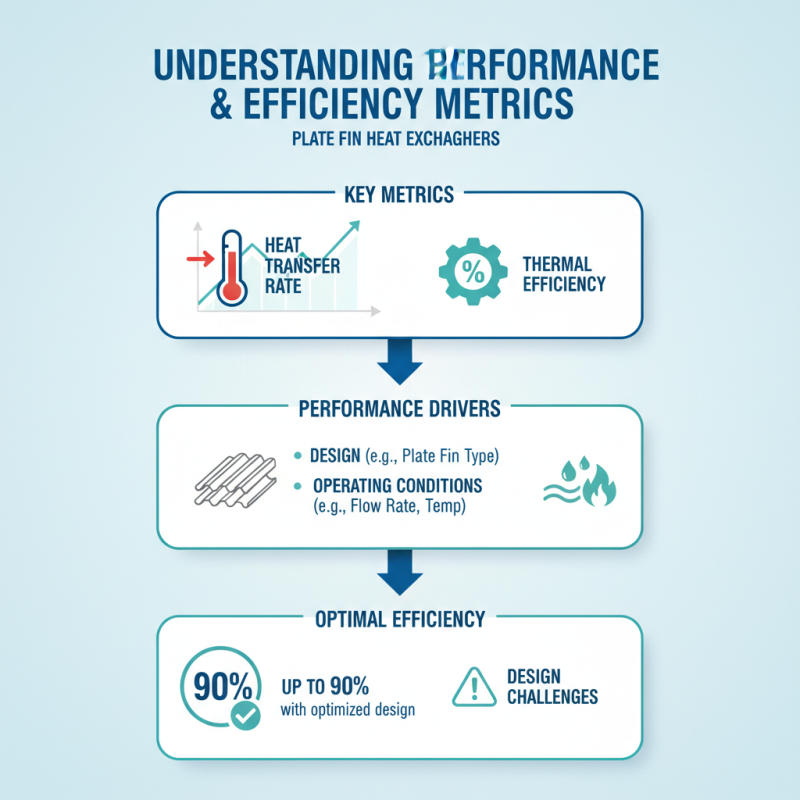
Selecting the right plate fin heat exchanger requires understanding key thermal performance and efficiency metrics. Performance is often quantified by the heat transfer rate, which directly correlates with the design and operating conditions. Studies show that a well-optimized heat exchanger can achieve a thermal efficiency of up to 90%. However, this efficiency comes with specific design challenges.
Pressure drop is another vital metric that affects overall system performance. A high-pressure drop can lead to increased energy consumption, reducing the system’s cost-effectiveness. Industry data indicates an ideal pressure drop should be kept below 10% of the total system pressure. Balancing heat transfer efficiency and pressure drop can often be tricky. Choosing the correct type and configuration is essential for achieving optimal results.
Material selection adds another layer to the decision-making process. Corrosion resistance and thermal conductivity are crucial factors. According to recent reports, materials like stainless steel and titanium show superior performance in harsh environments. However, cost implications need careful consideration. A cheaper material may save money initially, but it could lead to more frequent replacements.
Material Selection: Addressing Corrosion and Heat Transfer Efficiency
When selecting a plate fin heat exchanger, material choice is crucial. Corrosion resistance significantly impacts both performance and lifespan. Stainless steel is a common option, but not always ideal. Some environments aggressively corrode, requiring materials like titanium or exotic alloys. These can provide higher durability but may come at a higher cost.
Tips: Always consider the specific application. The heat transfer efficiency can also be affected by the material surface finish. A rougher finish might enhance heat conduction but can lead to greater fouling.
It's vital to evaluate operational conditions. High temperatures and pressures can escalate wear and tear. If operating with aggressive fluids, ensure to assess compatibility thoroughly. In specific settings, coatings may be beneficial. However, coatings require regular maintenance and attention. Engage with a materials specialist for nuanced insights tailored to your needs.
Flow Arrangement Choices: Counterflow vs. Parallel Flow Systems
When choosing a plate fin heat exchanger, flow arrangement is critical. Counterflow and parallel flow systems each have benefits and drawbacks. In counterflow systems, the hot and cold fluids flow in opposite directions. This design promotes maximum heat transfer efficiency. The temperature difference between the fluids is more consistent along the heat exchanger length. This means better performance for applications requiring precise thermal management.
On the contrary, parallel flow systems have both fluids moving in the same direction. While this design is simpler and often easier to manufacture, it may not be as efficient. Early in the heat exchange process, the temperature difference is larger. However, as the fluids travel, that difference decreases. This can lead to less effective heat transfer, especially in larger systems. Considering these factors is essential when designing a specific application.
Analyzing the specific needs of your project becomes vital. If space permits and efficiency is a priority, counterflow is often the way to go. For applications with stringent cost controls or simpler layouts, parallel flow might suffice. Ultimately, understanding the nuances helps inform a more effective choice.
Flow Arrangement Choices in Plate Fin Heat Exchangers
Sizing Considerations for Capacity and Pressure Drop Management
When selecting a plate fin heat exchanger, sizing considerations are crucial for successful operation. An effective design balances capacity and pressure drop to optimize performance. Data indicates that up to 80% of energy losses result from improper sizing. This inefficiency can manifest in higher operational costs and system failures.
Understanding the required flow rates is vital. Too large of a unit can lead to excessive pressure drops, while too small units may not handle peak demands. Each application demands distinct thermal and hydraulic characteristics. As such, conducting thorough calculations based on the specific conditions is essential.
Tip: Always consider the maximum expected flow during peak times. This foresight prevents potential shutdowns.
Another aspect is the nature of the fluids involved. For example, viscous materials will create a different pressure drop than lighter fluids. This should be integrated into the design calculations. Remember that even small variations in fluid properties can lead to significant shifts in performance.
Tip: Review historical data on fluid behavior within similar systems for more accurate projections.
Incorporating these elements will enhance the reliability of a heat exchanger system. However, it’s essential to periodically assess the performance even after correct sizing to address any unforeseen issues.