What is a Cooling System and How Does It Work?
Cooling systems play a vital role in modern technology and daily life. In data centers, they account for approximately 30% of energy consumption. This significant demand emphasizes the importance of efficient cooling methods. With increasing energy costs, solutions must improve and adapt.
Cooling systems maintain optimal temperatures across various applications. For instance, industrial processes rely on them to ensure safe operations. Moreover, residential air conditioning systems provide comfort during hot months. Yet, many existing systems remain inefficient, leading to excess energy use.
Improving cooling technology is crucial. New innovations can enhance performance and sustainability. Reports indicate that adopting advanced cooling strategies can reduce energy use by up to 50%. However, challenges remain in implementation. Striking a balance between efficiency and cost is an ongoing concern. Understanding how cooling systems work is essential for future advancements.
What is a Cooling System: Definition and Purpose
Cooling systems play a crucial role in maintaining thermal balance in various applications. Essentially, a cooling system removes excess heat, ensuring that equipment operates efficiently and safely. Its primary purpose is to control temperature, preventing damage to components. In industrial settings, cooling systems can reduce equipment failure rates by nearly 30%, according to recent industry reports.
Understanding how cooling systems function is vital. They usually transfer heat from one location to another through various mediums, like water or air. Common types include evaporative cooling and refrigeration systems. Each has unique benefits and suitable applications. In homes, for instance, air conditioning often utilizes vapor-compression cycles. They provide comfort but can consume significant energy, impacting both utility bills and the environment.
**Tips:** Ensure regular maintenance of your cooling system to enhance efficiency. Simple tasks like cleaning filters can improve airflow. It's also wise to monitor energy consumption closely. Keeping track of these metrics can reveal underlying issues needing attention. Remember, neglecting small problems can lead to larger, costlier repairs.
Cooling System Efficiency Comparison
This bar chart compares the energy efficiency ratios (EER) of different types of cooling systems. Higher EER values indicate more energy-efficient cooling solutions.
Key Components of a Cooling System and Their Functions
A cooling system is vital for regulating temperature in various environments. It comprises several key components that work together efficiently.
Understanding these components helps in grasping how the entire system operates.
The compressor is the heart of the cooling system. It compresses refrigerant gas and raises its pressure, preparing it for the process ahead.
Next, the condenser cools and condenses the refrigerant. This key step transforms it from gas to liquid.
The expansion valve follows, allowing the refrigerant to expand. This process cools it down significantly.
Finally, the evaporator absorbs heat from the surrounding air. It reapplies the cold refrigerant, creating a cooling effect. Each of these parts plays a crucial role.
While the system aims for efficiency, issues can arise. Sometimes the compressor fails or refrigerant leaks occur.
These problems require quick fixes to avoid further complications. Understanding these details can enhance maintenance efforts.
How Cooling Systems Operate: Principles of Heat Exchange
Cooling systems are essential in various applications, from HVAC systems to industrial processes. The primary principle behind these systems is heat exchange. They transfer heat energy from one medium to another, which helps maintain desired temperatures. A report by the International Energy Agency (IEA) indicates that cooling accounts for approximately 10% of global electricity consumption. This significant energy use highlights the necessity for efficient cooling technology.
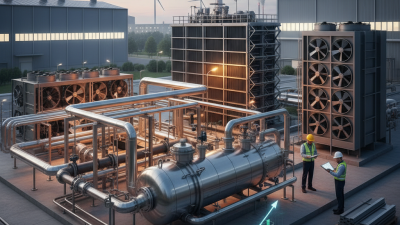
Heat exchangers are vital components in cooling systems. They facilitate the transfer of heat between fluids while keeping them separate. The efficiency of these systems can vary greatly, depending on design and environmental conditions. For instance, a study by the American Society of Heating, Refrigerating and Air-Conditioning Engineers (ASHRAE) revealed that poorly maintained exchangers can reduce efficiency by up to 30%. Regular maintenance and careful monitoring can mitigate these issues.
Additionally, the type of coolant used can influence system performance. Water is a common coolant due to its high specific heat capacity. However, alternatives like glycol or ammonia may be necessary for specific applications. The choice between them often involves trade-offs regarding efficiency, cost, and environmental impact. An unclear selection process can lead to inadequate cooling, wasting energy and resources.
Types of Cooling Systems: An Overview of Common Designs
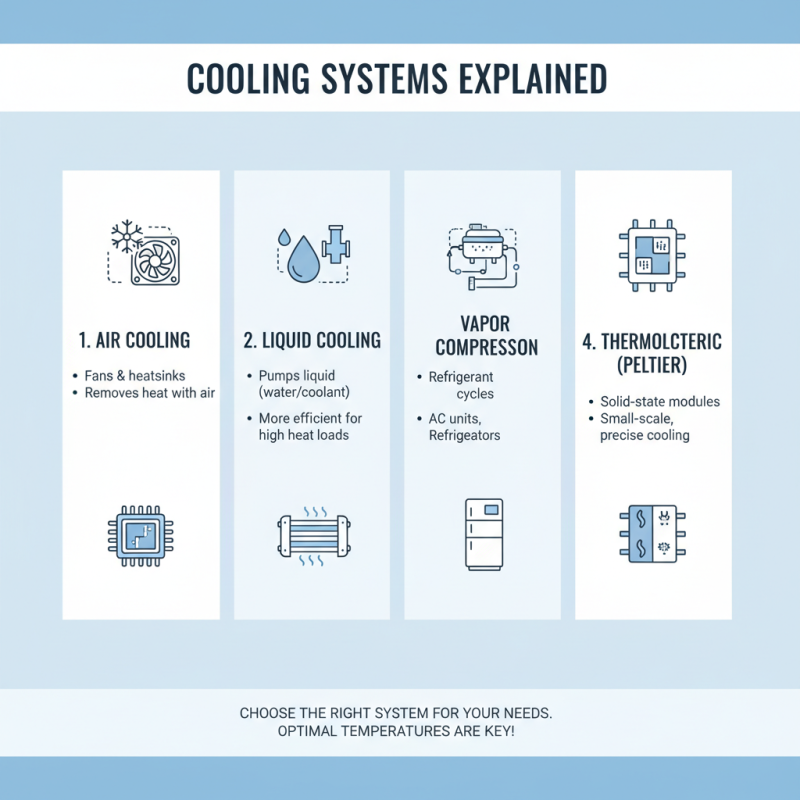
Cooling systems play a vital role in maintaining optimal temperatures in various environments. Understanding different types can help in choosing the right one for specific needs. There are several common designs, each with unique features and applications.
The air cooling system is one of the most prevalent. It uses fans to circulate air and maintain lower temperatures. This method is often found in homes and offices. Water cooling systems, on the other hand, employ water to absorb heat from machinery or buildings. This system is efficient but requires careful maintenance to avoid leaks.
Another popular design is the evaporative cooling system. It uses water evaporation to cool the air. This type works best in dry climates where humidity is low. Regardless of the system, all require regular upkeep. Neglecting maintenance can lead to inefficiency and even breakdowns. Exploring these systems in depth can reveal which is the best fit for specific situations, yet individual preferences may vary.
Maintenance and Efficiency of Cooling Systems: Best Practices
Cooling systems play a critical role in maintaining optimal temperatures in various environments. Regular maintenance is essential for their efficiency. When neglected, systems can develop issues. Dust accumulation on coils can hinder performance. This blockage reduces airflow, forcing the system to work harder. Over time, this causes increased energy consumption.
Routine checks are crucial. Cleaning or replacing filters monthly can dramatically improve airflow. Ensure that refrigerant levels are adequate. Low levels can lead to inefficient cooling. Monitor for leaks in the system too. Small leaks can lead to significant issues later on, both in efficiency and operating costs.
Consider system inspections twice a year, ideally before peak usage seasons. Checking parts like the thermostat and fan can prevent costly breakdowns. It’s easy to postpone these checks, but this can lead to energy losses. Reflecting on missed maintenance can reveal patterns. When systems are neglected, the overall costs can skyrocket. Prioritizing these simple tasks can enhance performance and longevity.