Top Cooling Systems Manufacturers for Global Buyers
Choosing reliable Cooling Systems manufacturers is a practical decision, not merely a comparison of product catalogs. Global buyers must examine cooling capacity, energy consumption, operating temperature, materials, and long-term service support. A system that performs well in a mild warehouse may struggle in a humid coastal plant or a dusty desert facility. Small details matter, including compressor access, fan noise, drainage design, and the clarity of maintenance instructions.
This guide reviews leading manufacturers through an evidence-based purchasing perspective. It considers engineering experience, production capability, quality controls, international certifications, and application support. Buyers should also check whether suppliers provide performance data under realistic conditions, rather than relying only on attractive laboratory figures. Site references, warranty terms, spare-parts availability, and response times can reveal more than a polished brochure.
No supplier is perfect. Trade-offs remain.
Some manufacturers offer advanced controls but limited regional service. Others provide competitive pricing but fewer customization options. Therefore, selection should match the buyer’s climate, facility size, budget, and compliance requirements. Technical discussions with qualified engineers can prevent costly mismatches, especially when cooling loads change across seasons. The strongest manufacturers communicate clearly, document their testing, and accept reasonable questions about weaknesses. That transparency builds trust. It also helps buyers avoid choosing equipment based on price alone. As this overview develops, readers can compare established global producers and identify the Cooling Systems partner most suitable for dependable, efficient, and maintainable operation.
Cooling Systems: Definition, Functions, and Major Applications
Cooling Systems: Definition, Functions, and Major Applications
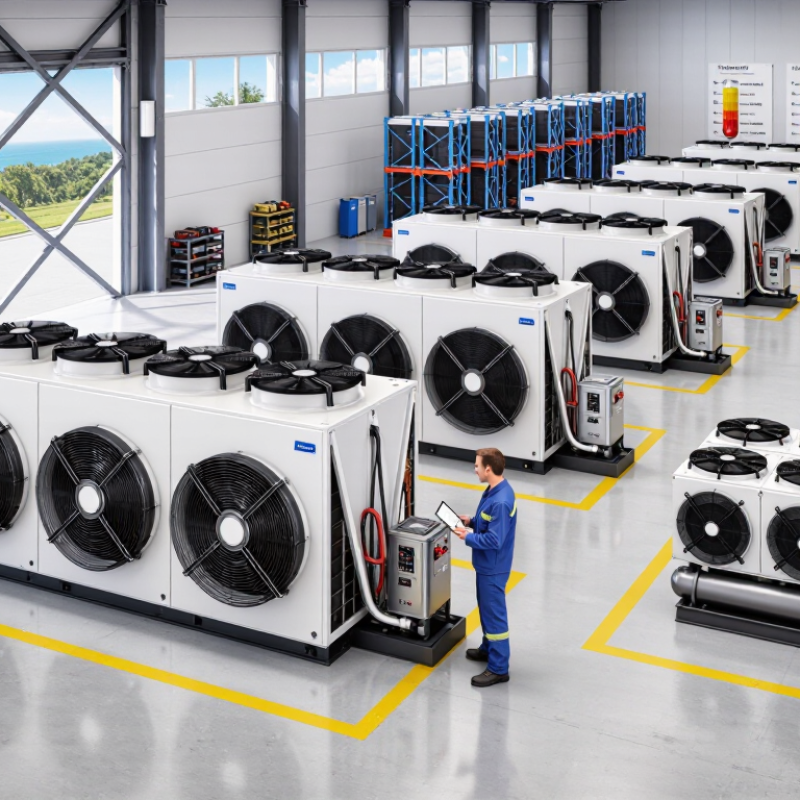
A cooling system removes unwanted heat from equipment, spaces, or industrial processes. It transfers heat through air, water, refrigerant, or a combination of these methods. The basic cycle includes heat absorption, movement, and release. Good design keeps temperatures stable, protects components, and supports safe operation. It also reduces energy waste when controls respond to real demand.
Cooling systems appear in homes, hospitals, data centers, factories, vehicles, and food storage facilities. In a data center, airflow must prevent hot pockets around server racks. In food processing, precise cooling helps preserve quality during storage and transport. Industrial equipment may require water circulation, heat exchangers, pumps, and monitoring sensors. These systems often operate continuously, so maintenance access matters as much as cooling capacity.
Global buyers should examine performance under local temperatures, humidity, voltage, and water conditions. Manufacturers should provide clear efficiency data, service guidance, and replacement-part availability. Independent testing can support these claims, but published figures may reflect ideal conditions. Real sites are messier. Dust, blocked filters, poor insulation, and incorrect sizing can reduce performance quickly. A smaller system is not always cheaper. An oversized system may cycle inefficiently and increase operating costs. Careful load calculations, commissioning, and regular inspection usually deliver more reliable results.
Key Types of Cooling Systems Used in Global Industries
Top Cooling Systems Manufacturers for Global Buyers
Industrial buyers should compare cooling types before comparing manufacturers. According to the International Energy Agency’s The Future of Cooling report, space cooling could triple global electricity demand by 2050. The most familiar option is the air-cooled system, which rejects heat through fans and coils. It suits dry regions and sites with limited water access. However, high ambient temperatures can reduce efficiency and increase compressor stress.
Water-cooled systems often deliver stronger performance in large factories, commercial buildings, and process plants. The U.S. Department of Energy notes that water-cooled chillers can achieve higher efficiency than many air-cooled alternatives under suitable operating conditions. Evaporative cooling can lower supply-air temperatures with less mechanical energy, but it needs careful water treatment. Water is not free. Poor control may cause scaling, corrosion, or hygiene risks.
For high-density computing and advanced manufacturing, direct liquid cooling is gaining attention because liquids remove heat more effectively than air. The International Energy Agency reports that data-center electricity use may exceed 1,000 TWh annually by 2026, increasing pressure on thermal management. Absorption cooling, powered by waste heat, can reduce electrical demand where stable heat sources exist. Yet it is complex and often overlooked. Real-world selection depends on climate, load changes, water quality, maintenance skills, and regulatory requirements. A technically impressive system may still fail when spare parts arrive late or operators lack training.
Top Cooling Systems Manufacturers for Global Buyers — Key Types of Cooling Systems Used in Global Industries
The chart compares representative chilled-water or coolant supply temperatures commonly used in major industrial applications. Lower temperatures are typical for process cooling, while data-center and comfort-cooling systems often operate with warmer water to improve energy efficiency. Actual specifications vary by climate, load, equipment design, and operating conditions.
Essential Criteria for Evaluating Cooling System Manufacturers
For global buyers, evaluating cooling system manufacturers requires more than comparing quoted prices. Start with verified efficiency data, tested capacity, and operating limits. The International Energy Agency reports that space-cooling electricity demand could rise from about 2,000 TWh today to over 6,000 TWh by 2050. Efficiency is not a minor feature. It is a long-term purchasing decision.
Ask manufacturers for independent test reports, seasonal efficiency ratings, noise data, and refrigerant specifications. Check whether equipment aligns with recognized standards, such as ISO quality controls and relevant ASHRAE guidance. Service capability also matters. Review spare-parts availability, technician training, response times, and warranty exclusions. The U.S. Department of Energy estimates that air conditioning uses about 6% of United States electricity. Small efficiency gaps can become substantial operating costs across warehouses, hospitals, or data facilities. However, published laboratory results may not reflect dusty filters, unstable voltage, or high humidity. That is where evaluations often become imperfect.
Tips: Request a site-specific performance simulation, not only a brochure. Compare lifecycle cost over ten years, including installation, maintenance, energy, and disposal. Visit an operating reference site if possible. Inspect control panels, drainage points, and filter access. A manufacturer that explains performance limits clearly may be more reliable than one promising unrealistic savings. Keep a written scoring sheet for efficiency, compliance, service, durability, and technical transparency. It will expose weak assumptions.