Choosing among China’s top Cooling Systems manufacturers is not as simple as comparing catalogues or factory size. Buyers need to match equipment to real operating conditions: summer heat, humidity, available floor space, water quality, and local service capacity. A chiller that performs well in a clean test room may face different demands on a dusty production line. Small details matter.
International Energy Agency Executive Director Fatih Birol has expressed a useful principle: “Energy efficiency is the first fuel.” That idea matters when assessing cooling equipment, where energy use, temperature stability, and maintenance costs shape long-term value. Yet efficiency ratings alone do not tell the whole story. Buyers should also examine product documentation, control systems, component options, warranty terms, and the manufacturer’s ability to support installation and after-sales service. Ask for evidence. Check the assumptions behind it.
This guide introduces ten Chinese manufacturers and considers their product focus, market presence, and potential fit for different applications. It is a starting point, not a universal ranking. Publicly available information can be incomplete, and a supplier’s strengths may vary by model or region. That uncertainty deserves attention. Before making a decision, request current technical specifications and references for comparable projects. The right choice depends on your site, operating schedule, and service needs—not just a headline price.
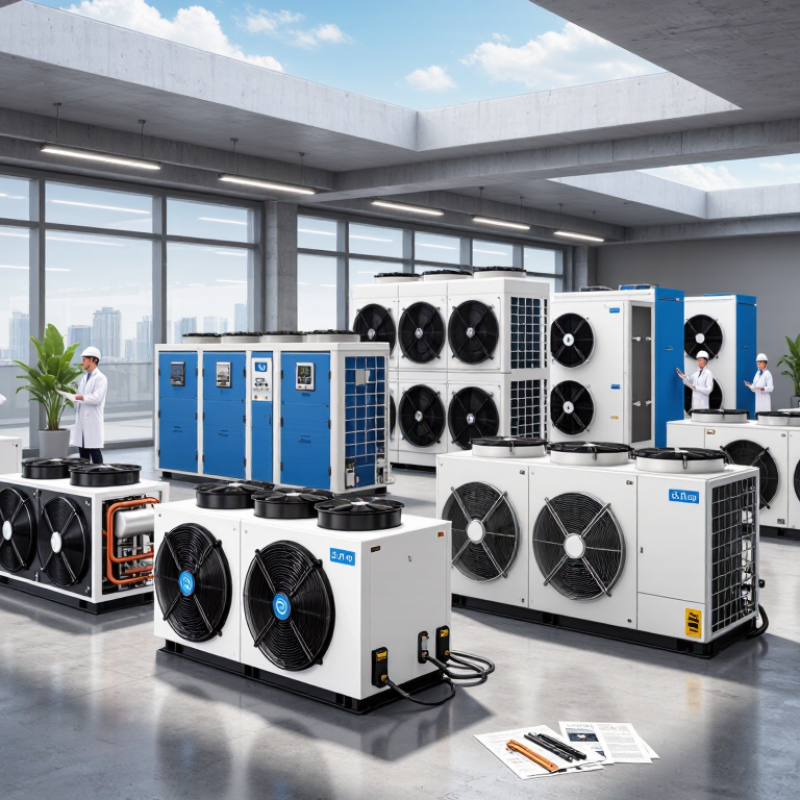
Cooling systems serve different jobs, even when they use similar chillers, pumps, and heat exchangers. HVAC systems manage indoor comfort and air quality. They respond to changing occupancy, outdoor weather, and ventilation needs. In a commercial building, a chilled-water loop may cool air-handling units, while controls adjust temperatures across separate zones. Small details matter. Poor balancing can leave one room cold and another warm.
Process cooling protects production conditions and equipment. A food facility, laboratory, or plastics line may need stable water temperatures and continuous heat removal. These systems are often designed around a specific process, not human comfort. Engineers consider flow rate, heat load, water quality, and backup capacity. A temperature drift of only a few degrees can disrupt output. Yet category labels can mislead: some processes tolerate variation, while others do not.
Data-center cooling focuses on removing concentrated heat from servers and keeping equipment within operating limits. Designs may use raised-floor air, contained hot and cold aisles, or liquid cooling close to processors. Redundancy is important, but extra equipment also consumes energy and space. Trade-offs are real. Comparing manufacturers therefore requires more than checking cooling capacity; buyers should examine control behavior, service access, operating conditions, and documented performance. No design fits every site. A neat specification sheet cannot fully predict how a system will perform after years of changing workloads.

When comparing cooling-system manufacturers in China, use thermal performance rather than headline capacity alone. ASHRAE’s Thermal Guidelines for Data Processing Environments recommends an inlet-air range of 18–27°C for commonly covered equipment classes. Measure at the server intake, not at a convenient wall thermostat. A rack can show a cool room average while its upper servers receive warm air. Small details matter: blanking panels, cable gaps, and fan speed can change airflow across a row.
ASHRAE’s range is a design reference, not a promise that every workload behaves alike. Uptime Institute’s 2024 Global Data Center Survey reported an average PUE of 1.56 among respondents. PUE reflects total facility overhead, not cooling alone, so it cannot rank cooling systems by itself. Still, it signals why operators should examine energy use alongside inlet temperatures. A tidy dashboard can hide a stubborn hot spot.
Tips: Place calibrated sensors at rack inlets, including upper and lower positions. Track temperature and humidity during peak loads, then review trends before changing setpoints. Avoid chasing the lowest possible reading; colder air may waste energy without improving equipment reliability. Real sites are messy, and one sensor may miss the story.
Technology benchmark, not a manufacturer ranking. Company and brand names are intentionally omitted. ASHRAE’s 18–27°C recommended inlet range is a reference for applicable equipment classes; actual operating limits depend on equipment specifications and site conditions.
| # | Cooling system type | Heat-transfer medium | Typical deployment | Inlet-temperature benchmark | Key design consideration |
|---|---|---|---|---|---|
| 1 | Room-based DX cooling (CRAC) | Refrigerant and air | Small and mid-sized server rooms; retrofit projects | Manage rack inlets within the applicable ASHRAE recommended range | Airflow containment and refrigerant-system efficiency |
| 2 | Chilled-water room cooling (CRAH) | Chilled water and air | Medium and large facilities with central chilled-water plants | Manage rack inlets within the applicable ASHRAE recommended range | Plant-water temperatures, pumping energy, and redundancy |
| 3 | In-row cooling | Refrigerant or chilled water and air | Higher-density rows or localized hot spots | Verify temperatures at equipment air inlets against the applicable range | Row layout, airflow balance, and service access |
| 4 | Rear-door heat exchanger | Water loop and server exhaust air | Rack-level heat capture, including dense deployments | Measure inlet conditions at the rack; the door captures heat at the exhaust | Rack weight, water connections, and leak management |
| 5 | Direct-to-chip liquid cooling | Coolant circulating through cold plates | High-performance computing and liquid-ready servers | Maintain room-air inlets per equipment guidance; liquid-loop targets are design-specific | Coolant distribution, connection standards, and facility heat rejection |
| 6 | Single-phase immersion cooling | Dielectric liquid that remains liquid in operation | Purpose-designed servers in immersion tanks | Conventional rack-inlet guidance is not the primary tank control; follow hardware limits | Fluid compatibility, maintenance procedures, and hardware qualification |
| 7 | Two-phase immersion cooling | Dielectric fluid that boils and condenses in the system | Specialized, purpose-built immersion deployments | Use system and hardware operating limits rather than room-air inlet temperature alone | Fluid handling, containment, and applicable environmental requirements |
| 8 | Direct evaporative cooling | Evaporatively cooled outdoor air | Sites where climate and air-quality conditions permit outside-air use | Control delivered air to meet equipment inlet requirements | Humidity, water use, filtration, and local climate |
| 9 | Indirect evaporative cooling | Air-to-air heat exchange with evaporative cooling on a separate stream | Facilities seeking reduced compressor cooling in suitable climates | Verify supply-air and rack-inlet conditions under seasonal extremes | Climate suitability, water consumption, and heat-exchanger performance |
| 10 | Air-side or water-side economizer cooling | Filtered outdoor air or a heat-exchange water loop | Sites with favorable outdoor conditions and suitable system design | Use controls to keep equipment inlets within applicable limits during economizer operation | Outdoor air quality, humidity, water treatment, and changeover controls |
Note: These are cooling-system categories, not ranked suppliers. ASHRAE’s recommended inlet range is a guideline, not a guaranteed operating range for every server or cooling design; consult the applicable ASHRAE thermal guidelines and equipment documentation.
When comparing China’s top cooling-system manufacturers, treat factory capacity as evidence to verify, not a ranking by itself. Ask for annual output by product type, current utilization, and typical lead time. A large plant may still struggle with custom configurations or peak-season orders. Request a recent production schedule and, where possible, inspect sample units, welds, insulation, and control-panel finishing. Details matter.
COP figures need context. Results can change with test conditions, ambient temperature, and equipment configuration. Compare models tested under the same recognized standard, and request reports that identify the exact model. Check whether the stated figure reflects full-load performance or includes part-load data. Certifications also need careful review: confirm the certificate covers the specific product and intended market, and check its validity with the issuing body. Paperwork alone does not prove consistent production quality.
Tips: Ask suppliers for test reports, certificate numbers, and references for comparable installations. Verify documents independently. If a claim seems unusually strong, ask what conditions produced it. This takes time, and the comparison may still feel imperfect; keep the same checklist for every manufacturer.
China’s cooling-system sector covers more than standard air conditioning. A practical comparison of ten manufacturer types starts with their products and operating conditions, not a universal ranking. Industrial chiller makers serve plastics, food processing, and machine shops, where stable outlet temperatures matter. Cooling-tower manufacturers support factories and commercial buildings with heat rejection. Precision air-conditioning suppliers manage temperature and humidity in control rooms. Data-center specialists offer room-based or liquid-cooling equipment for dense server racks.
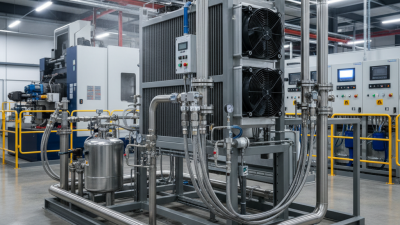
Other manufacturers focus on heat exchangers for chemical and energy facilities, refrigeration systems for cold storage, and thermal management for electric vehicles. Battery-cooling suppliers use liquid circuits to control pack temperatures. HVAC producers make fan-coil units and air-handling equipment for hotels and offices. Process-cooling firms assemble pumps, filters, tanks, and chillers into packaged skids. Details vary.
For buyers, match the system to load, ambient temperature, water quality, and available floor space. Ask for operating data at the expected conditions, not only a headline capacity. Check noise levels, control compatibility, maintenance access, and replacement-part availability. A glossy specification sheet is not enough. Request relevant test records and references for similar installations. One detail is easy to miss: poor piping design can undermine an otherwise capable cooling unit.
When comparing cooling-system suppliers, check delivered capacity at the site’s actual outdoor temperature, not only the catalogue rating. A unit rated at 100 kW may deliver less during a hot afternoon or with long, restrictive pipe runs. Ask for performance tables, operating limits, and commissioning records. Small details matter. The International Energy Agency’s The Future of Cooling report estimated that global air-conditioner stock could grow from 1.6 billion units in 2018 to 5.6 billion by 2050. That scale makes efficient, dependable equipment increasingly important, but a high rating alone cannot show how a system performs in your building.
Refrigerant choice also deserves a clear comparison. The IPCC Fourth Assessment Report lists 100-year GWP values of 2,088 for R-410A and 675 for R-32; figures can differ between assessment methods. Request the refrigerant type, charge size, and leakage-control plan, rather than relying on a “low-GWP” label. Service coverage should be tested with practical questions: How quickly can technicians arrive? Are common parts stocked locally? Is support available after installation? A broad service map can look impressive. I would still ask for response-time commitments in writing; coverage does not always mean fast help.