What Are the Top 10 Industrial Radiators for Global Buyers?
Industrial Radiators are no longer simple metal cores hidden behind factory panels. They protect engines, generators, compressors, hydraulic systems, and process equipment from damaging heat. For global buyers, the difficult question is not merely “Which radiator is largest?” It is “Which design remains reliable under our exact operating conditions?”
Recent industry data gives useful direction. Grand View Research values the global heat exchanger market at approximately USD 19 billion in 2023, with continued growth expected through the decade. MarketsandMarkets also identifies energy efficiency, industrial automation, and stricter equipment-performance requirements as important demand drivers. These reports do not classify every radiator consistently. That limitation matters. A mining radiator, a diesel-generator radiator, and a liquid-cooled process radiator may appear in different market categories.
Professor Bahgat Sammakia, a recognized thermal-management researcher, has expressed a practical engineering principle: “Thermal management is a system problem, not a component problem.” That sentence deserves attention. A radiator that performs well in a laboratory may struggle with dust, vibration, poor airflow, hard water, or neglected maintenance. Real factories are rarely perfect.
This guide evaluates the top 10 Industrial Radiators for global buyers. It considers cooling capacity, core construction, materials, pressure tolerance, corrosion resistance, service access, lifecycle cost, and supplier support. Field experience remains essential. Datasheets can hide weaknesses. Buyers should verify test conditions, warranty limits, replacement-part availability, and compliance requirements before purchasing. No single radiator fits every plant. That is the uncomfortable truth.
Industrial Radiators: Definition, Functions, and Core Design Features
For global buyers, an industrial radiator is not merely a large cooling device. It is a heat exchanger designed for demanding equipment and harsh operating conditions. In engines, generators, compressors, and production systems, it removes excess heat from coolant or hydraulic fluid. The radiator transfers heat through tubes, fins, airflow, and surrounding air. This keeps operating temperatures within safer limits. A stable temperature protects seals, bearings, lubricants, and electrical components. During plant inspections, technicians often check fin damage, coolant leaks, blocked passages, and fan performance. That evidence matters.
Core design begins with the tube-and-fin structure.
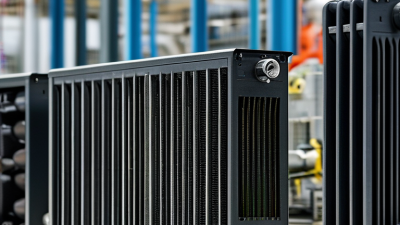
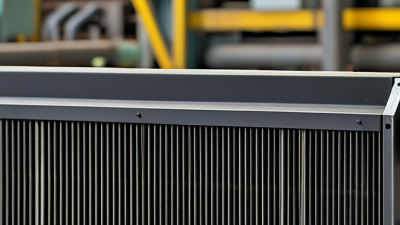
Tubes carry heated fluid, while fins enlarge the surface area for heat release. Headers distribute fluid across the core. Fans or natural airflow move heat away from the fins. Aluminum offers low weight and strong thermal performance. Copper alloys can provide excellent conductivity and easier repair. Steel may suit heavy-duty frames and severe environments. However, material choice must match pressure, corrosion exposure, vibration, and maintenance conditions.
When comparing the top ten industrial radiators, buyers should request tested heat-transfer data. Check operating temperature, flow rate, pressure drop, and airflow volume. Pressure drop matters. Excessive resistance can reduce system efficiency. Easy access for cleaning and tube inspection also improves service life. No radiator is perfect. A clean core can still fail under unexpected vibration or chemical exposure. Calculations may miss dust, altitude, or poor installation. Field conditions should influence every final specification.
How to Evaluate Industrial Radiators for Global Purchasing
Global buyers should rank industrial radiators by operating evidence, not catalogue appearance.
The top ten candidates may include air-cooled, water-cooled, oil-cooling, plate-fin, shell-and-tube, and custom process units. Each design suits a different heat load. The U.S. Department of Energy’s Industrial Decarbonization Roadmap states that process heating represents about 51% of energy use in U.S. manufacturing. This makes thermal efficiency a purchasing issue, not a cosmetic feature. Request rated heat rejection, inlet temperature, flow rate, pressure drop, and fan power at your actual duty point.
Fit matters.
Compare test conditions carefully.
A radiator rated at 40°C ambient may disappoint inside a dusty 50°C plant. Check materials, corrosion allowance, weld quality, vibration control, drain access, and replacement-core availability. ISO 9001 certification supports process control, but it does not prove field performance. Ask for traceable test reports, calibration dates, and a sample inspection plan. The IEA Energy Efficiency 2023 report places industry near 37% of global final energy demand, so small fan or pump penalties can accumulate across large fleets.
Do not guess.
Global purchasing also requires total-cost analysis.
Add freight dimensions, customs classification, spare parts, commissioning labor, water treatment, and disposal. The World Bank Logistics Performance Index 2023 shows major differences in logistics reliability between markets. Delivery promises need local verification. Review warranty exclusions and service response in writing. One uncomfortable lesson is that the lowest bid can hide poor fouling resistance or difficult maintenance. Laboratory efficiency may not survive dust, scale, or unstable voltage.
A witnessed factory test and site trial can reduce that uncertainty.
Top 10 Industrial Radiator Types and Their Main Applications
Industrial radiators are selected by heat load, fluid quality, pressure, and installation space. The ranking is not absolute. According to the IEA Energy Efficiency 2023 report, industry consumed about 37% of global final energy in 2022. Better heat rejection can therefore reduce wasted energy, especially in continuous production.
The ten leading radiator types serve different industrial duties. Shell-and-tube radiators support refineries, power plants, and process-water systems. Plate-and-frame units suit food processing and chemical plants. Air-cooled radiators work where water is scarce. Finned-tube radiators handle furnaces, compressors, and drying lines. Double-pipe models fit smaller, lower-flow systems.
Spiral radiators manage viscous fluids and limited floor space. Brazed-plate units serve hydraulic equipment and compact chillers. Microchannel radiators support battery cooling and high-density machinery. Oil coolers protect gearboxes and hydraulic presses. Immersion radiators control temperature inside tanks and electrical enclosures.
Selection requires more than comparing catalog capacity. ASHRAE guidance emphasizes fluid properties, fouling, airflow, and maintenance access. The U.S. Department of Energy’s Industrial Decarbonization Roadmap also highlights process-heat efficiency as a major improvement area. In practice, a radiator rated for clean water may perform poorly with sediment-heavy fluid. That mistake remains common. Engineers should verify approach temperature, corrosion resistance, fan noise, and seasonal ambient conditions. A slightly oversized unit can improve reliability, but excessive capacity may raise cost and pumping demand. The best choice is usually application-specific, not simply the largest radiator.
Global Buying Factors: Standards, Suppliers, Costs, and Logistics
What Are the Top 10 Industrial Radiators for Global Buyers?
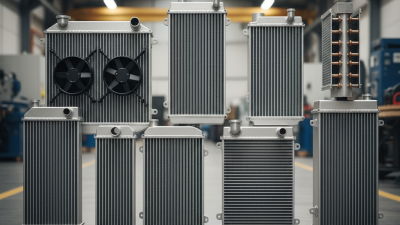
Global buyers should compare radiator designs by duty, compliance, and delivered cost. The practical top ten include engine radiators, oil coolers, shell-and-tube units, plate heat exchangers, brazed-plate units, air-cooled exchangers, fin-fan coolers, gas coolers, immersion radiators, and custom welded units. Terminology varies across industries. A fin-fan cooler may be called an air-cooled heat exchanger in one market. That detail matters during tender reviews.
Energy performance deserves serious attention. The International Energy Agency reports that industry uses nearly 40% of global final energy. A radiator with poor fouling resistance can increase pumping and fan demand. Buyers should request thermal calculations, pressure-drop data, material certificates, and cleaning access. API 661 supports air-cooled heat exchanger specifications, while ASME and EN pressure-equipment rules may apply to pressurized designs. ISO 9001 certification helps assess process control, but it does not prove thermal performance. Ask for test evidence.
Logistics can change the winning quotation. UNCTAD’s Review of Maritime Transport reports that maritime shipping carries over 80% of global merchandise trade by volume. Large radiators need shock-resistant crates, moisture protection, lifting points, and accurate customs documents. The World Bank’s 2023 Logistics Performance Index also shows meaningful differences in clearance and delivery reliability between markets. Compare total landed cost, not only factory price. A cheaper unit may require expensive modifications. I would not assume every “top ten” ranking fits every plant; local water quality, ambient temperature, spare-part access, and maintenance skills can overturn the decision.