How to Understand Heat Exchanger Function for Global Buyers?
Understanding the heat exchanger function is crucial for global buyers in various industries. The market for heat exchangers is expected to reach $19.2 billion by 2027, according to a report by Research and Markets. This growth is driven by increasing energy efficiency demands and the need for effective thermal management in industrial applications. Various sectors, such as chemical, oil and gas, and HVAC, heavily rely on heat exchangers to optimize performance.
It's essential to grasp how these devices operate. Heat exchangers transfer heat between two or more fluids, enhancing efficiency while minimizing energy consumption. As companies worldwide commit to sustainability, understanding the heat exchanger function plays a vital role in reducing operational costs. Moreover, improper selection or maintenance can lead to significant inefficiencies, underscoring the importance of expertise in this area.
Many buyers lack a comprehensive understanding, which can result in costly mistakes. Data indicates that proper installation and regular maintenance can improve heat exchanger performance by up to 30%. Therefore, investing time to learn about heat exchanger functions is essential for making informed decisions.
Understanding the Basics of Heat Exchangers and Their Importance
Heat exchangers play a crucial role in various industries, facilitating efficient thermal energy transfer. According to recent reports, the global heat exchanger market is projected to reach approximately $19 billion by 2026. This growth underscores their significance in energy management and process optimization. Understanding their function can enhance operational efficiency and reduce energy costs, making them a valuable asset for global buyers.
Heat exchangers come in different types, including shell-and-tube and plate models. Each type has specific applications, with shell-and-tube models often used in oil and gas industries and plate heat exchangers favored in food processing. Yet, many buyers overlook the importance of maintenance. Regular inspections can prevent inefficiencies that may arise from scaling and fouling. In fact, improper maintenance can lead to energy losses of up to 30%. This statistic highlights the need for attention to detail.
Additionally, consider the environmental impact. Inefficient heat exchangers can lead to higher CO2 emissions. Striking a balance between performance and sustainability is vital. Choosing the right heat exchanger can significantly contribute to reduced carbon footprints. Hence, understanding the importance of heat exchangers is not just an operational concern; it is a step toward meeting environmental goals.
Types of Heat Exchangers: A Comprehensive Overview for Buyers
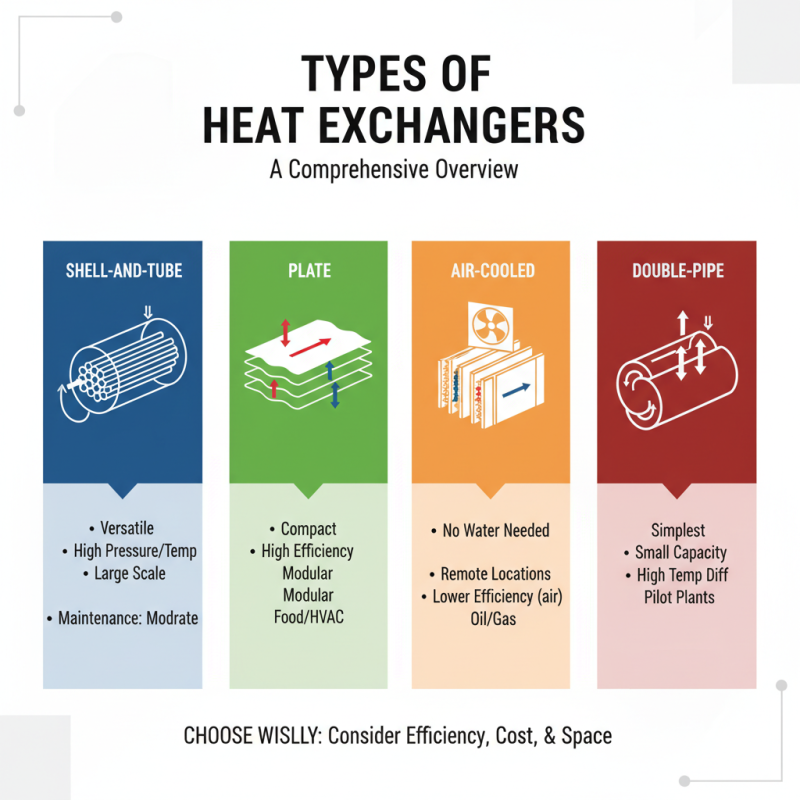
Heat exchangers play a pivotal role in various industries. Understanding their types and functions can help buyers make informed choices. The primary types include shell-and-tube, plate, air-cooled, and double-pipe heat exchangers. Each serves specific applications, with variations in efficiency, cost, and space requirements.
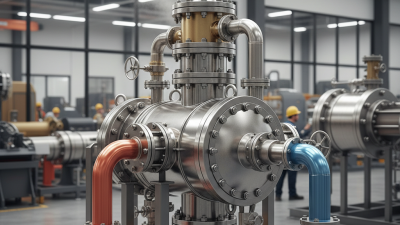
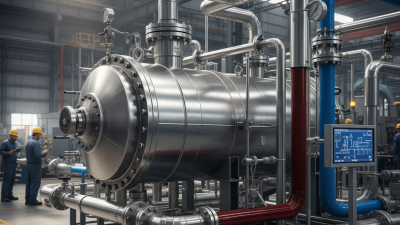
Shell-and-tube heat exchangers are commonly used in process industries. They consist of a series of tubes, allowing for effective heat transfer. The Global Heat Exchanger Market Report states that these units accounted for 40% of the market share in 2022. Meanwhile, plate heat exchangers are ideal for tighter spaces. They provide superior thermal performance and are easily maintainable.
**Tip:** Always consider the material of construction for heat exchangers. Corrosion resistance is crucial, especially in chemical processes.
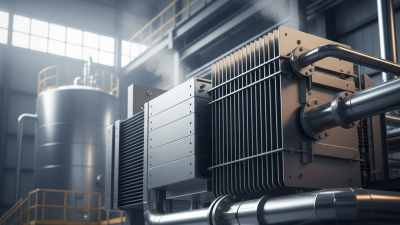
Air-cooled heat exchangers are energy-efficient and reduce water usage. They are gaining popularity due to the shift towards sustainable practices. However, performance can decline in extreme temperatures. Double-pipe designs are simple yet effective for small-scale applications. They require less maintenance but occupy more space.
**Tip:** Assess the installation environment and thermal efficiency before making a purchase. This ensures long-term sustainability in operations. Remember, different heat exchangers cater to different needs, so thorough research is essential.
Common Applications of Heat Exchangers in Various Industries
Heat exchangers play a crucial role in many industries. They transfer heat between two or more fluids. This improves energy efficiency and process effectiveness. Common applications can be seen in HVAC systems, power generation, and even the food industry.
In HVAC systems, heat exchangers help regulate temperature. They recover waste heat, reducing energy costs. For example, they warm buildings in winter while cooling them in summer. In the power industry, they assist in cooling steam after generation. Efficient cooling ensures better energy production. The food industry also benefits from heat exchangers. They pasteurize milk and process other food products safely.
**Tip:** When selecting a heat exchanger, consider the specific application. Factors like flow rate and temperature impact performance.
Maintenance is key for effective operation. Regular inspections help identify issues early. Ignoring small problems can lead to costly repairs later.
**Tip:** Always document maintenance activities. This ensures compliance and helps track performance over time.
Common Applications of Heat Exchangers in Various Industries
Maintenance and Efficiency Tips for Heat Exchanger Operation
Heat exchangers play a vital role in various industrial processes. Their efficiency directly impacts energy consumption and operational costs. Regular maintenance is crucial to ensure optimum performance. Simple tasks like cleaning and inspection can prevent costly downtime.
Inspect for leaks and corrosion regularly. These issues can lead to reduced efficiency. Users should be aware of typical wear points. Fouling caused by dirt and scale is common. Cleaning should be scheduled based on performance data. Ignoring these factors might result in significant efficiency loss.
Adopting best practices can enhance operational life. Use thermal imaging to detect hot spots. This technique can highlight parts that need attention. Always keep a log of maintenance activities. Reflecting on past issues helps in planning future maintenance. Small adjustments can lead to significant improvements. Make a habit of staying informed on advancements in heat exchanger technology.
How to Understand Heat Exchanger Function for Global Buyers? - Maintenance and Efficiency Tips for Heat Exchanger Operation
| Dimension |
Value |
Comments |
| Heat Transfer Area (m²) |
150 |
Sufficient for moderate applications |
| Design Pressure (bar) |
10 |
Ensure compliance with standards |
| Operating Temperature (°C) |
120 |
Optimal for many industrial processes |
| Material Type |
Stainless Steel |
Provides durability and resistance |
| Maintenance Frequency (months) |
6 |
Regular checks improve lifespan |
| Efficiency Ratio (%) |
85 |
Above average for similar units |
| Typical Applications |
Chemical Processing |
Widely used in the industry |