2026 Top Heat Exchanger Cost Guide for Global Buyers
The 2026 Top Heat Exchanger Cost Guide for Global Buyers examines the real factors behind international pricing. Heat Exchanger Cost rarely depends on equipment size alone. A compact stainless-steel unit may cost more than a larger carbon-steel model. Material grade, thermal duty, operating pressure, temperature, and fouling risk can quickly change the quotation.
Details matter.
Sadik Kakac, a widely recognized heat-transfer authority, stated that “the design of heat exchangers is a compromise between heat-transfer performance and pressure drop.” This principle also shapes purchasing decisions. A lower purchase price may hide higher pumping energy, frequent cleaning, difficult maintenance, or premature replacement. Experienced buyers therefore compare total ownership cost, not only the supplier’s initial offer.
This guide considers plate, shell-and-tube, air-cooled, and specialized exchanger systems. It also reviews fabrication standards, inspection requirements, delivery distance, packaging, taxes, installation, spare parts, and regional service capability. Costs can vary sharply between Europe, Asia, North America, and emerging industrial markets. Currency movement adds another uncertainty.
No guide can remove every pricing risk. Some estimates remain imperfect because suppliers use different assumptions, safety margins, and testing scopes. That is worth challenging. Buyers should request itemized quotations, verified performance data, material certificates, and clear warranty terms before approving a purchase. A practical comparison should place each offer beside its expected energy use, service life, cleaning schedule, and operating environment. That approach supports more reliable budgeting and stronger technical decisions in 2026.
Heat Exchanger Types and Their Core Operating Principles
Choosing a heat exchanger starts with the operating duty, not the catalogue price. A heat exchanger transfers heat between fluids while keeping them separated. Temperature difference drives the process. Flow arrangement controls how efficiently that heat moves.
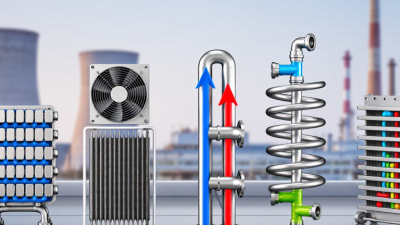
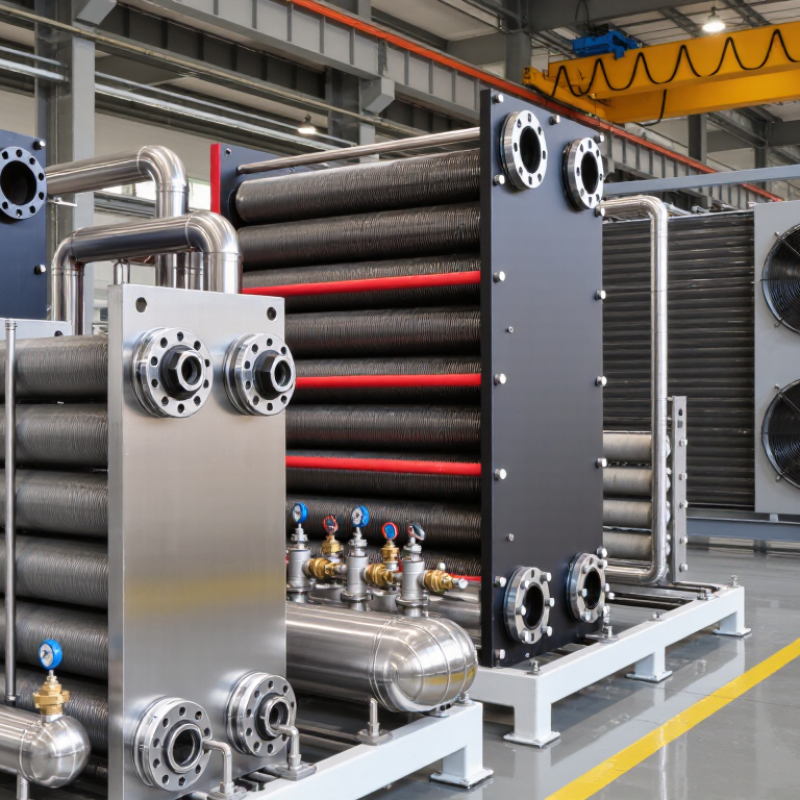
Shell-and-tube units place tubes inside a larger shell. One fluid flows through the tubes, while another crosses around them. They suit high pressure, dirty fluids, and demanding industrial service. Plate heat exchangers use thin, corrugated plates. Their channels create turbulence and provide strong heat transfer in a compact footprint. However, narrow passages can clog when filtration is poor. That detail is easy to overlook.
Air-cooled exchangers reject heat through finned tubes and fans. They reduce water consumption, but fan power and ambient temperature affect performance. Double-pipe exchangers use one pipe inside another. Their simple structure helps smaller duties, although large capacities may require excessive space. Condensers and evaporators operate with phase change. Steam releases latent heat during condensation, while a refrigerant absorbs heat during evaporation. These processes can deliver high capacity within limited temperature differences.
From practical specification work, fouling, corrosion, access, and cleaning often influence cost more than the initial quotation. Engineers should verify thermal calculations, pressure ratings, materials, test records, and maintenance clearances. A cheaper unit may become expensive after repeated cleaning or early tube failure. I have found that design assumptions deserve another review. Real operating conditions rarely match a perfect spreadsheet.
Key Factors That Determine Heat Exchanger Prices in 2026
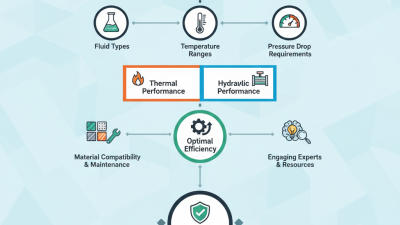
In 2026, heat exchanger prices will depend on more than surface area and flow rate. Material selection often creates the first major cost difference. Stainless steel, titanium, copper alloys, and nickel-based materials respond differently to corrosion, temperature, and pressure. A seawater application may require expensive alloy protection, while a closed-loop system may allow a more economical choice. Small design changes matter.
Thermal duty, operating pressure, and temperature define the exchanger’s size and construction. Higher pressure usually requires thicker walls, stronger joints, and more demanding inspections. Larger plates or tubes increase material use, but undersizing can cause unstable temperatures and costly downtime. Fouling risk also affects price because removable bundles, wider channels, or cleaning access may be necessary. A cheap quote can hide these requirements.
Manufacturing location, labor, testing, packaging, and freight can change the delivered cost substantially. Buyers should request material certificates, pressure-test records, performance calculations, and clear warranty terms. Experienced engineers also compare lifecycle cost, including pumping power, replacement parts, cleaning frequency, and maintenance access. The lowest purchase price is not always the lowest operating cost. That estimate may be wrong. Early data is often incomplete, especially when fluid composition changes seasonally. Buyers can reduce surprises by sharing accurate flow rates, contaminant levels, temperature ranges, installation drawings, and local compliance requirements before final pricing.
Regional Cost Differences for Global Heat Exchanger Buyers
Regional pricing will shape many 2026 heat exchanger budgets more than catalogue prices. A clean global average is misleading.
European fabrication often carries higher labor costs. Eurostat reported average hourly labor costs of €31.8 across the European Union in 2023, rising 5.3% year on year. Energy, welding certification, and documentation can add further pressure. In North America, the U.S. Bureau of Labor Statistics recorded a 3.8% annual increase in private-industry wages through December 2024. This affects skilled welding, testing, and installation services. Asian suppliers may offer lower fabrication costs, but inspection, coating, inland transport, and ocean freight can narrow the gap. UNCTAD’s Review of Maritime Transport 2024 also highlighted longer routes and unstable shipping conditions. Delivery risk is now a cost item.
Tips: Request regional quotations using identical materials, pressure ratings, tube counts, and inspection requirements. Separate equipment, freight, duties, installation, and spare parts. Compare delivered cost, not factory price. The World Bank’s Commodity Markets Outlook projected softer commodity prices for 2025 and 2026, but stainless steel pricing may not follow every global trend. That uncertainty deserves a contingency allowance. My practical view is simple: a cheaper exchanger can become expensive after redesigns, delayed certificates, or difficult site access. Estimates should remain flexible.
How to Compare Suppliers, Materials, Capacity, and Total Costs
2026 Top Heat Exchanger Cost Guide for Global Buyers
Comparing heat exchanger suppliers requires more than checking the quoted unit price. Request material certificates, pressure-test records, thermal calculations, and recent project references. A reliable supplier explains assumptions clearly. Ask about design standards, inspection steps, delivery terms, warranty coverage, and spare-part availability. Factory experience matters, but paperwork alone cannot prove performance.
Match materials to the operating fluid and site conditions. Stainless steel suits many general processes, while titanium may perform better in chloride-rich water. Carbon steel can reduce cost, but corrosion protection becomes critical. Check temperature, pressure, flow rate, fouling risk, and allowable pressure drop. A small change in these values can alter the required heat-transfer area.
Capacity should be compared using the same duty, inlet temperatures, outlet targets, and safety margins. Otherwise, two “similar” offers may not be comparable. Include freight, import charges, installation, insulation, pumps, energy use, cleaning, replacement plates or tubes, and downtime. The lowest quote can become expensive after one difficult cleaning cycle. Early estimates are often imperfect. Recheck them against real operating data before approval.
2026 Top Heat Exchanger Cost Guide for Global Buyers
Indicative total installed cost comparison for a standardized 1 MW thermal-duty project. Values are planning-level benchmarks in USD thousands and exclude taxes, freight, duties, and site-specific civil works.
Shell-and-tube units generally require higher equipment and installation budgets than plate units, while air-cooled exchangers have the highest total cost because of fans, structural steel, controls, and larger footprints. Final pricing depends on materials, pressure rating, temperature range, capacity, energy costs, and maintenance requirements.
Purchasing, Installation, Maintenance, and Lifecycle Cost Planning
A heat exchanger’s purchase price is only one part of its 2026 cost. Material choice, pressure rating, surface area, testing, freight, and spare parts can change the budget quickly. The U.S. Department of Energy’s Industrial Decarbonization Roadmap reports that process heating uses about 51% of industrial energy consumption. Better thermal performance can therefore reduce operating costs, especially in continuous plants.
Installation planning should include lifting access, pipe supports, valves, insulation, commissioning, and production downtime. The DOE’s Federal Energy Management Program recommends life-cycle costing instead of comparing initial prices alone. Maintenance costs also deserve attention. Fouling increases pressure drop and lowers heat transfer. A small service opening may save many hours during cleaning. ASHRAE guidance supports regular inspection, water-quality control, and performance trending for thermal systems. In practice, the first estimate is rarely perfect. Site conditions often expose hidden labor costs.
Tips: Ask suppliers for a five-year and fifteen-year cost model. Record inlet and outlet temperatures, pressure drop, cleaning frequency, and energy use. Compare total ownership cost, not just the quotation. The IEA’s Energy Efficiency 2023 report identifies efficiency improvements as a major near-term emissions reduction opportunity. Yet an oversized exchanger can waste capital and space. A smaller unit may look cheaper, but it could create higher fouling risk. Review the duty range, seasonal loads, and future capacity before approving the design.
2026 Top Heat Exchanger Cost Guide for Global Buyers - Purchasing, Installation, Maintenance, and Lifecycle Cost Planning
| Heat Exchanger Type |
Typical Applications |
Typical Duty Range |
Purchase Cost
(USD) |
Installation Cost
(USD) |
Annual Maintenance
(USD) |
Expected Service Life |
20-Year Lifecycle Cost
(USD) |
Primary Cost Drivers |
| Shell-and-Tube |
Refineries, power plants, chemical processing, utility cooling |
100 kW–100 MW |
$8,000–$250,000 |
$4,000–$125,000 |
$800–$15,000 |
15–25 years |
$28,000–$675,000 |
Materials, pressure rating, tube count, metallurgy, inspection requirements |
| Plate-and-Frame |
HVAC, district energy, food processing, water treatment |
50 kW–20 MW |
$3,000–$100,000 |
$1,500–$50,000 |
$500–$10,000 |
10–20 years |
$14,500–$350,000 |
Plate area, gasket material, frame size, pressure and temperature rating |
| Brazed Plate |
Heat pumps, refrigeration, domestic hot water, compact skids |
5–500 kW |
$300–$12,000 |
$250–$6,000 |
$100–$1,500 |
8–15 years |
$2,550–$42,000 |
Heat-transfer area, copper or nickel brazing, pressure rating, replacement access |
| Air-Cooled |
Remote sites, oil and gas facilities, dry cooling, water-limited plants |
0.5–50 MW |
$40,000–$1,000,000 |
$20,000–$500,000 |
$4,000–$50,000 |
15–25 years |
$140,000–$2,500,000 |
Fin-fan surface, fan motors, ambient design temperature, structural steel, noise control |
| Double-Pipe |
Small process duties, pilot plants, high-pressure services |
10–1,000 kW |
$2,000–$35,000 |
$1,000–$18,000 |
$300–$4,000 |
15–25 years |
$9,000–$133,000 |
Pipe diameter, alloy selection, fabrication, insulation and field labor |
| Spiral |
Viscous fluids, wastewater, fouling services, slurry handling |
100 kW–10 MW |
$15,000–$180,000 |
$7,500–$90,000 |
$1,500–$18,000 |
15–25 years |
$52,500–$630,000 |
Channel geometry, corrosion allowance, access for cleaning, fabrication complexity |
| Graphite Block |
Highly corrosive chemicals, acids, specialty process systems |
50 kW–5 MW |
$25,000–$300,000 |
$12,500–$150,000 |
$2,500–$30,000 |
10–20 years |
$87,500–$1,050,000 |
Graphite grade, impregnation, corrosion resistance, pressure and thermal-shock limits |
Planning assumptions:
Cost ranges are indicative 2026 global-budget estimates in USD for new equipment and should be validated with project-specific quotations. Purchase cost generally covers the exchanger package only. Installation cost may include lifting, supports, piping tie-ins, insulation, testing, commissioning, and basic controls, but excludes major civil works and process redesign. The 20-year lifecycle cost is calculated as purchase cost plus installation cost plus annual maintenance multiplied by 20 years; energy, downtime, taxes, financing, freight, customs duties, and replacement costs are excluded. Actual costs vary by capacity, materials, pressure and temperature ratings, country, labor rates, certification, delivery terms, and site conditions.