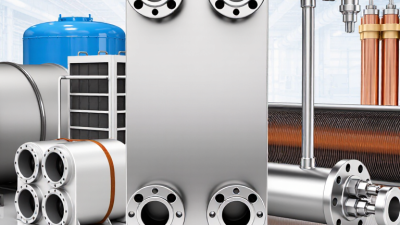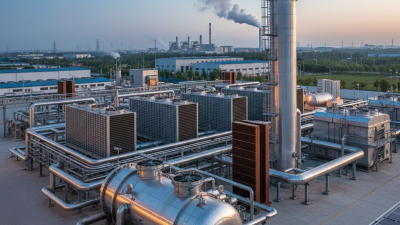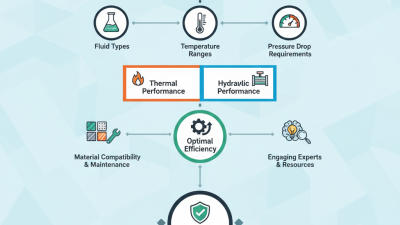
A Heat Exchanger can look simple on a product sheet: metal plates or tubes, a stated duty, and a price. The real decision is less tidy. Buyers must match the unit to fluid properties, flow rates, temperatures, pressure limits, cleaning needs, and the conditions at the installation site. A unit that performs well in a factory test may struggle when fouling, seasonal water changes, or limited maintenance access enter the picture.
Heat-transfer authority Dr. Sadik Kakac has written extensively on exchanger design and selection. A practical buying principle consistent with his engineering work is: “Choose for the real operating conditions, not the catalog rating alone.” Treat that as a guiding summary, not a verbatim quotation. It captures why a careful specification matters. Ask suppliers to show the assumptions behind thermal performance, pressure drop, materials, and allowable operating ranges. Get details in writing.
Small details matter. Will the exchanger fit through the plant doorway? Can technicians remove the cover without moving nearby pipework? Is the gasket material compatible with the actual process fluid? These questions can prevent costly surprises. They are easy to overlook.
This guide outlines seven buying tips for global buyers, from defining duty and checking materials to evaluating service support and comparing lifecycle costs. It also leaves room for an uncomfortable truth: supplier data may be incomplete, and a buyer’s own operating figures may be imperfect. Flag the gaps. Confirm critical assumptions before ordering. A little doubt, handled early, is useful.
Before comparing heat exchangers, document each fluid, flow rate, inlet temperature, and required outlet temperature. Include normal, start-up, shutdown, and upset conditions. A process running at 8 bar during normal production may briefly reach 10 bar during cleaning; that difference can affect pressure rating and equipment selection. Record fluid composition, viscosity, solids, and fouling tendency too. “Water” may contain enough suspended grit to change maintenance needs.
The U.S. Department of Energy’s 2008 report, Waste Heat Recovery: Technology and Opportunities in U.S. Industry, estimates that 20–50% of industrial energy input may be lost as waste heat, depending on the sector. That range is broad, not a guaranteed saving for any one plant. Use measured operating data to estimate recoverable heat, rather than applying a headline percentage to your project. If readings vary by season or production batch, note that uncertainty openly.
Tip: Send suppliers a short duty sheet with minimum and maximum flows, temperatures, pressures, fluid properties, and available space. Ask them to state their design assumptions and expected pressure drop. Keep a few weeks of real operating logs if possible. Clean design conditions can look reassuring, but they may not describe Monday morning after a maintenance shutdown.
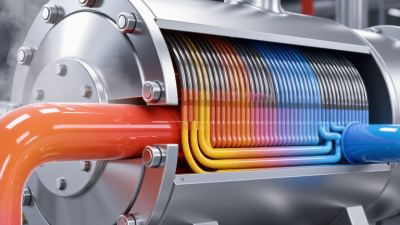
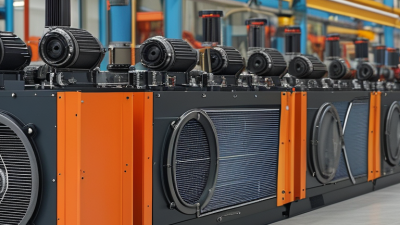
Select a heat exchanger around the actual process, not just the quoted duty. A shell-and-tube unit often suits high pressure, hot fluids, or services that need mechanical cleaning. A gasketed plate exchanger can save floor space and transfer heat efficiently when fluids are relatively clean and compatible with its seals. For sites with limited cooling water, an air-cooled design may be worth evaluating. Check temperature, pressure, flow rate, viscosity, and corrosion risk before comparing prices.
Tip: Write down the fluid composition and expected fouling before requesting quotes. Ask how the unit will be opened, inspected, and cleaned. Those details matter. The U.S. Department of Energy’s report Waste Heat Recovery: Technology and Opportunities in U.S. Industry estimates that roughly 20–50% of industrial energy input may leave as waste heat. The range is broad, but it shows why matching the exchanger to recoverable heat and operating conditions deserves careful attention.
Do not rely on a clean-fluid calculation alone. Deposits can reduce performance, while an undersized unit may struggle during peak production. A plate exchanger’s compact footprint can be attractive, yet gasket compatibility and maintenance access still need checking. Shell-and-tube equipment may take more space, but tube bundles can be easier to service in some applications. I would also confirm the design margin with the supplier; too much margin can add cost, and too little can become a problem later.
Indicative suitability for a broad range of process duties
Scores are qualitative screening guidance, not measured performance data. Shell-and-tube and plate exchangers suit many common process duties; air-cooled, double-pipe, and scraped-surface designs are often chosen for more specific constraints. Confirm pressure, temperature, fluid properties, fouling and cleaning needs, and available space before selecting a design.
Heat exchanger materials should match the actual fluid, temperature, pressure, and cleaning method—not just the purchase price. Stainless steel may suit many water services, while chloride exposure can make alloy selection more demanding. Titanium can resist seawater corrosion, but its cost and fabrication requirements need review. Small details matter. Ask suppliers for material certificates, corrosion allowances, and documented operating limits. Check whether gaskets tolerate the process fluid and expected temperature swings.
Thermal performance needs evidence. Compare rated duty, outlet temperatures, pressure drop, and fouling assumptions under the same operating conditions. The U.S. Department of Energy’s 2008 Waste Heat Recovery report estimated about 1,600 trillion Btu of industrial waste heat annually in the United States. That figure is broad, not exchanger-specific, and does not mean all heat is recoverable. Still, it shows why verified heat-transfer performance matters.
Not always. A low purchase price can conceal higher pumping or cleaning costs.
For compliance, confirm which pressure-vessel code applies at the installation site, such as ASME Section VIII or EN 13445 where relevant. Request inspection records, pressure-test documentation, and traceable material records. Requirements vary by destination and equipment classification, so verify them before ordering—not after delivery.
When comparing heat exchanger suppliers, look beyond the quotation. Ask how long they have built the specific exchanger type and whether they have handled similar fluids, temperatures, pressures, and operating cycles. Experience with a similar duty is more useful than a long general sales history. Request an example project with customer details removed, plus an explanation of what the supplier learned from it. Details matter.
Supplier quality should be visible in everyday controls. Ask how incoming plates, tubes, and gaskets are checked, and how production dimensions are recorded. Request sample inspection records and confirm that measuring equipment is calibrated. If a factory visit is possible, observe how parts are identified between production steps. A tidy workshop helps, but it does not prove consistent performance.
Documentation deserves equal scrutiny. For the proposed unit, request material certificates, drawings, pressure-test results, inspection plans, and operation and maintenance instructions. Check that document revisions match the quoted design and that test records identify the actual unit. Missing paperwork may have a simple explanation, but it still creates work later. I have seen buyers compare prices closely while overlooking document gaps; that is easy to do. Ask who will provide outstanding records, and when, before approving the order.
Compare the quoted price with installation, operating, and maintenance costs across the exchanger’s expected service life. Include freight, customs handling, insulation, lifting, commissioning, spare parts, cleaning, and eventual disposal. DOE’s Operations & Maintenance Best Practices Guide notes that operations and maintenance can account for 60–80% of a facility’s life-cycle cost. That figure is not exchanger-specific, but it is a useful warning against choosing on purchase price alone. Small details matter. Request a written cost breakdown, expected pressure drop, cleaning interval, and assumptions behind the efficiency estimate. Check whether the quote includes compatible gaskets and a clear procedure for replacing them.
Confirm delivery dates against actual production milestones, not just the dispatch estimate. Ask how the unit will be crated, protected from moisture, and tracked during transit. Clarify who handles damage claims and what happens if a critical component arrives late. DOE’s 2022 Industrial Decarbonization Roadmap reports that industry accounted for about 30% of U.S. energy-related emissions in 2020, reinforcing the value of checking thermal performance data. After-sales support deserves the same scrutiny: specify response times, remote troubleshooting, local service coverage, and spare-parts availability in writing. A promise of “lifetime support” sounds reassuring, but without named response targets it is hard to evaluate. I would still treat projected savings cautiously; fouling, changing loads, and imperfect maintenance can alter real-world results.
| Buying Tip | What to Assess | Useful Data or Documents | Buyer Action |
|---|---|---|---|
| 1. Compare total cost of ownership | Look beyond the purchase price. Include installation, piping changes, insulation, commissioning, cleaning, replacement parts, and expected energy use. | Request a cost breakdown and operating assumptions. Estimate annual energy cost as: power demand (kW) × operating hours per year × electricity tariff. | Compare quotations over the same service life, duty, operating hours, and energy-price assumptions. |
| 2. Confirm the thermal and process duty | Check flow rates, inlet and outlet temperatures, fluid properties, allowable pressure drop, fouling tendency, and operating range. | Ask for the thermal calculation, design conditions, pressure-drop figures, and stated fouling allowance. | Have the process data reviewed by a qualified thermal engineer before approving the design. |
| 3. Verify materials and corrosion compatibility | Assess process-fluid chemistry, chloride content, temperature, pressure, erosion risk, and the materials used for plates, tubes, shell, and gaskets. | Request a material list, corrosion-compatibility basis, and material test certificates where specified, such as EN 10204 Type 3.1. | Confirm material grades against the actual fluid composition and project specification. |
| 4. Check applicable codes and inspection | Determine which pressure-equipment rules and project codes apply in the installation country and to the equipment’s design conditions. | Depending on scope and destination, documentation may reference ASME Boiler and Pressure Vessel Code or the EU Pressure Equipment Directive (2014/68/EU). | Specify required design code, conformity documents, inspections, and tests in the purchase order. |
| 5. Compare delivery on a like-for-like basis | Separate manufacturing time from inspection, packing, export documentation, transit, customs clearance, and delivery to site. | Request a dated production schedule, shipping method, named delivery point, Incoterms® rule and version, and confirmation of export-packing scope. | Compare total lead time to the same destination and clarify who handles freight, insurance, import clearance, duties, and unloading. |
| 6. Review warranty and after-sales support | Check warranty start date, coverage, exclusions, claim process, technical response arrangements, and availability of local service. | Request written warranty terms, service contact details, recommended spare-parts list, and typical dispatch arrangements for critical parts. | Agree how technical issues, warranty claims, and urgent service requests will be handled across time zones. |
| 7. Plan maintenance and lifecycle access | Assess cleaning method, inspection access, gasket or tube replacement, isolation requirements, and the downtime needed for routine service. | Ask for maintenance instructions, lifting and clearance requirements, recommended inspection intervals, and a list of wear parts. | Confirm the exchanger can be safely serviced at the installation site and include maintenance access in the layout review. |