How to Understand Heat Exchanger Function for Better Efficiency?
Understanding the Heat Exchanger Function is crucial for optimizing system efficiency. In a recent report by the International Energy Agency (IEA), it was found that heat exchangers can improve energy efficiency by up to 30% in industrial systems. This statistic highlights the impact of efficient heat exchange on overall energy consumption and cost savings.
Industry expert Dr. Emily Chen emphasizes the importance of understanding these systems. She states, "Grasping the Heat Exchanger Function allows industries to minimize waste and enhance productivity." With increasing energy demands, the need for efficient heat exchange becomes even more urgent.
Many organizations still overlook the significance of heat exchanger performance. This oversight can lead to increased operational costs and environmental impacts. By focusing on optimizing the Heat Exchanger Function, businesses can achieve both economic and ecological benefits. It's time to address these inefficiencies for a sustainable future.
Understanding the Basic Principles of Heat Exchanger Operation
Heat exchangers play a vital role in various industrial processes. Understanding their basic principles is crucial for enhancing efficiency. These devices transfer heat between two or more fluids without mixing them. The driving force is the temperature difference between the fluids. This principle follows the laws of thermodynamics.
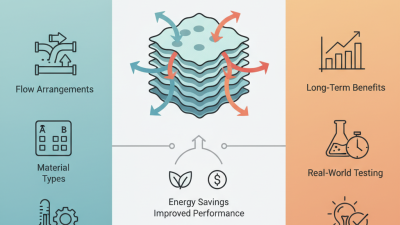
In operation, several factors influence performance. Flow arrangement, for instance, can be counterflow or parallel flow. Counterflow usually offers higher efficiency. The material choice for construction also matters. Different materials have varying thermal conductivities. This affects how quickly heat transfers.
Despite having knowledge of these principles, inefficiencies often arise. Regular maintenance is often overlooked. Deposits can build up, reducing heat transfer capacity. Additionally, system design flaws can lead to poor heat exchange. Continuous monitoring is essential to identify and rectify these issues. Engaging experts periodically can help ensure optimal performance.
Key Types of Heat Exchangers and Their Applications
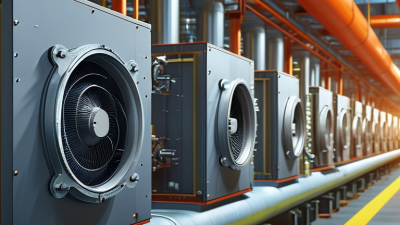
Understanding heat exchangers is crucial for improving energy efficiency. Various types serve different applications. There are two main categories: air-cooled and liquid-cooled. Air-cooled exchangers utilize ambient air to dissipate heat. This method works well in environments where water is scarce or costly.
Liquid-cooled heat exchangers, on the other hand, use liquids like water or oil for heat transfer. They are commonly found in industrial processes. Shell-and-tube, plate, and finned-tube designs are among the most popular. Each design has its pros and cons. Shell-and-tube is robust and easy to maintain, but can be bulky.
In contrast, plate heat exchangers offer higher efficiency in a compact form. However, they may be harder to clean. Understanding these differences can help in applications ranging from HVAC systems to chemical processing. The choice of heat exchanger directly impacts performance. Not all designs fit every scenario. Hence, careful evaluation is necessary to enhance overall system efficiency.
Factors Affecting Heat Exchanger Efficiency and Performance
Heat exchangers play a crucial role in various industries. Their efficiency and performance depend on several key factors. Understanding these factors can lead to better operational outcomes.
One major aspect is the flow arrangement. Counterflow designs generally outperform parallel flow systems. The effectiveness of heat transfer improves as the temperature gradient increases. Additionally, the type of fluid used can influence performance. For example, choosing fluids with higher thermal conductivity can enhance heat transfer rates.
Tips: Regular maintenance is essential. Check for fouling regularly. Clean the heat exchanger surfaces to avoid efficiency losses. Another consideration is insulation. Proper insulation minimizes heat loss. A well-insulated system can maintain optimal temperature differences, boosting efficiency.
Design parameters can't be overlooked. Surface area, fluid velocity, and temperature all affect heat transfer. Larger surface areas increase contact, leading to better heat transfer. However, a higher flow velocity might cause turbulence, which can disrupt the process. Balancing these elements can be challenging but essential for performance.
How to Understand Heat Exchanger Function for Better Efficiency? - Factors Affecting Heat Exchanger Efficiency and Performance
| Factor |
Description |
Impact on Efficiency (%) |
| Fluid Properties |
Viscosity, density, and heat capacity of the fluids involved. |
±15% |
| Flow Arrangement |
Counterflow, parallel flow, or crossflow configurations. |
±20% |
| Heat Transfer Area |
Total surface area available for heat transfer. |
±25% |
| Temperature Difference |
The difference in temperature between the hot and cold fluids. |
±30% |
| Insulation |
Quality and thickness of insulation around the heat exchanger. |
±10% |
| Maintenance |
Regular cleaning and inspection to prevent fouling. |
±20% |
| Design Efficiency |
Efficiency based on design specifications and materials. |
±15% |
Maintenance Practices to Enhance Heat Exchanger Effectiveness
Effective maintenance practices are crucial for enhancing heat exchanger performance. Regular inspections help identify issues early. For instance, watching for leaks or corrosion can prevent costly downtime. Cleaning the heat exchanger surfaces improves heat transfer efficiency. Dirt buildup can reduce performance significantly, leading to energy loss.
One often overlooked aspect is the fluid quality used in heat exchangers. Impurities in the working fluids can cause blockages and damages. Monitoring fluid temperature, pressure, and flow rates is essential to ensure optimal function. If parameters deviate from normal ranges, it might indicate underlying problems that need to be addressed promptly.
Operators should also remember that maintenance routines can sometimes be too rigid, ignoring unique operational conditions. Tailoring practices to specific applications enhances reliability. Reflection on past performance can highlight areas needing improvement. Maintenance is not merely a checklist but requires ongoing evaluation and adjustment.
Innovative Technologies for Improving Heat Exchanger Efficiency
Innovative technologies are transforming the efficiency of heat exchangers in various industries. Many heat exchangers experience efficiency losses due to fouling and scaling. A study by the American Society of Mechanical Engineers shows that fouling can reduce efficiency by up to 30%. Innovations in materials and designs aim to combat these challenges. Advanced coatings and enhanced surface geometries help maintain heat transfer efficiency over time.
Another key advancement is the integration of smart monitoring systems. These systems utilize sensors to track operational data in real time. According to a report from the International Energy Agency, these technologies can lead to efficiency gains of up to 20%. They enable proactive maintenance, reducing unexpected downtimes. Yet, some companies may still overlook regular assessment of heat exchanger performance, leading to missed opportunities for improvement.
Digital twins are also emerging in the industry. They allow for virtual simulations, predicting how changes will impact performance. This method can highlight potential inefficiencies before they occur. However, the implementation can be complex, and staff training is often needed. Organizations must ensure they keep pace with these technological advancements to truly maximize the benefits.
Heat Exchanger Efficiency Metrics