Top Benefits of Using Plate-Fin Heat Exchanger in Industry?
In recent years, the use of Plate-Fin Heat Exchangers has gained significant traction in various industries. A study by the American Society of Heating, Refrigerating, and Air-Conditioning Engineers (ASHRAE) indicates that these exchangers can improve thermal efficiency by up to 90%. This impressive efficiency makes them a crucial choice in sectors like aerospace and chemical processing.
The compact design of Plate-Fin Heat Exchangers allows for efficient heat transfer within limited spaces. This design is critical in industries where real estate is costly. Furthermore, the ability to withstand high pressures and temperatures enhances their appeal for demanding applications. However, selecting the right heat exchanger remains a challenge. It requires careful consideration of specific operational needs and environmental factors.
Despite their benefits, not all applications may warrant their use. Some processes may benefit more from traditional designs. A thorough analysis is essential to determine the right fit. This careful approach will ensure optimal performance while avoiding unnecessary costs. Ultimately, Plate-Fin Heat Exchangers present unique advantages that merit serious evaluation for industrial heat management solutions.
Benefits of Enhanced Heat Transfer Efficiency in Plate-Fin Heat Exchangers
Plate-fin heat exchangers are well-known for their
remarkable heat transfer efficiency. They utilize a
unique design that maximizes surface area, allowing for increased heat exchange between fluids. This design results
in superior thermal performance compared to traditional heat exchangers. Enhanced heat transfer means reduced energy
consumption, leading to lower operational costs in industrial applications.
In addition to efficiency, these heat exchangers have a compact structure. Their smaller footprint saves valuable
space in facilities. This is especially advantageous in industries where space is limited. However, the compactness
also means that maintenance can be challenging. Technicians may face difficulties when accessing specific components.
An understanding of the design is crucial for successful upkeep.
Furthermore, plate-fin heat exchangers are versatile. They can handle various fluids, including gases and liquids,
at different temperatures and pressures. However, this broad applicability requires careful selection for specific
processes. Misapplication can lead to inefficiency. Industrial operators must weigh the benefits against potential
pitfalls. A thorough assessment ensures optimal performance.
Reduced Space Requirements: Compact Design Advantages of Plate-Fin Units
Plate-fin heat exchangers offer notable space-saving benefits for industrial applications. Their compact design allows for efficient integration in facilities with limited room. According to the Heat Exchange Institute, these units can reduce the required footprint by up to 50% compared to traditional heat exchangers. This is essential for operations requiring multiple units, minimizing installation costs and maximizing available space.
The plate-fin structure optimizes heat transfer. It increases surface area while maintaining a smaller volume. Industries such as oil and gas often face constraints where equipment must be tightly packed. A report by the International Institute of Refrigeration highlights that plate-fin heat exchangers enhance thermal efficiency by 20-30%. This allows for higher performance in a confined area.
Tips: Consider the specific heat duties and fluid types when choosing a plate-fin unit. Coatings may also be necessary to combat corrosion in harsh environments. Regular performance assessments can identify inefficiencies, promoting long-term reliability. Although compact, these systems may require more frequent maintenance checks due to their intricate design. Balancing space efficiency with maintenance needs can lead to improved operational outcomes.
Improved Operational Flexibility in Various Industrial Applications
Plate-fin heat exchangers offer remarkable operational flexibility in various industrial applications. Their compact design allows for easy integration into limited spaces, whether in chemical plants or power stations. This adaptability is crucial for industries seeking to optimize space and enhance efficiency.
In many settings, changing production needs arise frequently. Plate-fin heat exchangers can adjust to varying temperature and pressure requirements effectively. This capability allows industries to maintain productivity even with fluctuating operational demands. The design facilitates enhanced thermal performance, which leads to energy savings.
However, not all processes suit this technology equally. Some applications may face challenges with fouling and maintenance. In these instances, a thorough evaluation is essential. Each operation should consider the long-term implications of using plate-fin heat exchangers. It is beneficial to analyze the specific needs of each system for optimal results.
Cost-Effectiveness: Long-Term Savings with Plate-Fin Technology
Plate-fin heat exchangers are increasingly recognized for their cost-effectiveness in industrial applications. The design minimizes energy loss while maximizing heat transfer efficiency. This leads to significant savings over time. Many industries benefit from these savings due to longer operational lifespans.
Choosing plate-fin technology can offer reduced maintenance costs. Fewer moving parts and robust construction contribute to reliability. However, some users may face initial investment concerns. It takes time to see returns, especially for smaller operations. The upfront costs may seem daunting, but the long-term savings often outweigh this hurdle.
Moreover, the ability to customize these exchangers adds value. Different configurations allow for specific process needs. However, detailed design and installation still require expertise. Proper design can be complex, and errors may lead to inefficiencies. Attention to detail is crucial in realizing the full benefits of plate-fin heat exchangers.
Ease of Maintenance and Repair in Plate-Fin Heat Exchangers
Plate-fin heat exchangers offer significant advantages, especially in ease of maintenance and repair. Their compact design allows for more straightforward access during inspections. This means technicians can conduct routine checks quickly, ensuring optimal performance.
Maintenance becomes less daunting with plate-fin designs. Removing a single plate for cleaning is convenient. It reduces downtime compared to traditional exchangers. However, care should be taken during reassembly. Not aligning plates correctly can lead to leaks.
Repairing plate-fin heat exchangers may be challenging at times. Finding specific replacement parts can be a hurdle. Some users report difficulties in locating the right components promptly. This can extend downtime unexpectedly. Despite these challenges, the overall benefit of reduced maintenance frequency remains appealing. The intricate design allows efficient heat transfer while minimizing the need for frequent service.
Top Benefits of Using Plate-Fin Heat Exchanger in Industry
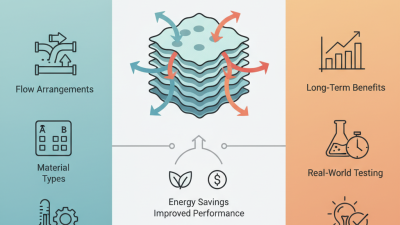
This chart illustrates the top benefits of using plate-fin heat exchangers in various industries, highlighting their ease of maintenance and repair compared to traditional heat exchangers.